EUROPEAN UNION
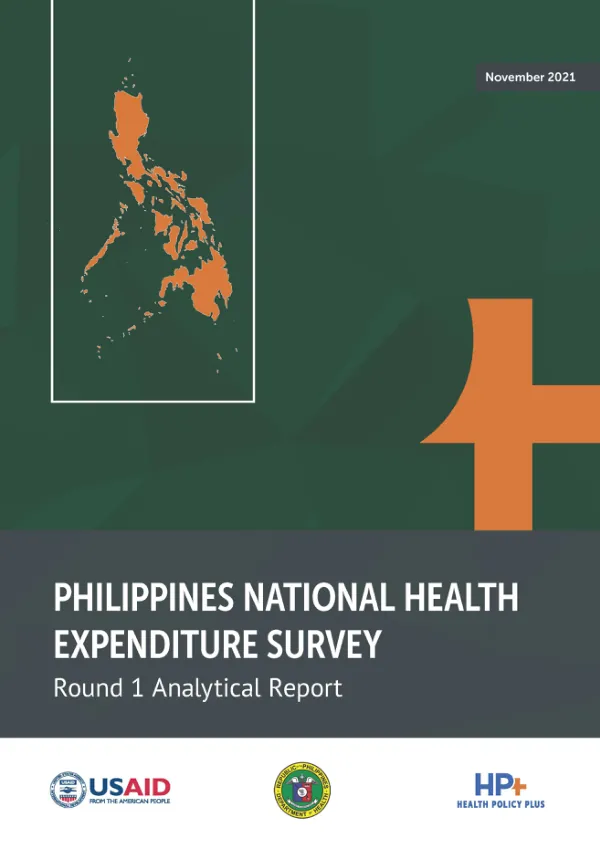
Philippines National Health Expenditure Survey: Round 1 Analytical Report
The National Health Expenditure Survey (NHES) in the Philippines was conducted from 2018 to 2021 to collect data on health service utilization and associated expenditure.
2021 · 107 pages
Sign in to readA free account is required to download.
Abstract
The survey was spearheaded by the Philippine Department of Health-Health Policy Development and Planning Bureau to fill an evidence gap in health service utilization and associated expenditure data. The NHES is the first uniquely designed survey to collect data from both households and medical providers on the disease and health expenditure burden of households, sources of care, and care financing. The survey has two components: a household component (HC) and a linked medical provider component (MPC). The HC collects household- and individual-level data on health service utilization, visits, and charges, payments, and financing sources. The MPC allows for the household-reported data to be validated and provides additional details on services provided, diagnoses, and charges. The NHES is intended to be conducted on a regular basis to inform health sector decision making, including implementation of the 2019 Universal Health Care Act and monitoring and evaluation of health sector reforms. The survey collected data on household characteristics and health insurance coverage, health-seeking behavior and utilization, healthcare charges, and healthcare expenditure. The data showed that households with higher socioeconomic status had better access to healthcare services and were more likely to have health insurance coverage. The survey also found that households with lower socioeconomic status had higher out-of-pocket expenditure for healthcare services. The NHES also collected data on healthcare charges and expenditure. The average charges for care at health facilities were found to be high, with households with lower socioeconomic status bearing a disproportionate burden of these charges. The survey also found that households with health insurance coverage had lower out-of-pocket expenditure for healthcare services. The survey's findings have implications for health sector decision making in the Philippines. The data collected by the NHES can be used to inform policy decisions on healthcare financing, access to healthcare services, and the implementation of the 2019 Universal Health Care Act. The survey's results can also be used to monitor and evaluate the impact of health sector reforms on healthcare access and expenditure. The NHES was conducted in collaboration with various stakeholders, including the Philippine Survey and Research Center, the U.S. Agency for International Development, and the European Union's Philippine Health Sector Reform Contract. The survey's methodology was designed to ensure the accuracy and reliability of the data collected. The survey's results are expected to contribute to the development of evidence-based policies and programs to improve healthcare access and expenditure in the Philippines. The NHES is a pioneering effort to collect data on health service utilization and associated expenditure in the Philippines. The survey's methodology and results provide valuable insights into the healthcare system in the Philippines and can inform policy decisions on healthcare financing, access to healthcare services, and the implementation of the 2019 Universal Health Care Act.