BIRDLIFE INTERNATIONAL
Phong Dien Nature Reserve Fact Sheet
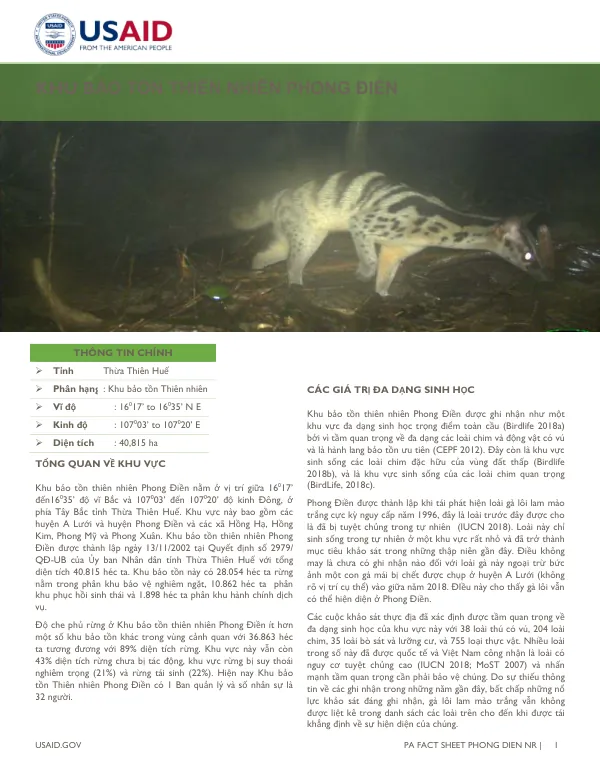
Phong Dien Nature Reserve is located in Thua Thien Hue Province, Vietnam, spanning an area of 40,815 hectares.
2018 · 2 pages
Sign in to readA free account is required to download.
Abstract
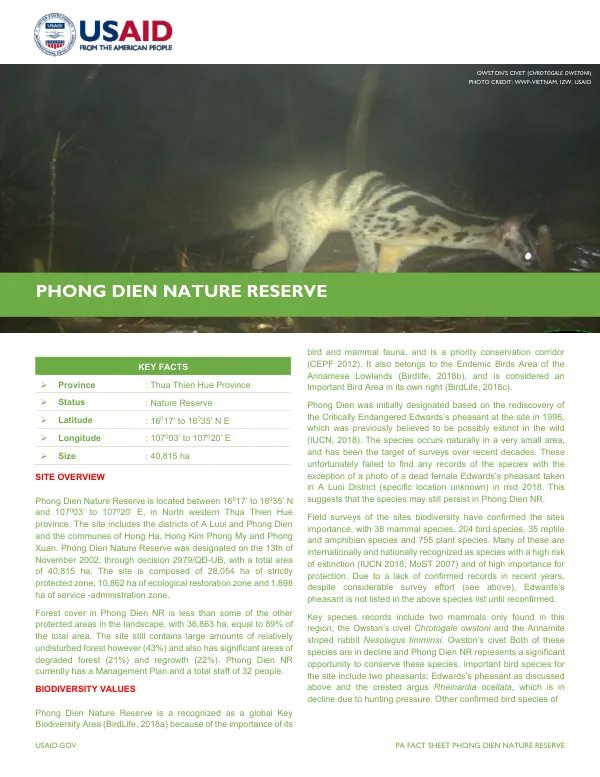
The site is situated between 16°0'17'' to 16°0'35'' N latitude and 107°0'3'' to 107°0'20'' E longitude. The reserve is composed of 28,054 hectares of strictly protected zone, 10,862 hectares of ecological restoration zone, and 1,898 hectares of service-administration zone. Phong Dien Nature Reserve is recognized as a global Key Biodiversity Area due to its importance in supporting bird and mammal fauna. The site is also a priority conservation corridor and belongs to the Endemic Birds Area of the Annamene Lowlands. The reserve is home to a diverse range of species, including 38 mammal species, 204 bird species, 35 reptile and amphibian species, and 755 plant species. Many of these species are internationally and nationally recognized as species with a high risk of extinction. The reserve is particularly significant for the conservation of the Critically Endangered Edwards's pheasant, which was rediscovered at the site in 1996. Field surveys have confirmed the site's importance, with key species records including the Owston's civet and the Annamite striped rabbit. These species are in decline, and Phong Dien Nature Reserve represents a significant opportunity for their conservation. Other important bird species for the site include the crested argus, Annam partridge, and Indochinese wren babbler. Conservation issues in Phong Dien Nature Reserve include ongoing deforestation, with approximately 201 hectares of forest loss between 2012 and 2016. Increased monitoring and enforcement, especially along river valleys in the core zone, are necessary to avoid further impacts. Hunting with snares continues to be a major threat to biodiversity in the reserve, and a snare removal program engaging local communities could help reduce this threat. The development of hydropower in the area also poses a significant threat to biodiversity, with clearance of habitats, infrastructure development, and hunting and wildlife consumption contributing to the impact on the site's values.
Related documents