USAID DEC
Zonation for Biodiversity Inventories in Bac Hai Van Proposed Nature Reserve in Thua Thien Hue Province
Sign inECODIT, INC.
Zonation for Biodiversity Inventories in Bac Hai Van Proposed Nature Reserve in Thua Thien Hue Province
The Bac Hai Van Protection Forest Management Board (BHVPFMB) is a proposed nature reserve in Thua Thien Hue Province, Vietnam.
2018 · 23 pages
Sign in to readA free account is required to download.
Abstract
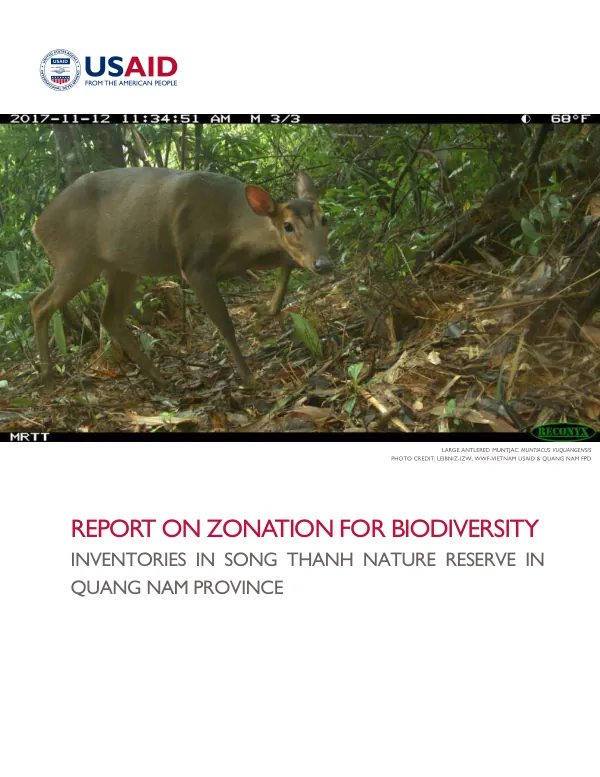
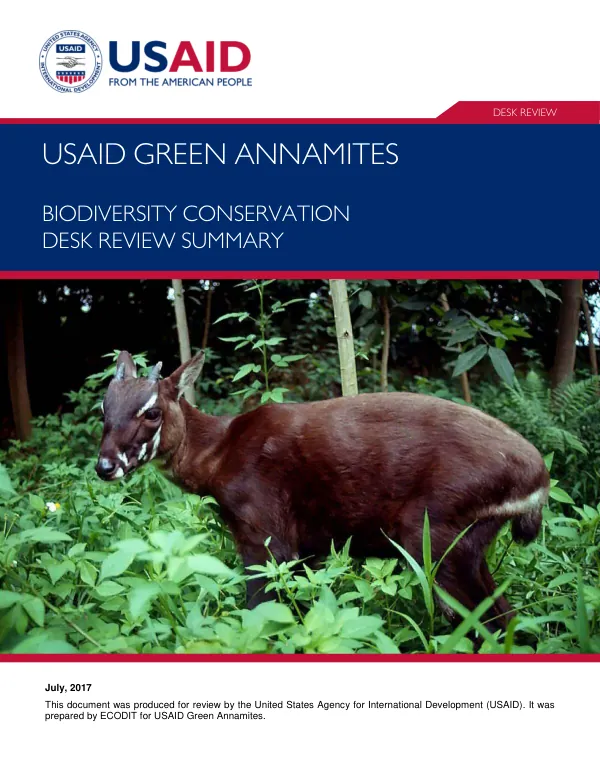
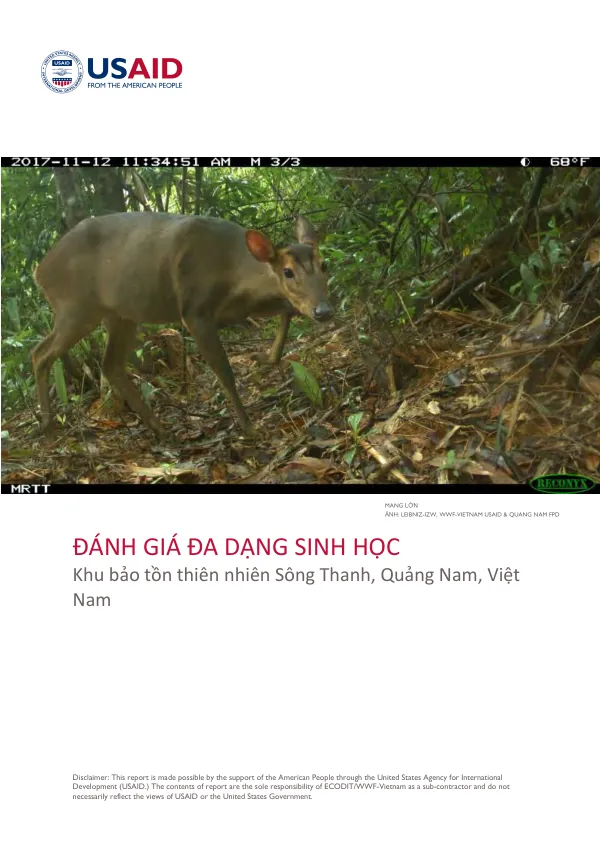
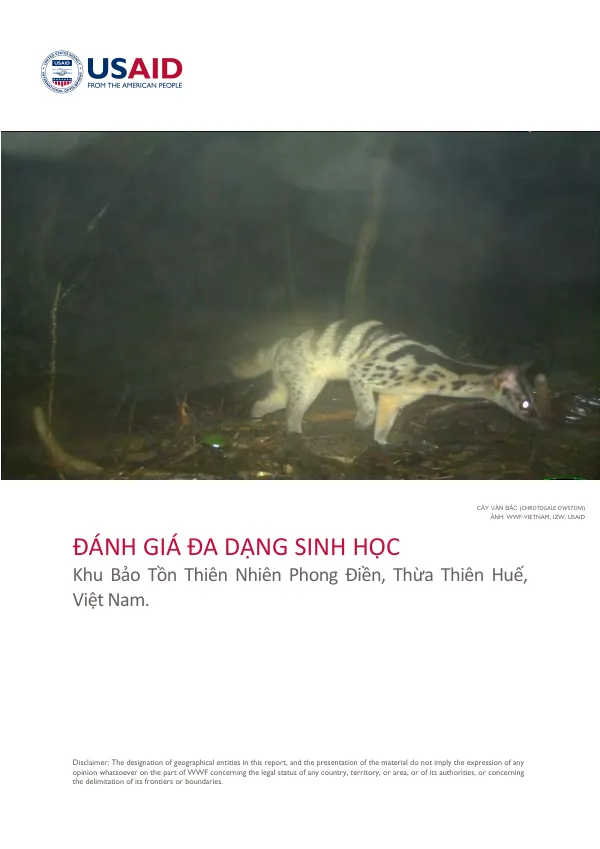
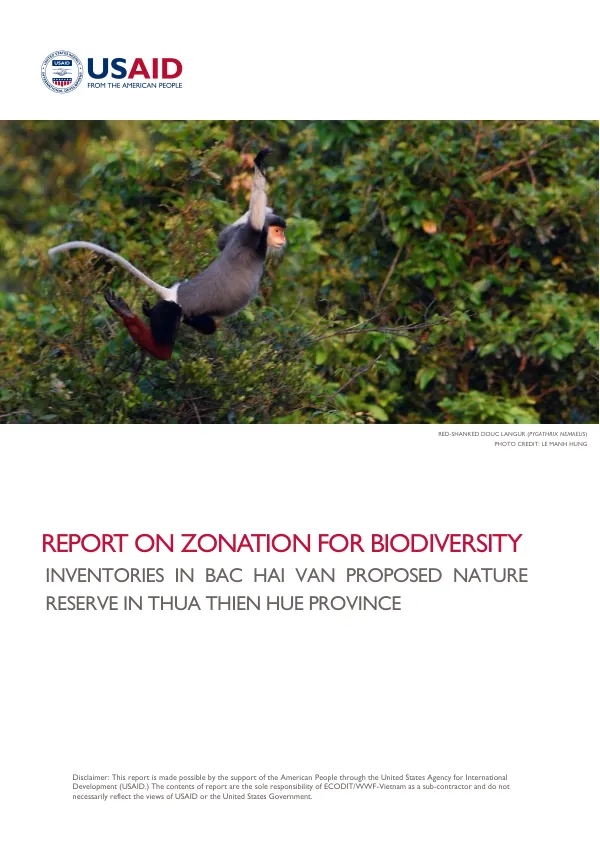
The area is part of the Central Annamites, one of the largest continuous natural forest areas in continental Asia. The region is home to many endemic species, including the Saola, large antlered muntjac, Truong Son muntjac, Owston's civet, crested argus, and Annamite striped rabbit. The proposed nature reserve covers an area of 9,274.75 hectares, with 6,620.00 hectares designated as strictly-protected sub-zones, 1,974.17 hectares as ecological restoration sub-zones, and 3 communes and one town in the buffer zone. The forest cover analysis indicates that 91.42% of the total natural area is under forest cover types, with four forest categories identified: Forest plantation (25.26%), evergreen broadleaf - medium forest (7.23%), evergreen broadleaf - poor forest (32.02%), and evergreen broadleaf - regrowth (26.91%). Six high conservation value species of animal and bird have been selected as representative to develop key and important species layer maps: Red-shanked Douc Langur (Pygathrix nemaeus), Edwards's Pheasant, Annam partridge, Northern pig-tailed macaque, Serow, and Pygmy Slow. These species are located in both stable forest plantation and evergreen broadleaf - medium forest belonging to strictly protected sub-zones. Six threats have been identified to develop threat layer maps: Illegal logging, wildlife hunting and trapping, exploitation of NTFPs, forest fire, forest encroachment, and livestock grazing. The illegal logging and forest encroachment are considered as the main threats to Bac Hai Van proposed NR. In relation to proposed zonation, the illegal logging and wildlife hunting identified mostly in strictly protected sub-zones, while the exploitation of NTFPs and livestock grazing occurred mostly in ecological restoration sub-zones. The Green Annamites project, funded by USAID and implemented through ECODIT, aims to protect and restore species and their habitats in the Central Annamites, with a focus on Quang Nam and Thua Thien Hue provinces. The project supports Vietnam's transition to climate-smart, low emissions, and resilient development that protects people, landscapes, and biodiversity in the region. The project's objectives include establishing a baseline for biodiversity monitoring systems in identified PAs, creating species lists, abundance estimates of key species, and threat analysis data in the landscape. The biodiversity inventory in PAs in Thua Thien Hue and Quang Nam provinces under the Green Annamites project aims to collect data for biodiversity baseline data in five PAs, establish a biodiversity monitoring system database, design the complex biodiversity monitoring for each PA, conduct forest cover assessments, re-zone and zone PAs to propose new PA standards, and facilitate sustainable management. The project's data will serve as a basis for upgrading, expanding, and establishing new PAs in the landscape.