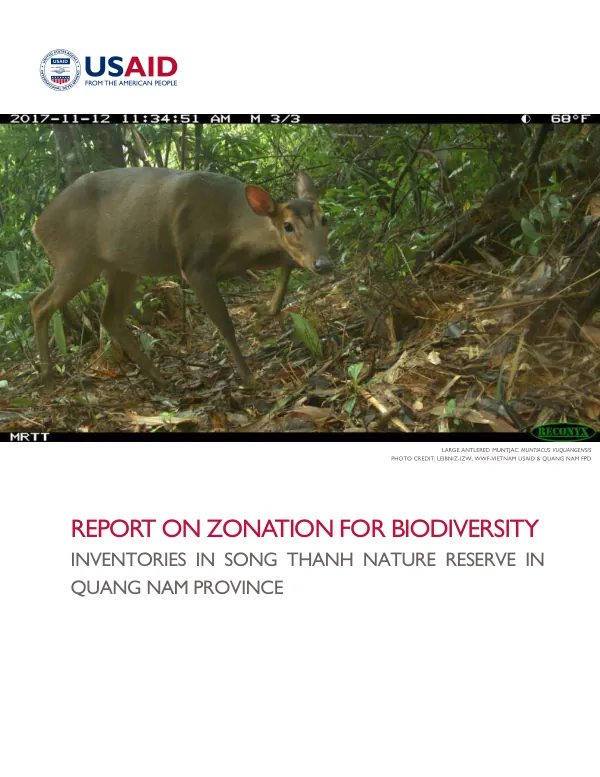
USAID
PA Fact Sheet: Song Thanh Nature Reserve
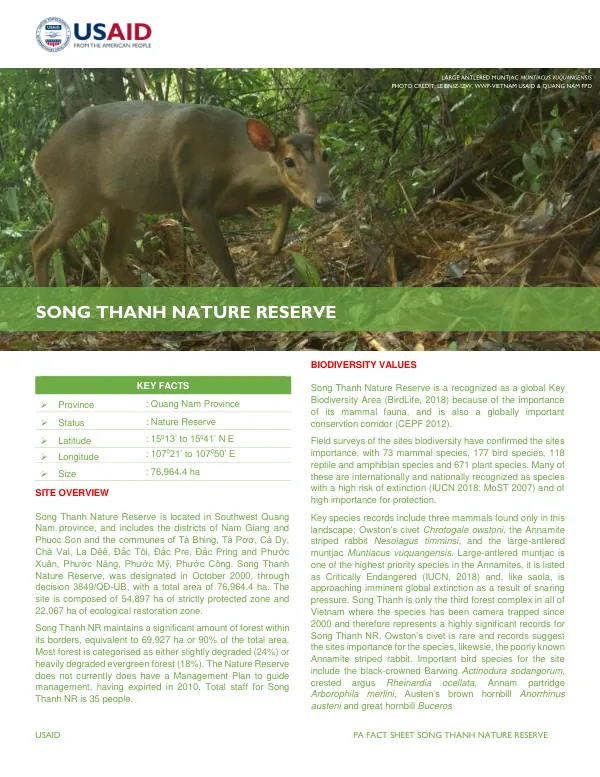
Song Thanh Nature Reserve is located in Quang Nam Province, Vietnam, and spans an area of 76,964.4 hectares.
2018 · 2 pages
Sign in to readA free account is required to download.
Abstract
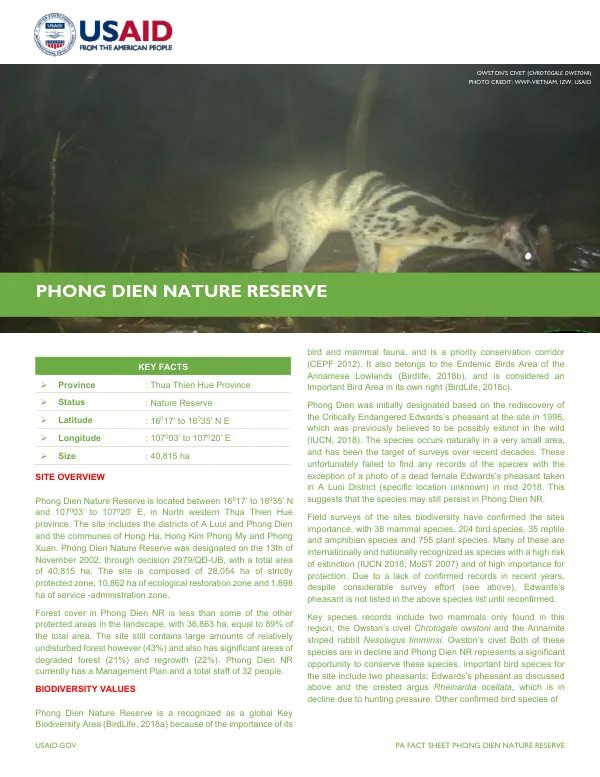
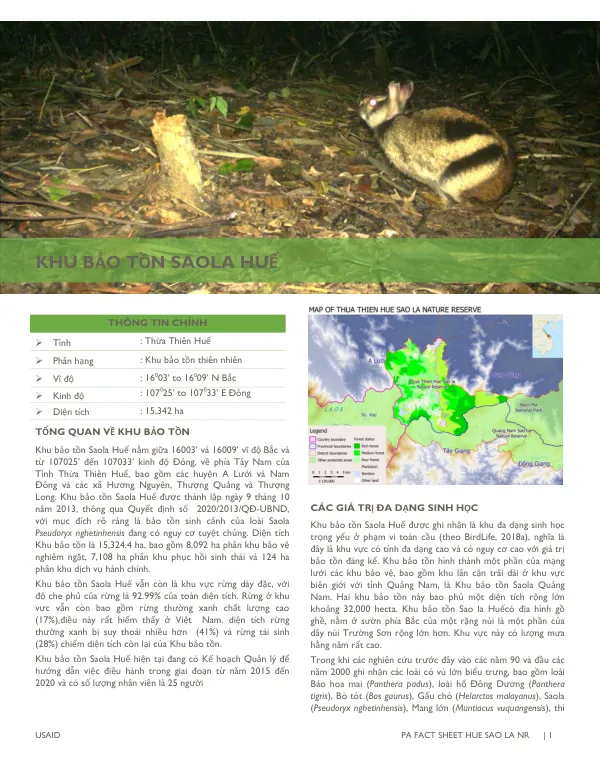
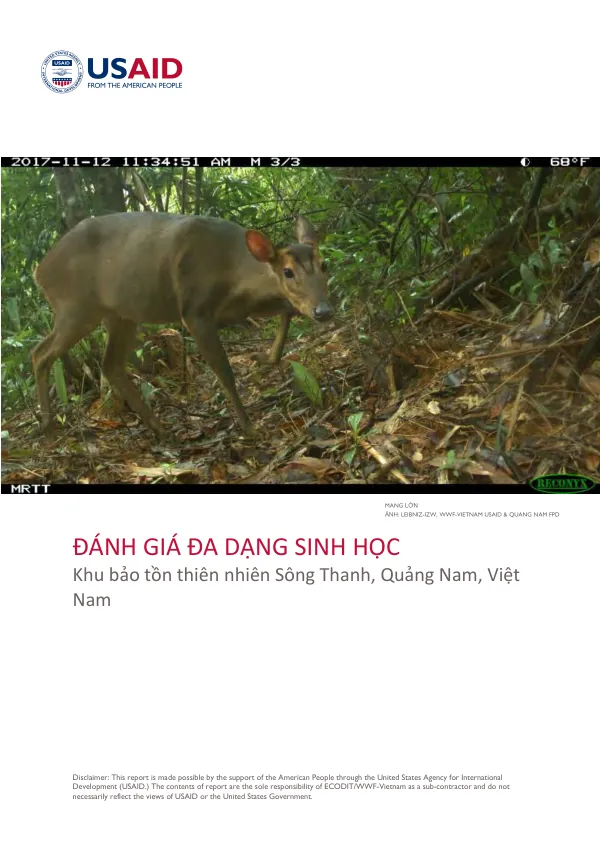
The reserve is situated in the districts of Nam Giang and Phuoc Son, and includes nine communes. Designated as a nature reserve in October 2000, Song Thanh NR is composed of 54,897 hectares of strictly protected zone and 22,067 hectares of ecological restoration zone. The reserve maintains a significant amount of forest within its borders, equivalent to 69,927 hectares or 90% of the total area. Most of the forest is categorized as either slightly degraded (24%) or heavily degraded evergreen forest (18%). The reserve does not currently have a management plan to guide its management, as the previous plan expired in 2010. The total staff for Song Thanh NR is 35 people. Song Thanh Nature Reserve is recognized as a global Key Biodiversity Area due to the importance of its mammal fauna. Field surveys have confirmed the site's importance, with 73 mammal species, 177 bird species, 118 reptile and amphibian species, and 671 plant species recorded. Many of these species are internationally and nationally recognized as species with a high risk of extinction. Key species records include three mammals found only in this landscape: Owston's civet, the Annamite striped rabbit, and the large-antlered muntjac. The large-antlered muntjac is one of the highest priority species in the Annamites, listed as Critically Endangered on the IUCN Red List. The species is approaching imminent global extinction due to snaring pressure. Song Thanh NR is only the third forest complex in all of Vietnam where the species has been camera-trapped since 2000, making it a highly significant record for the site. Other important species for the site include the black-crowned Barwing, the crested argus, and the great hornbill.