USAID
PIRS Indicator 11.3 Probability of prosecution
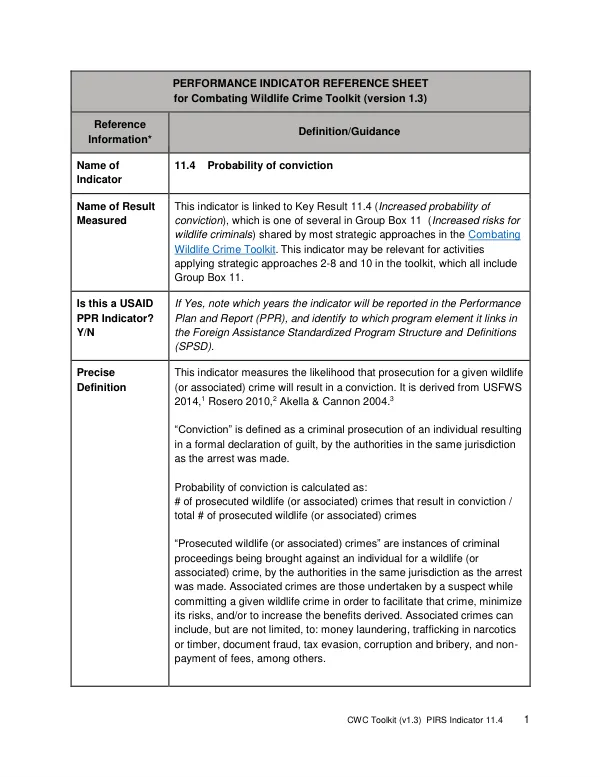
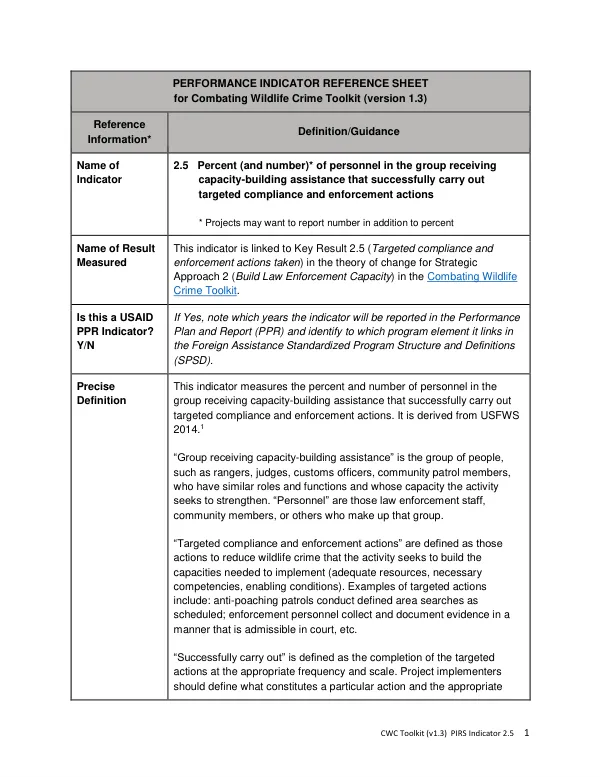
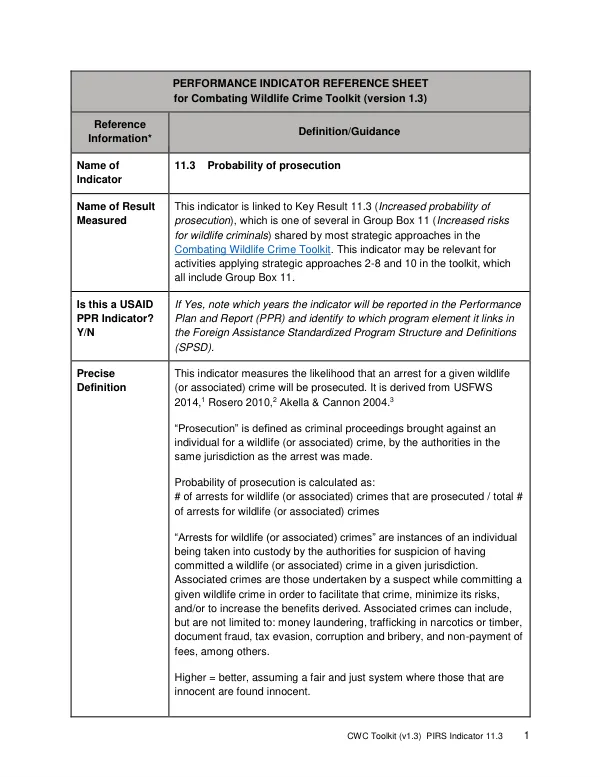
The Combating Wildlife Crime Toolkit (version 1.3) includes a performance indicator reference sheet for PIRS Indicator 11.3, which measures the probability of prosecution.
2017 · 6 pages
Sign in to readA free account is required to download.
Abstract
This indicator is linked to Key Result 11.3, which is part of Group Box 11, "Increased risks for wildlife criminals." The indicator is relevant for activities applying strategic approaches 2-8 and 10 in the toolkit, which all include Group Box 11. The probability of prosecution is defined as the likelihood that an arrest for a given wildlife (or associated) crime will be prosecuted. It is calculated as the number of arrests for wildlife (or associated) crimes that are prosecuted divided by the total number of arrests for wildlife (or associated) crimes. Associated crimes include money laundering, trafficking in narcotics or timber, document fraud, tax evasion, corruption and bribery, and non-payment of fees, among others. Higher probability of prosecution is considered better, assuming a fair and just system where those that are innocent are found innocent. However, it is noted that the data available to track this indicator may be biased toward lower-level perpetrators, who are easier to catch and possibly convict. Project teams should consider designing indicators that incentivize the capture of the largest-impact criminals, such as middlemen and higher-level criminals. The data source for this indicator is official records held by relevant authorities within jurisdictions. The design of data collection instruments and protocols for data collection and analysis should be informed by robust statistical methodologies and best practices in the field. Implementers should respect data ownership rights as well as data sensitivity issues, and all data collected should be archived and made available through the Development Data Library (DDL) per ADS Chapter 579, USAID Development Data. The frequency at which these data are measured will depend on the type of evidence, available survey techniques, and available records. Data should be reported at least annually. An initial baseline measure must be established, and the general basis on which targets are set for the indicator should be explained. Dates of data quality assessments (DQA) and the name of the reviewer should be indicated, as well as the date of future planned DQAs.