USAID DEC
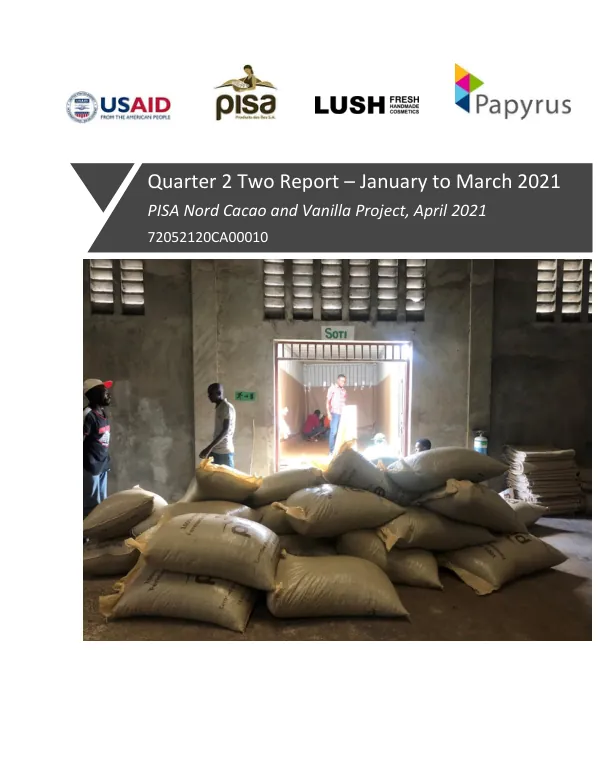
PISA Nord Cacao and Vanilla Project, Year One – Quarter One Report
The PISA Nord Cacao and Vanilla Project aims to increase revenue for up to 900 farm families on up to 600 hectares by increasing their cacao yields by 80%.
2021 · 13 pages
Sign in to readA free account is required to download.
Abstract
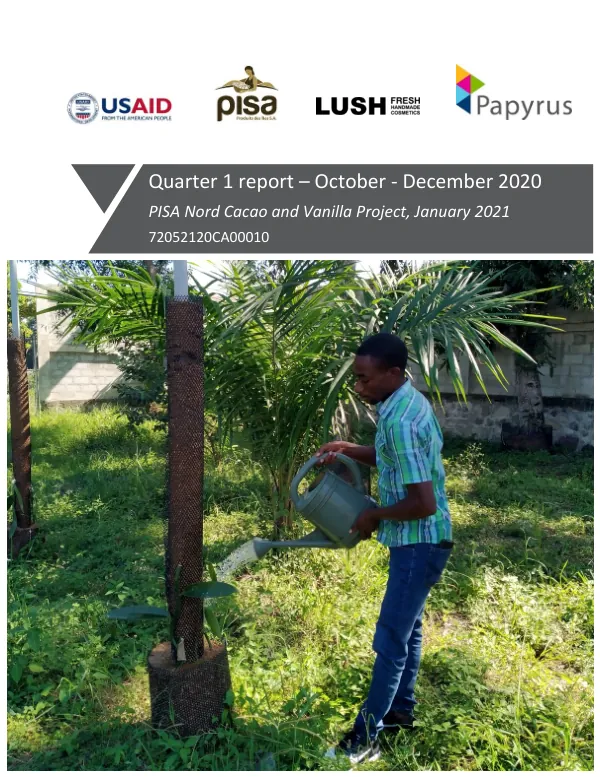
The project also seeks to further increase revenues for up to 150 farm families on 100 hectares through intercropped production, conditioning, and export of vanilla. During the first quarter of the project, which spans from October to December 2020, the primary focus was on preparing and passing the Organic and Fair for Life 2020 certification audit. PISA also began work on the vanilla nursery at its facility in the North. Despite a late and lower-than-usual small harvest, PISA expanded its drying infrastructure in preparation for the main harvest next quarter, with projections indicating a positive outcome. Activity 1.1, Value Chain and Gender Mapping, involved the Chief of Party reviewing literature on templates, methodology, and objectives. A table of contents and plan for collecting data and drafting the document were created for implementation in the next quarter with assistance from the Papyrus Home Office team. Activity 1.2, Establish a green field model cacao/vanilla farm, was hindered by a land conflict. PISA is currently using its main property to start the vanilla nursery due to the conflict over the originally selected land. The company is in contact with the Tax Authority (DGI) to explore the possibility of leasing state-owned land. Activity 1.3, Improving existing cacao plots, involved PISA closing the 2020 harvest and compiling cocoa delivery data for each producer. The company began the yearly survey of plots to finalize the selection of those to be improved. Activity 1.4, Cacao seedlings production and distribution, was delayed due to the insufficient harvest seeds collected. PISA will wait to evaluate the number of seedlings required for the first year before starting production during the main harvest in September. Activity 2.1, Introducing vanilla to progressive farmers, involved adding a criterion for vanilla placement to the annual survey for certification. This criterion considers the distance between the plot and the producer's residence, as vanilla requires easy accessibility due to its high and delicate labor requirements. Activity 2.2, Integrating DEED farmers, made little progress during the quarter. APROCANO agreed to add three cells in areas where DEED farmers are located, and PISA will integrate farmers from these new areas into APROCANO's network during the producer registration process. Activity 2.3, Vanilla cuttings production and distribution, was delayed due to the lack of LUSH's expert recommendations. A small nursery of 850 square meters was installed at the PISA facilities, and 35 vanilla vine cuttings were planted on existing trees and bamboo stakes. Activity 2.5, Maintain and expand international certifications; Identify/build new markets, was the main focus of the quarter. PISA finalized audit preparations, which included classifying and verifying producer control reports and the producer's database. The company also received two audits during the period of 30 November to 14 December, which concluded positively.
Related documents