DEVELOPMENT ALTERNATIVES, INC./FINNET
Plan de Adaptación al Cambio Climático del municipio de San Lorenzo
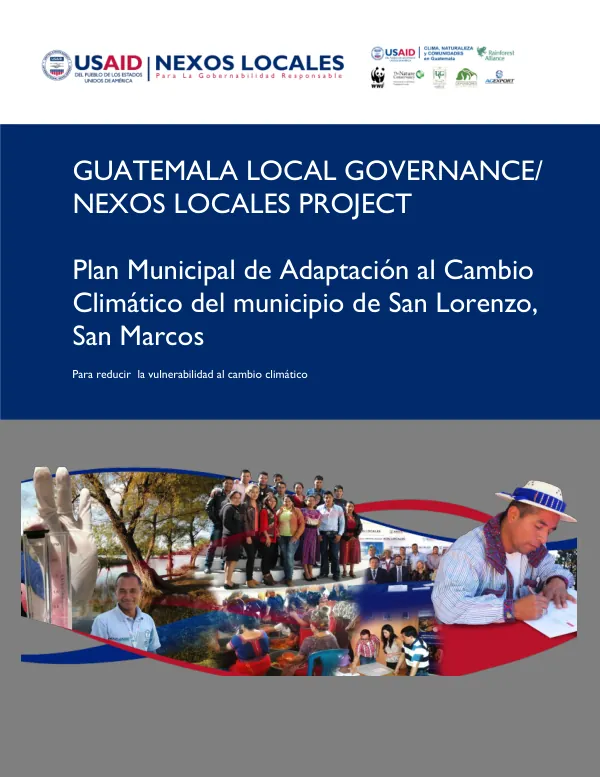
The Plan Municipal de Adaptación al Cambio Climático del municipio de San Lorenzo, San Marcos, was developed to reduce the municipality's vulnerability to climate change.
2016 · 28 pages
Sign in to readA free account is required to download.
Abstract
The plan was created through a consultation process involving local authorities, community leaders, and representatives of local organizations. The goal of the plan is to identify and prioritize strategies to address the impacts of climate-related threats on the municipality's natural and productive systems. The municipality of San Lorenzo is characterized by high levels of poverty, with the majority of the population relying on basic grains and crops that depend directly on natural resources. According to the document of analysis of vulnerability of the western highlands, San Lorenzo is the most vulnerable municipality in the department of San Marcos, with high levels of vulnerability and threats. The municipality's lands, which are mountainous, hilly, and steep, are fragile due to their geomorphology and become vulnerable due to deforestation with inadequate management, prone to landslides, landslides, and erosion over the long term. The plan identifies eight strategic lines to address the impact of climate-related threats, organized around focal objects and broken down into activities and budget. These strategies aim to achieve a desired condition within 20 years for each of the focal objects, proposing activities that generate expected results in the first two years and then the expected results in five years. The plan has been designed to be implemented by the municipality, which will coordinate inter-institutional coordination and sign agreements for financial and technical cooperation to execute the proposed activities within each of the strategic lines. The methodology used corresponds to the strategic planning of areas, based on the Open Standards for Conservation model developed by the Conservation Measures Alliance and adapted by The Nature Conservancy. The emphasis is on the second phase, which includes the following stages: vision, focal objects, threats, and strategies. The plan was developed through a participatory process involving local stakeholders, including community leaders, local organizations, and government institutions. The plan's implementation will be facilitated by the municipality, which will coordinate inter-institutional coordination and sign agreements for financial and technical cooperation to execute the proposed activities within each of the strategic lines. The plan identifies and proposes responsible parties, estimates costs and times for each activity and expected results, which will also be useful for monitoring and evaluating the progress and fulfillment of goals. The municipality of San Lorenzo is identified as one of the municipalities with the highest vulnerability in the department of San Marcos. The plan aims to reduce the municipality's vulnerability to climate change by identifying and prioritizing strategies to address the impacts of climate-related threats on the municipality's natural and productive systems. The plan's implementation will be facilitated by the municipality, which will coordinate inter-institutional coordination and sign agreements for financial and technical cooperation to execute the proposed activities within each of the strategic lines. The plan's development process involved a consultation process with local authorities, community leaders, and representatives of local organizations. The plan identifies eight strategic lines to address the impact of climate-related threats, organized around focal objects and broken down into activities and budget. These strategies aim to achieve a desired condition within 20 years for each of the focal objects, proposing activities that generate expected results in the first two years and then the expected results in five years.