USAID DEC
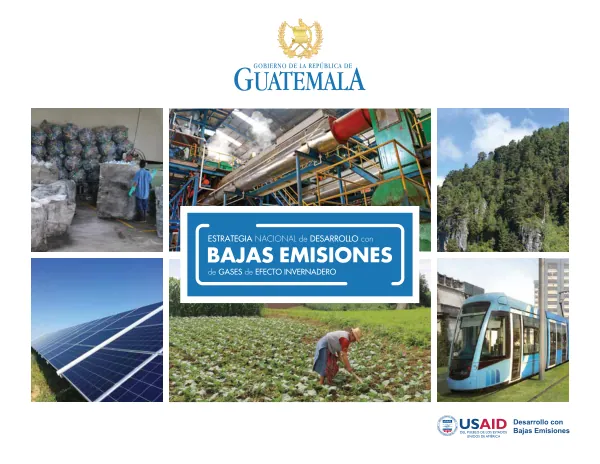
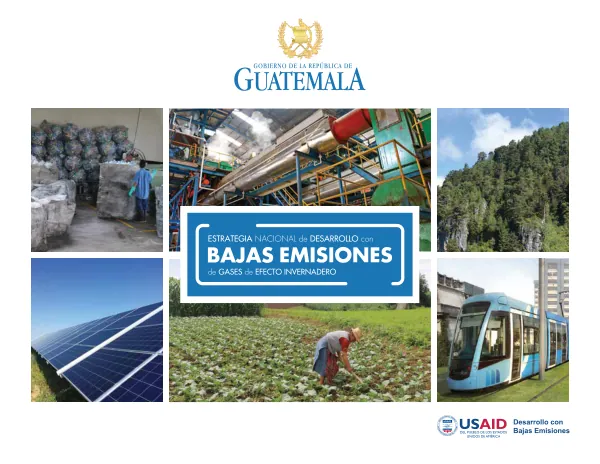
Estrategia Nacional de Desarrollo con Bajas Emisiones de Gases de Efecto Invernadero
Sign inUSAID
Estrategia Nacional de Desarrollo con Bajas Emisiones de Gases de Efecto Invernadero
The Guatemalan government has subscribed and ratified various conventions in the field of environment and climate change, including the United Nations Framework Convention on Climate Change (CMNUCC), the Kyoto Protocol, and the Paris Agreement.
2018 · 67 pages
Sign in to readA free account is required to download.
Abstract
Through these conventions, the country promotes the implementation of adaptation and mitigation actions for climate change through determined national contributions under the principle of common but differentiated responsibilities and in accordance with its current capacities. Guatemala presented its proposed National Determined Contribution (NDC) to the CMNUCC, aiming to reduce greenhouse gas emissions by 11% by 2030 compared to its emission trend based on constant growth between 1990 and 2005. This effort involves a reduction of up to 6 million tons of carbon dioxide equivalent per year by 2030. The Ministry of Environment and Natural Resources (MARN) has promoted policies and instruments for climate change adaptation and mitigation at the national level, including the National Policy on Climate Change, the Climate Change Act, and the National Action Plan for Adaptation and Mitigation to Climate Change. Additionally, it has promoted the implementation of other policies and instruments related to environmental management and the integral management of natural resources, whose impacts will help improve the country's efforts to adapt to and mitigate climate change. The Ministry of Economy has developed policies and strategies to promote productivity and competitiveness in a global market, including the National Competitiveness Policy 2018-2032, which aims to contribute to improving the quality of life, increasing human capital qualification, and generating greater development opportunities for all Guatemalans. The Ministry of Economy also promotes the National Quality Policy, which aims to improve national and international trade conditions, supporting the competitiveness of companies and consumer protection through tools and mechanisms in the areas of standardization, accreditation, metrology, technical regulation, and conformity evaluation procedures. The Ministry of Economy joins the efforts of the Ministry of Environment and Natural Resources, as well as the Secretariat of Planning and Programming of the Presidency, to present the Low Emissions Development Strategy for Guatemala, developed with the support of the United States Agency for International Development (USAID). This strategy represents an opportunity to improve competitiveness by identifying, with the participation of different actors in Guatemalan society, economic activities that generate higher greenhouse gas emissions to determine and prioritize mitigation options in accordance with the level of impact on reducing these emissions, thus contributing not only in economic terms but also to the protection of the environment and natural resources of our planet.