USAID DEC
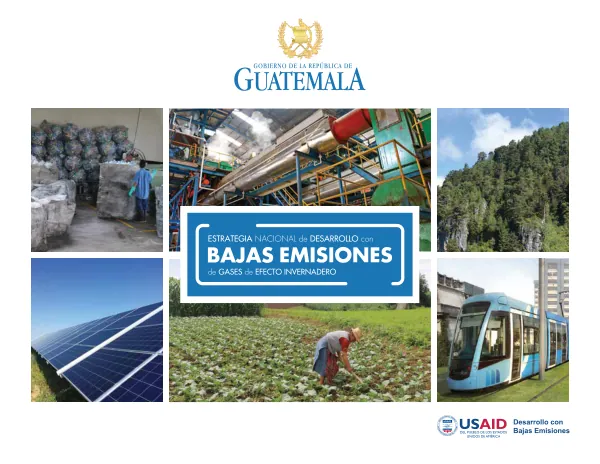
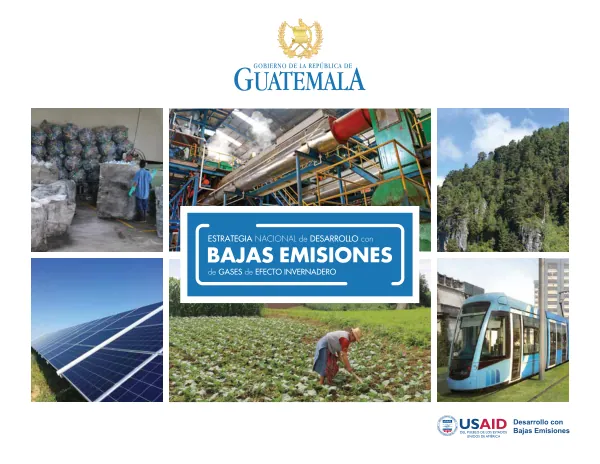
Estrategia Nacional de Desarrollo con Bajas Emisiones de Gases de Efecto Invernadero
Sign inUSAID
Estrategia Nacional de Desarrollo con Bajas Emisiones de Gases de Efecto Invernadero
The Guatemalan government has committed to reducing greenhouse gas emissions by 11% by 2030, as part of its Nationally Determined Contribution (NDC) under the Paris Agreement.
2018 · 67 pages
Sign in to readA free account is required to download.
Abstract
This effort aims to reduce emissions by up to 6 million tons of CO2 equivalent annually by 2030. The Ministry of Environment and Natural Resources (MARN) has been promoting policies and instruments for climate change adaptation and mitigation at the national level, including the National Policy on Climate Change and the Law on Climate Change. The Ministry of Economy has also developed policies and strategies to promote productivity and competitiveness in a global market, including the National Policy on Competitiveness 2018-2032. The Ministry of Economy has joined the effort to develop the National Strategy for Low Emissions Development in Guatemala, which aims to promote economic growth while reducing greenhouse gas emissions. The strategy identifies key sectors and activities that generate high emissions and prioritizes options for mitigation based on their impact on reducing emissions. The strategy is based on a participatory process involving different stakeholders from the Guatemalan society, including the private sector, academia, and civil society. The strategy aims to improve competitiveness, identify opportunities for economic growth, and promote sustainable development while reducing greenhouse gas emissions. The strategy also aims to increase the country's capacity to adapt to climate change and reduce its vulnerability to its impacts. The strategy identifies six key sectors that contribute to greenhouse gas emissions: energy, transportation and urban planning, industry, agriculture and livestock, forests and other land uses, and solid and liquid waste. The strategy proposes a range of options for mitigation, including the promotion of renewable energy sources, energy efficiency, and sustainable land use practices. The strategy also proposes the development of a national system for monitoring and reporting greenhouse gas emissions. The strategy is supported by the United States Agency for International Development (USAID) and is part of the country's efforts to implement the Paris Agreement. The strategy aims to contribute to the country's economic growth while reducing greenhouse gas emissions and promoting sustainable development.