CHEMONICS
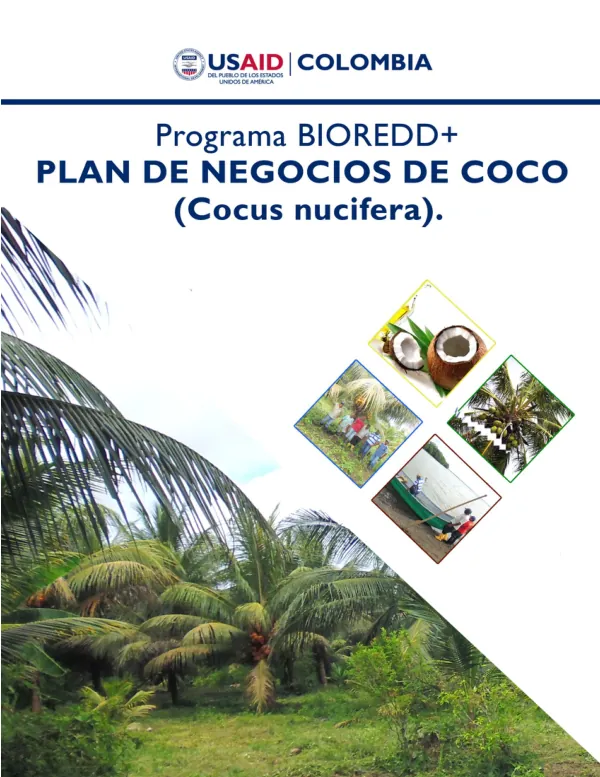
Plan de Negocios Achiote (Bixa Orellana)
The agricultural development initiative in Colombia focused on the production and commercialization of achiote (Bixa Orellana), a plant native to the Pacific region.
2015 · 42 pages
Sign in to readA free account is required to download.
Abstract
The initiative was part of the BIOREDD+ program, a USAID-funded project implemented by Chemonics International between 2011 and 2015. The program aimed to promote sustainable development and reduce deforestation in the region by supporting the development of value chains for non-timber forest products. The achiote value chain was identified as a priority by BIOREDD+, and a business model was developed to promote the production and commercialization of achiote and its derivatives. The model aimed to increase the income of local communities and reduce the pressure on natural resources. The achiote value chain consists of three main stages: production, processing, and commercialization. The production stage involves the cultivation and harvesting of achiote seeds, which are then transported to a local or veredal collection center. The processing stage involves the purchase of achiote seeds, manual or mechanical selection, and drying when necessary. The commercialization stage involves the industrialization of achiote seeds into final products, such as bixin and norbixin, and their sale in the national and international markets. The business model for the achiote value chain involves the participation of local communities and strategic allies in each stage of the chain. The model aims to generate income for local communities through the sale of achiote seeds and participation in the final product's profits. The production stage of the achiote value chain is the first link in the chain, involving the cultivation and harvesting of achiote seeds. The costs associated with this stage include labor, equipment, and transportation costs. The income generated from the sale of achiote seeds is used to cover these costs and generate a profit. The processing stage of the achiote value chain involves the purchase of achiote seeds, manual or mechanical selection, and drying when necessary. The costs associated with this stage include labor, equipment, and energy costs. The income generated from the sale of processed achiote seeds is used to cover these costs and generate a profit. The commercialization stage of the achiote value chain involves the industrialization of achiote seeds into final products, such as bixin and norbixin, and their sale in the national and international markets. The costs associated with this stage include labor, equipment, and marketing costs. The income generated from the sale of final products is used to cover these costs and generate a profit. The total costs of the achiote value chain include the costs associated with each stage of the chain. The total income generated from the sale of achiote seeds and final products is used to cover these costs and generate a profit. The achiote value chain has the potential to generate significant income for local communities and reduce the pressure on natural resources. However, the success of the chain depends on the effective participation of local communities and strategic allies in each stage of the chain.
Related documents
Documents in this collection
USAID DEC
LA SOYA BOLIVIANA HACIA EL MERCADO LIBRE EN LAS AMERICAS
Open record 2020
2020USAID DEC
Análisis de cómo el PAE logra el impulso o fortalecimiento de circuitos cortos de comercialización y cómo se vinculan los pequeños productores en los procesos de suministro y distribución de alimentos
Open record