USAID DEC
Planning for Hydropower Resilience in a Changing Climate: A Four Step Approach to Addressing Risk
Sign inBANK FOR WEST AFRICAN DEVELOPMENT
Planning for Hydropower Resilience in a Changing Climate: A Four Step Approach to Addressing Risk
Hydropower is a rapidly growing clean and renewable energy source worldwide, with an estimated 33 gigawatts of capacity put into operation globally in 2015.
2017 · 6 pages
Sign in to readA free account is required to download.
Abstract
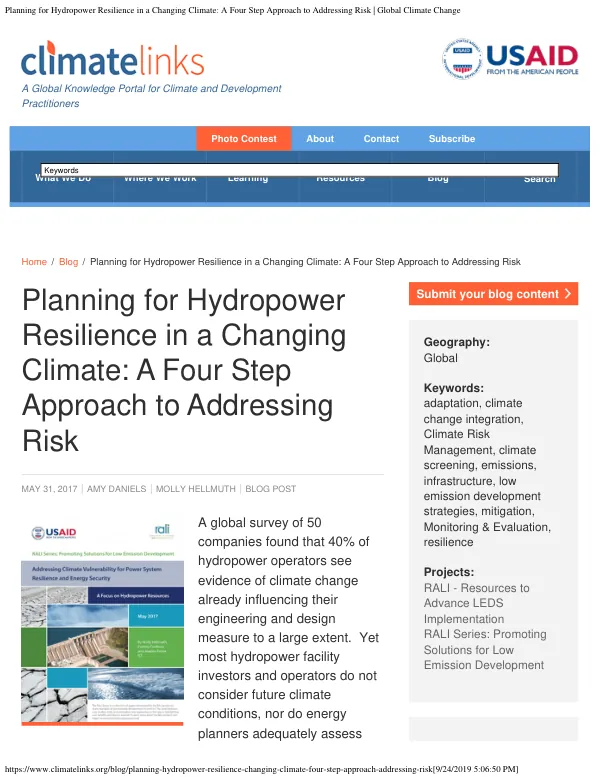
The benefits of hydropower are particularly salient for smaller-scale hydro, given its smaller environmental and social footprint. New finance instruments, such as green bonds and payments for water services, have made smaller-scale hydropower investment more attractive and feasible. However, a changing climate poses significant risks to hydropower generation capacity. Climate change affects hydroelectricity generation through changing rainfall patterns, rising temperatures, more frequent or intense droughts and extreme weather events, glacier and snow-pack melt, sea level rise, and resulting flooding. These changes can damage infrastructure and disrupt service, undermining the intended benefits of hydropower in improving energy access and security while reducing emissions relative to other power sources. A 2015 survey found that 40% of hydropower operators see evidence of climate change already influencing their engineering and design measures to a large extent. Yet, most hydropower facility investors and operators do not consider future climate conditions, nor do energy planners adequately assess climate risks in power planning. To address these risks, planners should consider both climate risks and emissions reductions opportunities across energy supply and demand chains, along with interdependencies between variable renewable resources. A four-step approach has been outlined to address climate risks to hydropower and power system performance. The approach involves assessing climate risks and vulnerabilities, identifying, evaluating, and prioritizing options to address climate risks, integrating climate change into project implementation, power planning, operations, and maintenance, and monitoring, evaluating, and adjusting plans over time. This approach provides a roadmap for planners and investors to follow in undertaking these steps and helps power planners and investors better understand and manage climate risks to hydropower and power system performance. The four-step approach is outlined in a paper titled "Addressing Climate Vulnerability for Power System Resilience and Energy Security," developed by the RALI Project. The paper explains how climate change affects hydropower and other power generation infrastructure and resources, and provides guidance on building climate resilience in the power sector. The authors of the paper, Amy Daniels and Molly Hellmuth, are experts in climate risk management and resilient development, with extensive experience in developing climate risk management strategies, tools, models, and guidelines for various clients. The information provided on this topic highlights the importance of considering climate risks in power planning and the need for a four-step approach to address these risks. By following this approach, planners and investors can better understand and manage climate risks to hydropower and power system performance, and promote the resilience of individual hydropower plants and the power system as a whole.
Related documents