GOVERNMENT OF COLOMBIA
Why Land Rights Matter
Land rights and land governance systems are weak in many countries, particularly in developing regions.
2015 · 2 pages
Sign in to readA free account is required to download.
Abstract
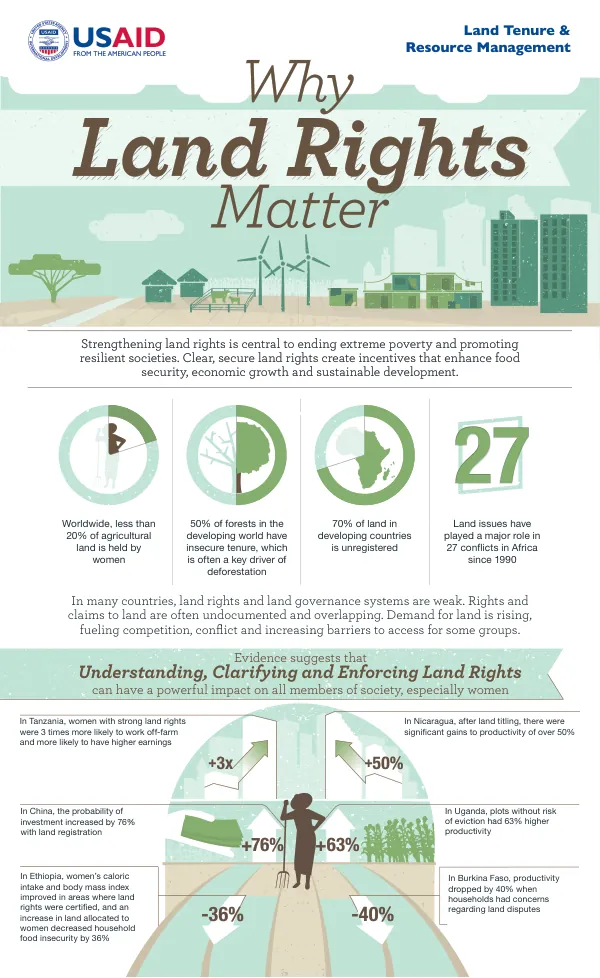
Rights and claims to land are often undocumented and overlapping, fueling competition, conflict, and increasing barriers to access for some groups. Land issues have played a major role in 27 conflicts in Africa since 1990. In developing countries, 70% of land is unregistered, and less than 20% of agricultural land is held by women. Strengthening land rights is central to ending extreme poverty and promoting resilient development. Clear, secure land rights create incentives that enhance food security, economic growth, and development. In China, the probability of investment increased by 76% with land registration. Understanding, clarifying, and enforcing land rights can have a powerful impact on all members of society, especially women. Evidence suggests that secure land rights can lead to significant economic benefits. In Tanzania, women with strong land rights were 3 times more likely to work off-farm and had higher earnings. In Ethiopia, women's caloric intake and body mass index improved in areas where land rights were certified, and an increase in land allocated to women decreased household food insecurity by 36%. In Nicaragua, after land titling, there were significant gains to productivity of over 50%. In Uganda, plots without risk of eviction had 63% higher productivity. The USAID is supporting the Government of Colombia to develop tools, systems, and skills to address the land issues at the heart of the nation's conflict. The Colombia Land and Ordnance Development Project has been active since 2013. The Global Land Tool is available at http://bit.ly/1JVgrqV. The Food and Agriculture Organization of the UN is available at http://bit.ly/1BmRA4. Rights and Resources Initiatives are available at http://bit.ly/1zMIpuE. The USAID has active land tenure programs in 24 countries, with $300 million committed to those programs. The programs directly benefit 7 million women and vulnerable populations in land restitution and formalization. The programs have resolved 3,000 land disputes. The USAID works to improve land and property governance and strengthen rights for all members of society, especially women.
Related documents