NORTH CAROLINA A&T STATE UNIVERSITY
Plant Disease Agents
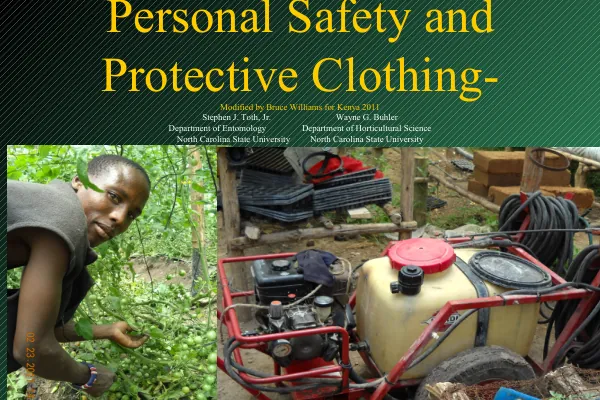
Personal safety and protective clothing are critical components of pesticide application.
2011 · 24 pages
Sign in to readA free account is required to download.
Abstract
Acute toxicity to pesticides occurs following brief exposure, typically within minutes or hours, and symptoms are usually reversible. However, chronic toxicity can result from prolonged exposure, often weeks or years, and may lead to severe health consequences. Allergic reactions to pesticides can also occur, involving an immune system response that can be permanent and worsen with repeated exposure. Pesticides can be absorbed through various routes, including inhalation, oral ingestion, and dermal contact. Inhalation involves breathing dusts and vapors of pesticides, while oral ingestion occurs through eating, drinking, or smoking with unwashed hands after handling pesticides. Dermal contact can occur through pesticide spills and splashes, open cuts in the skin, or inadequate protective clothing when applying pesticides. The effects of acute toxicity to pesticides vary depending on the route of exposure. Inhalation can cause pain or tightness in the chest, while oral ingestion may result in burning in the mouth, sore throat, and upset stomach. Dermal exposure can lead to irritation, temporary or permanent blindness, itching, blisters, and rash. Symptoms of acute toxicity can also include blurred vision, diarrhea, dizziness, excessive sweating, fatigue, headache, vomiting, and stomach cramps. Chronic toxicity to pesticides can result in a range of severe health effects, including tumors, genetic effects, miscarriages, impotence, birth defects, infertility, sterility, and nervous system disorders. These effects may occur from a single pesticide exposure that does not become apparent until much later or from repeated exposures over a long period of time. Allergic reactions to pesticides can also occur, involving systemic effects such as asthma and shock, skin irritation, and eye and nose irritation. In the event of pesticide poisoning, emergency response involves administering first aid, calling a physician or going to a hospital, taking the pesticide label or container with you, and contacting a poison control center. First aid for dermal exposure includes drenching the skin with water, removing contaminated clothing, washing the body with mild soap and water, and applying loose, clean, and dry covering to burns.
Related documents