USAID DEC
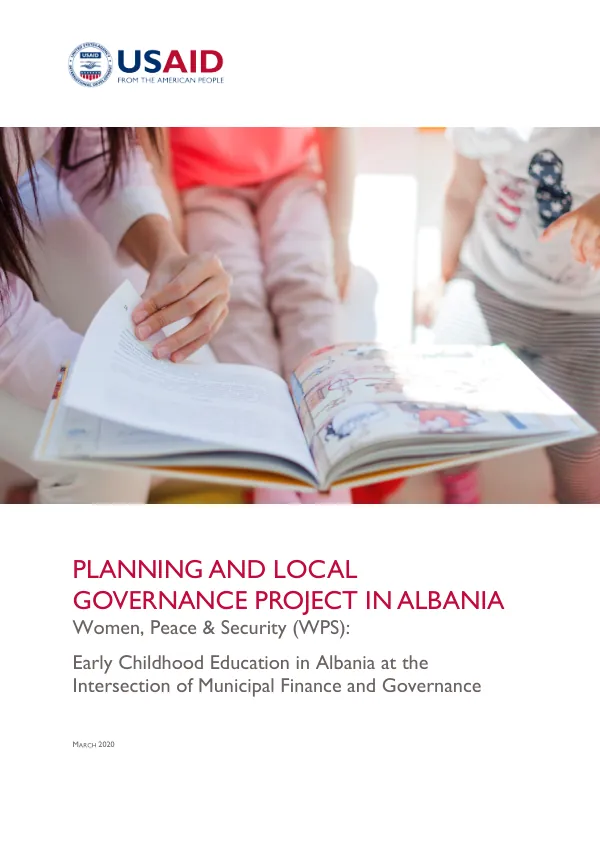
Policy Paper - Early Childhood Education at the Intersection of Municipal Finance and Governance
Sign inTETRA TECH
Policy Paper - Early Childhood Education at the Intersection of Municipal Finance and Governance
The decentralization of education responsibilities to local governments in Albania began in the early 2000s.
2020 · 42 pages
Sign in to readA free account is required to download.
Abstract
By 2015, Albania consolidated 373 urban and rural local governments into 61 municipalities, making them fully responsible for managing and financing 2,100 public preschools. Most municipalities now spend more on preschool education than any other function, employing over 6,500 people and serving up to 74,000 children. The current management and financing of preschools in Albania are complex and influenced by broader European trends. The 2015 Local Self-Government Law eliminated the category of "shared functions" from Albanian Law, making preschool education a municipal "own function." This change requires that financial support for preschool education be provided to municipalities through the freely disposable "Unconditional Transfer." However, the national government has failed to put monies designed to support preschool education into the Unconditional Transfer, instead supporting the function through an "Unconditional Sectoral Transfer for Preschool Education." The government's decision to redirect funds from the Unconditional Transfer to the Unconditional Sectoral Transfer for Preschool Education in 2019 was intended to increase funding for preschool education. However, the procedure was non-transparent, and some municipalities did not spend the funds as intended. To address these issues, we recommend that the funds currently being provided to municipalities for preschool education be increased and folded into the Unconditional Transfer. This would require increasing the share of the GDP used to define the size of the Unconditional Transfer, expanding the percentage of the transfer allocated to municipalities based on the number of pupils attending their schools, and introducing coefficients to adjust the allocation in accordance with the differential costs of providing preschool education in rural and urban areas. Additionally, we recommend that the Unconditional Transfer for Preschool education be increased to include costs of didactic materials and basic school maintenance. Furthermore, we suggest introducing a categorical grant program to provide one free, cold meal a day in all public preschools. If implemented properly, such a program would increase enrollment and attendance rates while also improving the data that local and national officials need to make reasonable decisions about where to invest in preschools. This would require a significant increase in funding for preschool education, which would need to be addressed through a combination of increased funding and a more transparent and predictable allocation process. The future of early childhood education in Albania is inextricably linked to the future of municipal management and finance. Policy makers need to look at early childhood education through a municipal lens and to municipal finance and management through the lens of early childhood education. Albania has significantly underfunded both its preschools and its local governments, and until the budget priorities of the national government change, little good will happen in either early childhood education or municipal governance. Improving preschool education in Albania will require many years of politically contentious and technically difficult decisions. Municipalities will need to address the complex problems that underfunding and demographic change have bequeathed to them, including inherited preschool networks that are physically run down, radically different staffing patterns, pupil/teacher ratios, and enrollment rates. To meet these challenges, municipalities will require both more funding and funding that is predictable from year to year. The reliability of data on preschool enrollment and attendance is also a critical issue. Without accurate enrollment and attendance data, it is impossible to make informed decisions about the best allocation of scarce resources. However, improving the reliability of enrollment and attendance data will require as much focus on changing institutional cultures as it will on developing new reporting systems and procedures.
Related documents
Documents in this collection
 2020
2020USAID DEC
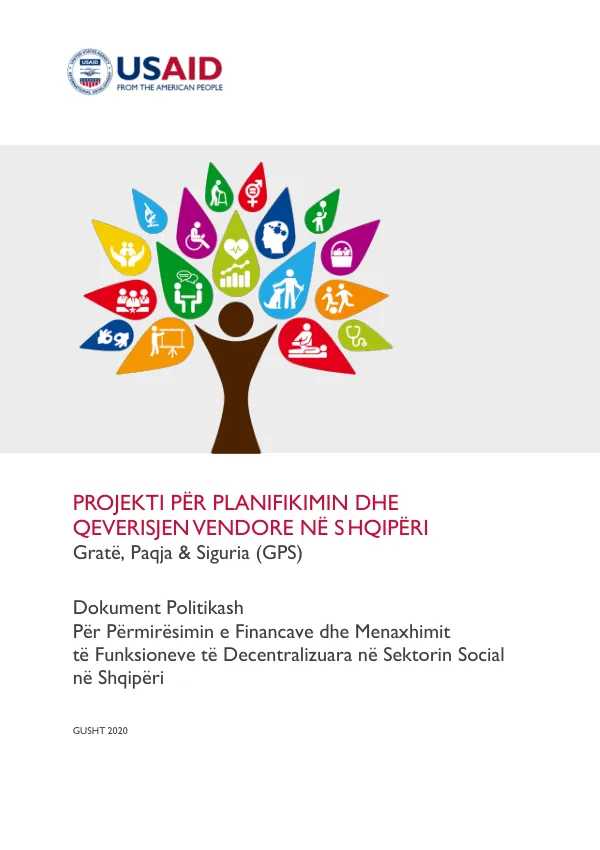
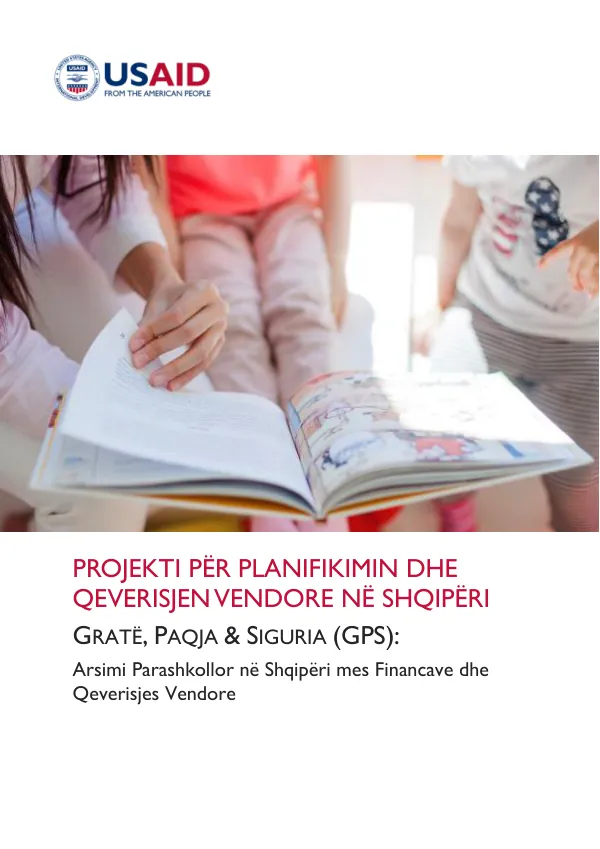
Projekti për Planifikimin dhe Qeverisjen Vendore në Shqipëri: Gratë, Paqja & Siguria (GPS): Arsimi Parashkollor në Shqipëri mes Financave dhe Qeverisjes Vendore
Open record 2020
2020USAID DEC