MINISTRY OF HEALTH
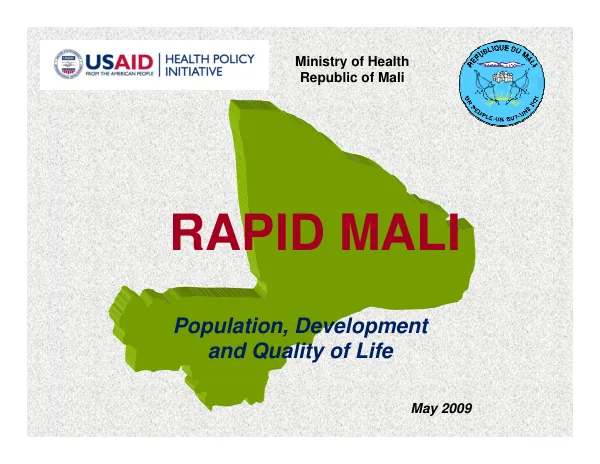
Population, Development, and Quality of Life in Mali: What is RAPID?
The Republic of Mali's vision for the future emphasizes the importance of combining wisdom, dynamism, and ownership among its people to achieve a prosperous, serviceable, and modern nation.
2009 · 56 pages
Sign in to readA free account is required to download.
Abstract
This vision, outlined in the document "Population, Development, and Quality of Life," highlights the significance of population issues in relation to Mali's ability to achieve its goals in the coming decades. Mali's population has experienced significant growth since independence in 1960, with the population tripling over this period. The country's population is characterized as young, with a high proportion of individuals in the reproductive age group. The total fertility rate in Mali has not changed significantly since 1987, indicating a persistent high birth rate. The average number of children per woman in Mali has remained relatively stable over the past two decades, with an average of 6-7 children per woman. The high fertility rate in Mali has significant implications for the country's socio-economic development. The impact of increased population growth on the socio-economic sectors is expected to be substantial, with potential effects on education, employment, and healthcare. The high fertility rate also has a direct impact on maternal and infant health, with increased risks associated with childbirth and child mortality. The relationship between population growth and economic development is complex and multifaceted. On one hand, a growing population can provide a larger workforce and contribute to economic growth. On the other hand, rapid population growth can put pressure on resources, infrastructure, and services, potentially hindering economic development. In the case of Mali, the high fertility rate is expected to have a significant impact on the country's ability to achieve its vision for the future. The document highlights the need for a policy response to address the challenges associated with high fertility rates in Mali. This includes increasing access to family planning services, improving maternal and infant health, and promoting education and economic opportunities for women. By addressing these challenges, Mali can work towards achieving its vision for a prosperous, serviceable, and modern nation.