USAID DEC
Potential of Floating Photovoltaic Technology in Pakistan
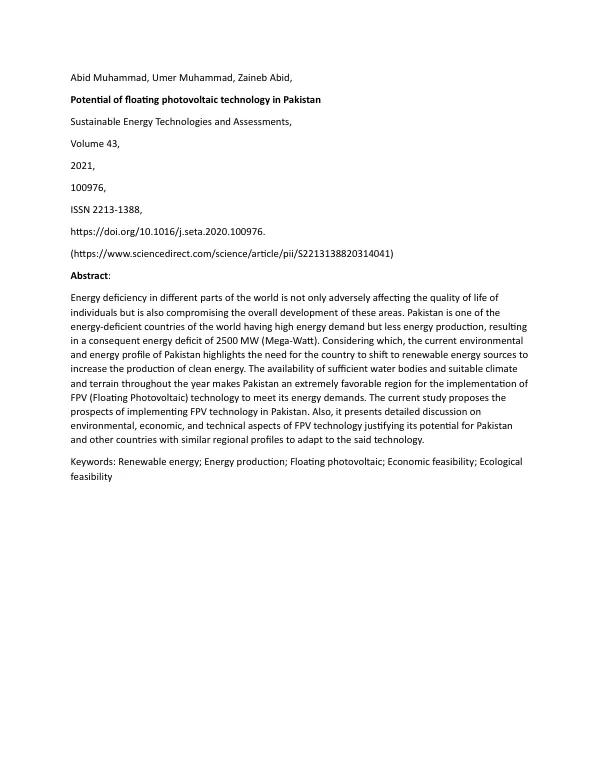
Pakistan's energy demand is significantly higher than its production, resulting in a substantial energy deficit of 2500 MW.
2021 · 1 pages
Sign in to readA free account is required to download.
Abstract
The country's environmental and energy profile highlights the need to transition to renewable energy sources to increase clean energy production. Pakistan's favorable climate, terrain, and abundant water bodies make it an ideal location for implementing floating photovoltaic (FPV) technology to meet its energy demands. FPV technology involves installing photovoltaic panels on water bodies, such as reservoirs, lakes, or rivers, to generate electricity. This approach has several advantages, including reduced land use, lower environmental impact, and increased energy production. The technology also offers economic benefits, as it can be implemented on existing water bodies, reducing the need for new land acquisition and infrastructure development. A study on the potential of FPV technology in Pakistan highlights its environmental, economic, and technical feasibility. The technology has the potential to reduce greenhouse gas emissions, mitigate climate change, and promote sustainable development. FPV systems can also provide a reliable source of electricity, reducing dependence on fossil fuels and improving energy security. The economic feasibility of FPV technology in Pakistan is supported by its potential to generate significant revenue through electricity sales. The technology can also create employment opportunities in the renewable energy sector, contributing to the country's economic growth. Furthermore, FPV systems can help reduce energy costs for households and industries, improving their competitiveness in the global market. The technical aspects of FPV technology in Pakistan have been extensively studied, and the results indicate that the technology is suitable for the country's climate and terrain. The study highlights the importance of proper planning, design, and implementation of FPV systems to ensure their optimal performance and longevity. The technology's potential to meet Pakistan's energy demands is significant, and its adoption can contribute to the country's transition to a low-carbon economy.