USAID DEC
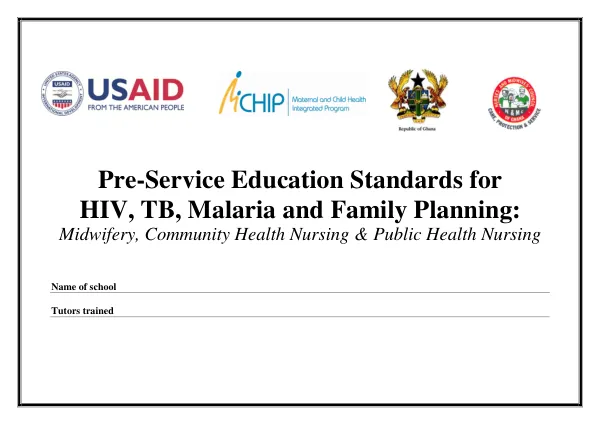
Pre-Service Education Standards for HIV, TB, Malaria and Family Planning: Midwifery, Community Health Nursing & Public Health Nursing
Sign inJHPIEGO
Pre-Service Education Standards for HIV, TB, Malaria and Family Planning: Midwifery, Community Health Nursing & Public Health Nursing
The pre-service education standards for HIV, TB, Malaria, and Family Planning are outlined for midwifery, community health nursing, and public health nursing.
1 pages
Sign in to readA free account is required to download.
Abstract
The standards aim to equip students with the necessary knowledge, skills, and attitudes to address these health issues effectively. The standards emphasize the importance of integrating HIV, TB, Malaria, and Family Planning into the curriculum of midwifery, community health nursing, and public health nursing programs. This integration aims to equip students with the necessary knowledge and skills to address the health needs of individuals, families, and communities. The standards outline specific learning objectives for each of the four health areas. For HIV, the standards emphasize the importance of understanding the epidemiology, pathophysiology, and prevention strategies. For TB, the standards emphasize the importance of understanding the epidemiology, diagnosis, and treatment options. For Malaria, the standards emphasize the importance of understanding the epidemiology, diagnosis, and prevention strategies. For Family Planning, the standards emphasize the importance of understanding the principles of family planning, reproductive health, and family planning methods. The standards also emphasize the importance of developing the skills of students to provide comprehensive care to individuals, families, and communities. This includes developing the skills to assess, diagnose, and manage health problems related to HIV, TB, Malaria, and Family Planning. The standards also emphasize the importance of developing the skills to provide health education, counseling, and support to individuals, families, and communities. The standards also emphasize the importance of developing the attitudes of students to address the health needs of individuals, families, and communities. This includes developing the attitudes to respect the rights of individuals, families, and communities, and to promote health and well-being. The tutors trained in these standards are expected to provide students with the necessary knowledge, skills, and attitudes to address the health needs of individuals, families, and communities. The tutors are expected to use a variety of teaching methods, including lectures, discussions, and practical exercises, to ensure that students acquire the necessary knowledge, skills, and attitudes. The implementation of these standards aims to improve the quality of care provided by midwives, community health nurses, and public health nurses. The implementation of these standards aims to improve the health outcomes of individuals, families, and communities.