JHPIEGO
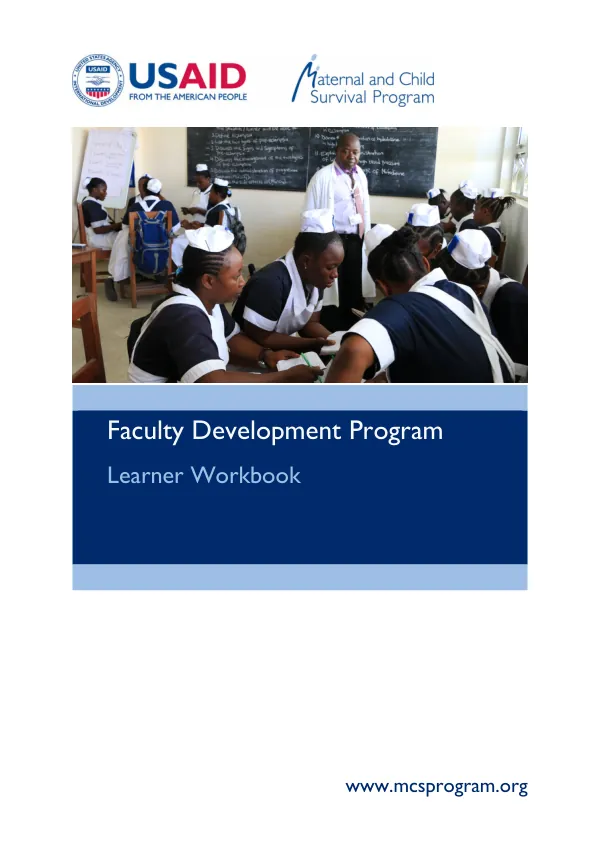
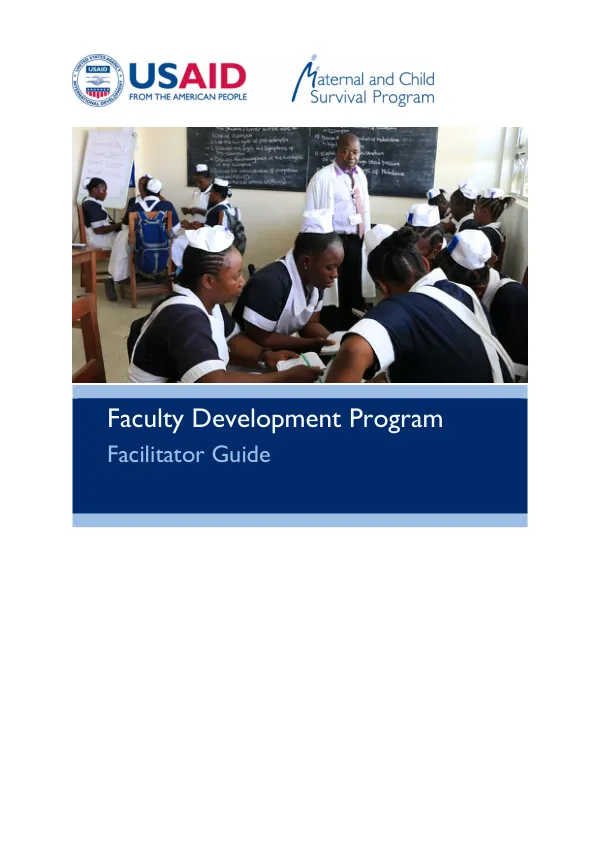
Faculty Development Program Facilitator Guide
The Faculty Development Program is a 4-month blended learning initiative designed to enhance the teaching skills of faculty members.
2018 · 63 pages
Sign in to readA free account is required to download.
Abstract
The program provides a supportive environment for faculty to build confidence, leadership, change management, and teaching skills. The program is centered on preparation of a personal portfolio relevant to teaching skills and includes three instructor-led training sessions and two rounds of individualized learning facilitated by an online forum for questions and peer support. The program goals are to identify key elements of effective leadership, demonstrate excellence in classroom teaching, facilitating clinical practice, assessing learning, and evaluating teaching. Additionally, the program aims to ensure gender-sensitive pedagogical approaches and a gender-equitable environment in the classroom and clinical settings. Participant selection criteria include demonstrated commitment to their academic institution, commitment to participation in the program, and willingness to self-evaluate and reflect on performance. The teaching and learning methods employed in the program include instructor-led training sessions, structured self-study via eLearning, and individualized learning. Each instructor-led training session includes a schedule, session plan, and resources and exercises. The eLearning modules contain an overview of the module, resources to review, activities to complete, short audio files, short narrated presentations, resources materials, exercises, and a knowledge assessment. The program is designed to be completed over a 4-month period, with three instructor-led training sessions and two rounds of individualized learning. The program facilitator guide provides a comprehensive resource for program facilitators, including roles and responsibilities, learner assignment completion tracking sheets, assessment tools, and checklists for demonstration skills, coaching, and basic facilitation skills. The Faculty Development Program is supported by the Maternal and Child Survival Program, a global USAID initiative to introduce and support high-impact health interventions in 25 priority countries. The program is made possible by the generous support of the American people through the United States Agency for International Development (USAID) under the terms of the Cooperative Agreement AID-OAA-A-14-00028. The program's blended-learning approach includes a combination of instructor-led training sessions, structured self-study via eLearning, and individualized learning facilitated by an online forum for questions and peer support. The program's focus on preparation of a personal portfolio relevant to teaching skills and its emphasis on gender-sensitive pedagogical approaches and a gender-equitable environment in the classroom and clinical settings make it a valuable resource for faculty development. The program's assessment methods include successful completion of eLearning modules, participation in instructor-led training sessions, and completion of a personal portfolio. The program's evaluation will provide valuable insights into the effectiveness of the program and inform future improvements.
Related documents