INTERNATIONAL CONFEDERATION OF MIDWIVES
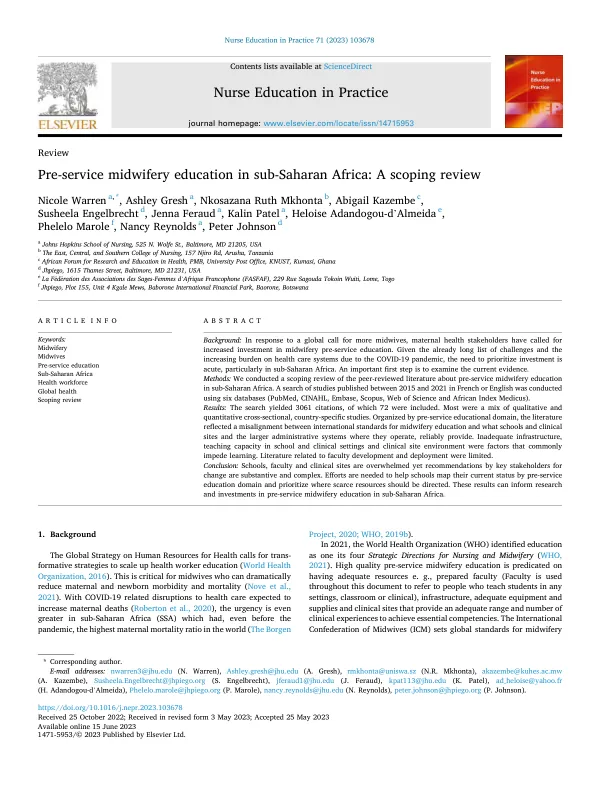
Pre-service midwifery education in sub-Saharan Africa: A scoping review
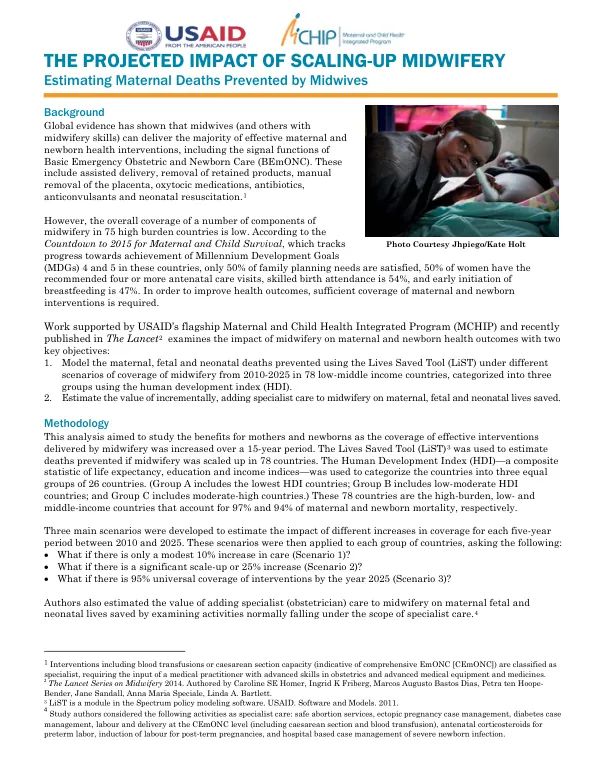
Pre-service midwifery education in sub-Saharan Africa is a critical area of focus due to the region's high maternal mortality ratio and the need for increased investment in midwifery education.
2023 · 10 pages
Sign in to readA free account is required to download.
Abstract
The Global Strategy on Human Resources for Health calls for transformative strategies to scale up health worker education, including midwives, who can dramatically reduce maternal and newborn morbidity and mortality. The World Health Organization (WHO) has identified education as one of its four Strategic Directions for Nursing and Midwifery, emphasizing the importance of high-quality pre-service midwifery education. The International Confederation of Midwives (ICM) sets global standards for midwifery pre-service education, which include governance, faculty, students, midwifery program and curriculum, resources, and quality improvement. However, despite these standards, there is wide variation in the quality of midwifery pre-service education programs in sub-Saharan Africa. Many schools in the region are operating beyond capacity, resulting in students being poorly prepared. The WHO and other maternal health stakeholders have called for increased investment in midwifery pre-service education, but the best way to target investment is unclear. A scoping review was conducted to summarize the current evidence around midwifery pre-service education in sub-Saharan Africa. The review included 72 citations published in French or English between 2015 and 2021. The search yielded a diverse range of studies, including qualitative and quantitative cross-sectional studies, as well as country-specific studies. The literature reflected a misalignment between international standards for midwifery education and what schools and clinical sites reliably provide. Inadequate infrastructure, teaching capacity, and clinical site environment were common factors that impede learning. The review also highlighted the need for faculty development and deployment, which were limited in the literature. The results of the review suggest that schools, faculty, and clinical sites are overwhelmed, and recommendations for change are substantive and complex. Efforts are needed to help schools map their current status by pre-service education domain and prioritize where scarce resources should be directed. These results can inform research and investments in pre-service midwifery education in sub-Saharan Africa. The review included a sample of 72 citations, representing 39 countries in sub-Saharan Africa. Most of the countries represented are members of professional midwifery and/or nursing organizations. The literature highlighted the importance of addressing the challenges faced by midwifery pre-service education programs in the region, including inadequate infrastructure, teaching capacity, and clinical site environment. The review also emphasized the need for faculty development and deployment, as well as the importance of aligning midwifery education with international standards. The results of the review have implications for policy and practice in sub-Saharan Africa. They suggest that investment in midwifery pre-service education is critical to improving maternal and newborn health outcomes in the region. The review also highlights the need for a comprehensive approach to addressing the challenges faced by midwifery education programs, including infrastructure development, faculty capacity building, and clinical site improvement. By addressing these challenges, it may be possible to improve the quality of midwifery education and ultimately reduce maternal and newborn mortality in sub-Saharan Africa.
Related documents