USAID
President’s Emergency Plan for AIDS Relief Quarterly Report
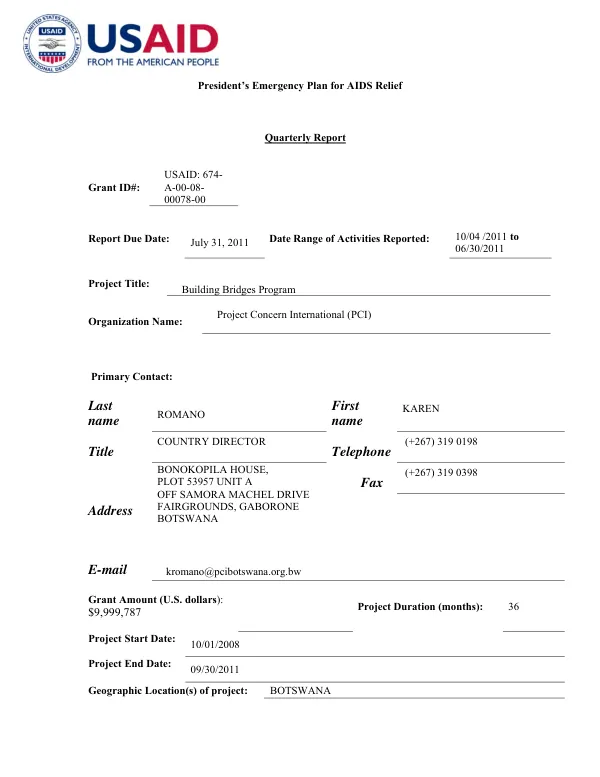
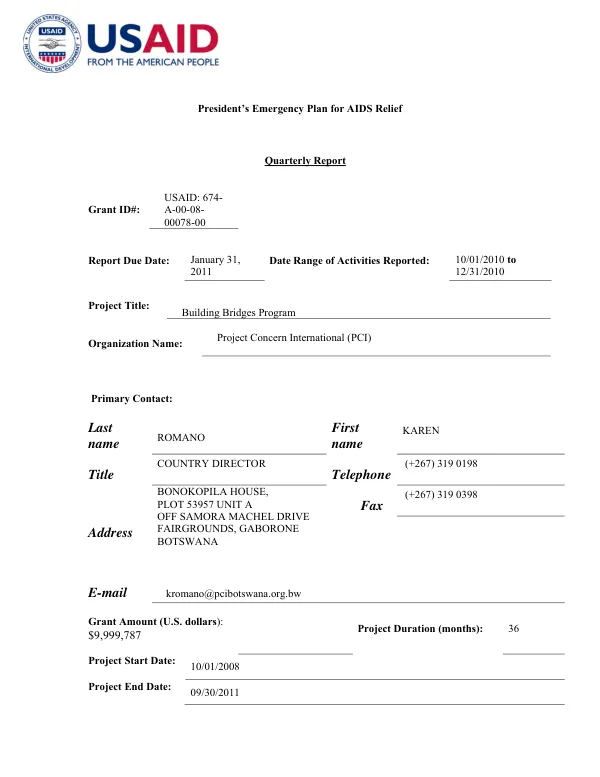
The Building Bridges Program in Botswana, implemented by Project Concern International (PCI), aims to strengthen the role of civil society organizations (CSOs) in delivering comprehensive care and support services for HIV-affected families and vulnerable youth.
2011 · 25 pages
Sign in to readA free account is required to download.
Abstract
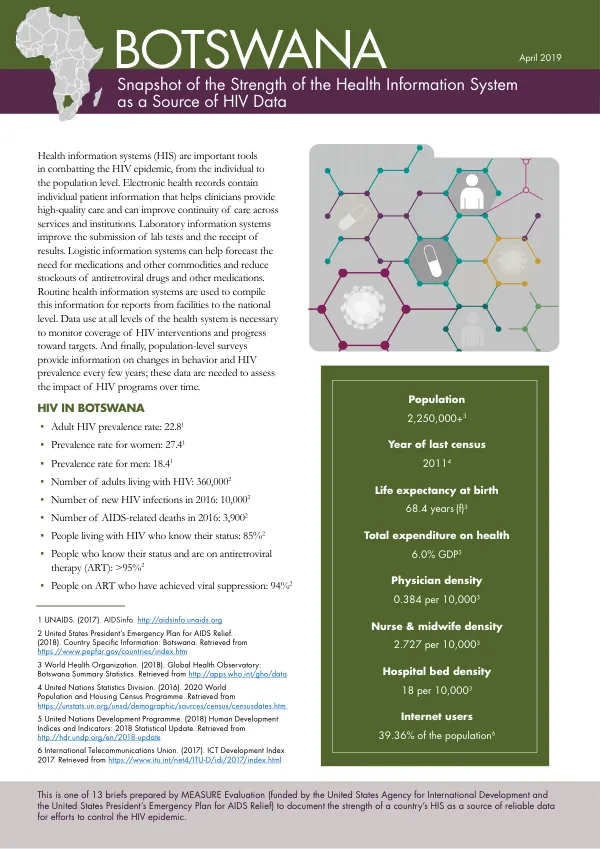
The program is funded by the President's Emergency Plan for AIDS Relief (PEPFAR) and has a grant amount of $9,999,787. The program's goal is to improve and expand CSO delivery of integrated HIV/AIDS services for affected/infected children and families. To achieve this, PCI provides sub-grants and technical assistance to 11 NGO partners, as well as funding support and technical assistance to two umbrella organizations. The program also collaborates with government counterparts at national and district levels. The program has a staff complement of 18, with all positions filled. However, the Program Officer for Palliative Care is tendering in a resignation and will be leaving PCI early next quarter. PCI does not intend to replace staff who leave at this time, but will keep sharing out responsibilities among current staff and hire short-term assistance as needed. Key activities and progress achieved by the program include the delivery of comprehensive HIV/AIDS care and support services at family and community level by PCI-supported NGO partners. With assistance from PCI, 11 NGO partners continued to provide HIV/AIDS care and support services to families and communities during quarter one of FY 11 (October – December 2010). PCI capacity building efforts have led to improved and more effective approaches to service delivery, including the use of home visits, pre-school education, after-school care, and kids clubs. The program has also implemented the Journey of Life (JOL) methodology, which has led to community mobilization and the identification of means to deal with problems affecting families. The concept of Food, Nutrition, and Livelihood Security (FNLS) has been embraced by vulnerable groups, and community members participating in FNLS activities have a restored sense of dignity and confidence in themselves. The program has achieved significant results in terms of PEPFAR required care and support indicators. A total of 5,609 beneficiaries were reached, including 2,051 adults and 3,558 children. The program also provided a minimum of one care service to 5,609 beneficiaries, including 2,051 adults and 3,558 children. Additionally, 1,862 HIV-positive adults and children received a minimum of one clinical service, and 1,571 eligible clients received food and/or other nutrition services. The program has also made progress in terms of education and vocational training, with 521 eligible children provided with education and/or vocational training. Furthermore, 284 eligible adults and children were provided with protection and legal services, and 3,368 eligible adults and children were provided with psychological, social, or spiritual support. Overall, the Building Bridges Program in Botswana has made significant progress in strengthening the role of CSOs in delivering comprehensive care and support services for HIV-affected families and vulnerable youth. The program's achievements demonstrate its commitment to improving the lives of those affected by HIV/AIDS in Botswana.
Related documents