USAID DEC
Prevenir la resurgence de la maladie à virus ébola grâce à la surveillance à base communautaire
Sign inINTERNATIONAL MEDICAL CORPS
Prevenir la resurgence de la maladie à virus ébola grâce à la surveillance à base communautaire
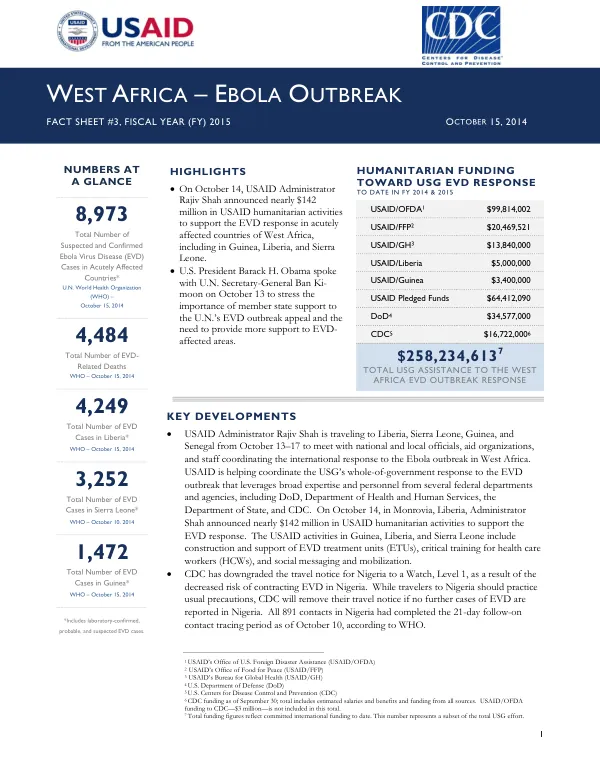
In Guinea, the first cases of Ebola were reported in December 2013, marking the beginning of the most severe Ebola outbreak in the world.
2018 · 5 pages
Sign in to readA free account is required to download.
Abstract
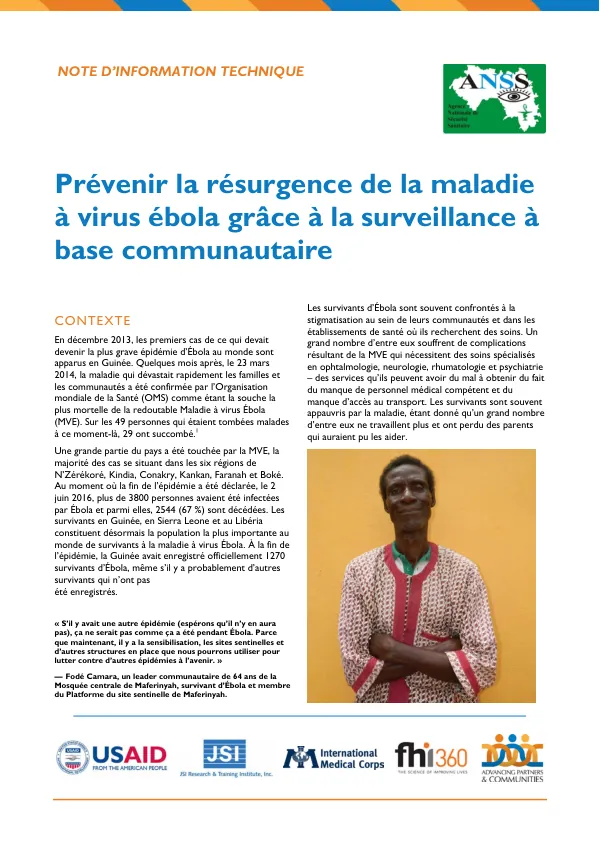
By March 2014, the disease had spread rapidly, infecting 49 people, of whom 29 died. The outbreak affected a large portion of the country, with the majority of cases occurring in the six regions of N'Zérékoré, Kindia, Conakry, Kankan, Faranah, and Boké. The Ebola outbreak had a devastating impact on the fragile healthcare system in Guinea, which comprises 1386 public health facilities with 977 doctors and 4756 nurses and midwives. During the outbreak, 199 healthcare workers, including clinical staff and other personnel, were infected with Ebola, resulting in the deaths of 109. In 2016, the Advancing Partners & Communities (APC) project, funded by USAID and implemented by JSI Research & Training Institute, Inc., intervened to support the Ministry of Health (MS) and the National Agency for Health Security (ANSS) in their efforts to support the post-Ebola healthcare system, establish measures to prevent future outbreaks, and provide quality services to survivors. To prevent future Ebola outbreaks through early detection and rapid response, the APC and the International Medical Corps, a beneficiary of APC funding, helped the Guinean Ministry of Health establish an early warning system by setting up sentinel sites. The surveillance program aims to detect early signs of fever and other symptoms or diseases among Ebola survivors and their immediate contacts. These cases are quickly reported to local health authorities and the ANSS national office, triggering a response according to a defined protocol. Each sentinel site collects detailed health data in its area of intervention on Ebola survivors and their families.