ACTION CONTRE LA FAIM
West Africa – Ebola Outbreak Fact Sheet #3, Fiscal Year (FY) 2015
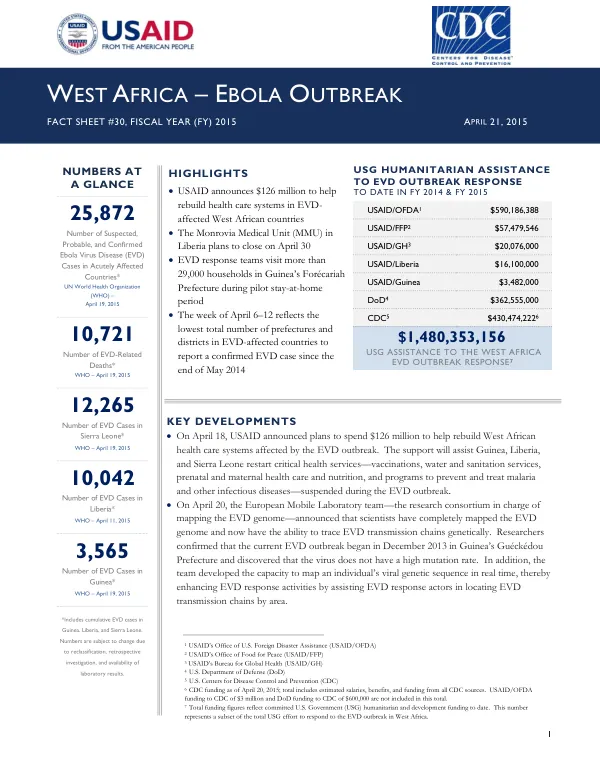
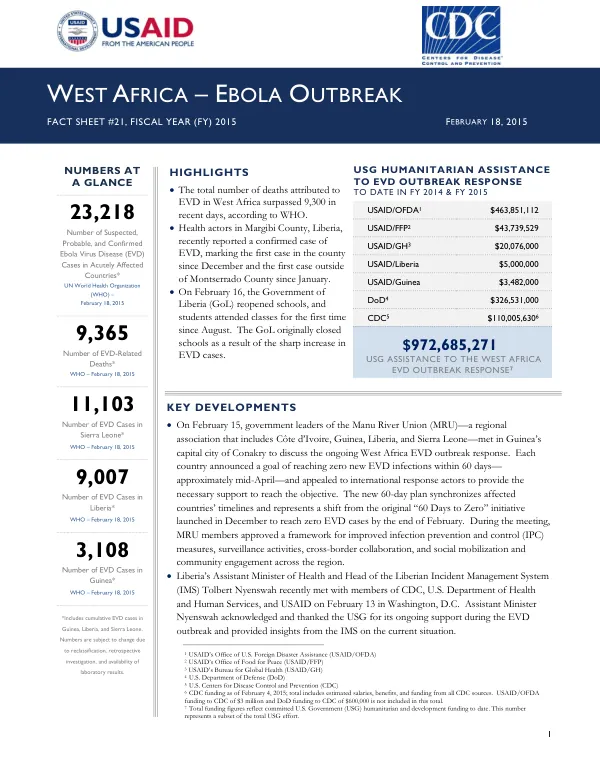
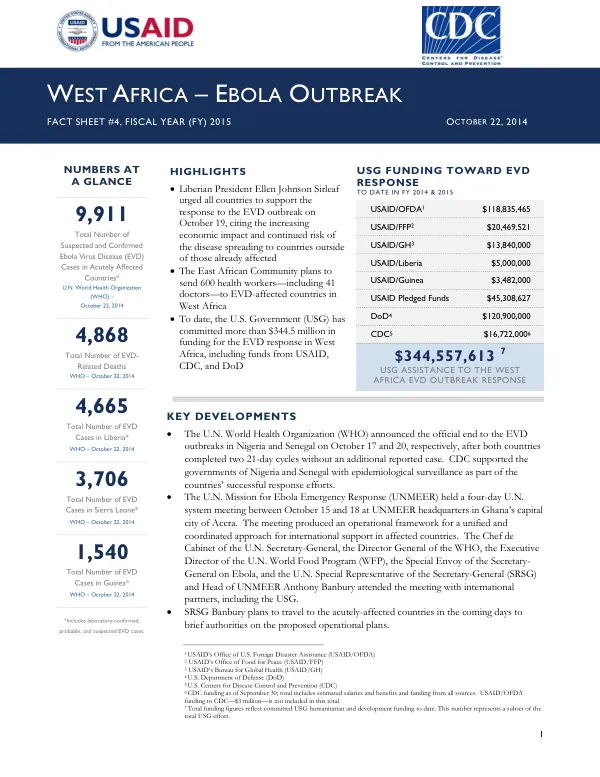
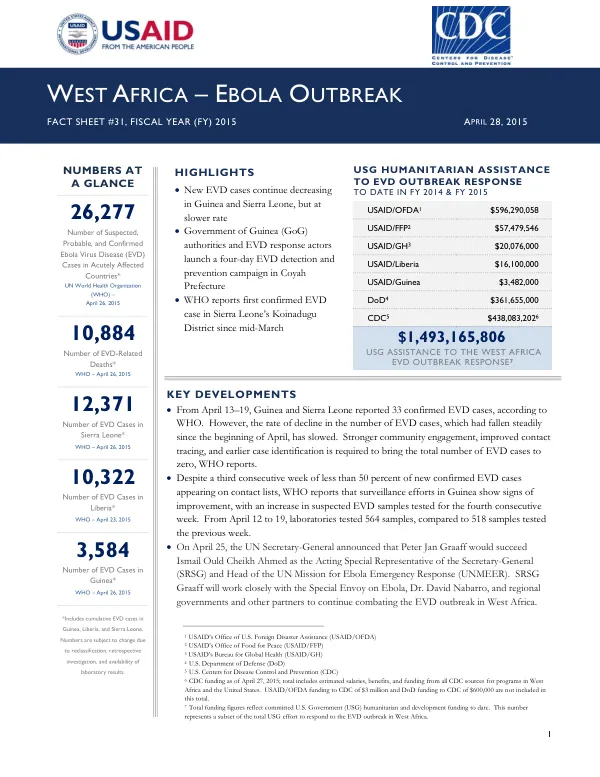
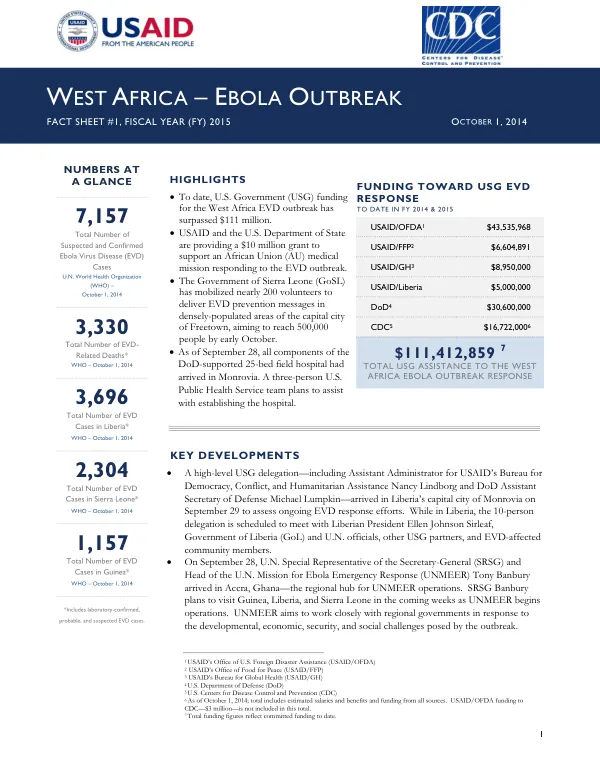
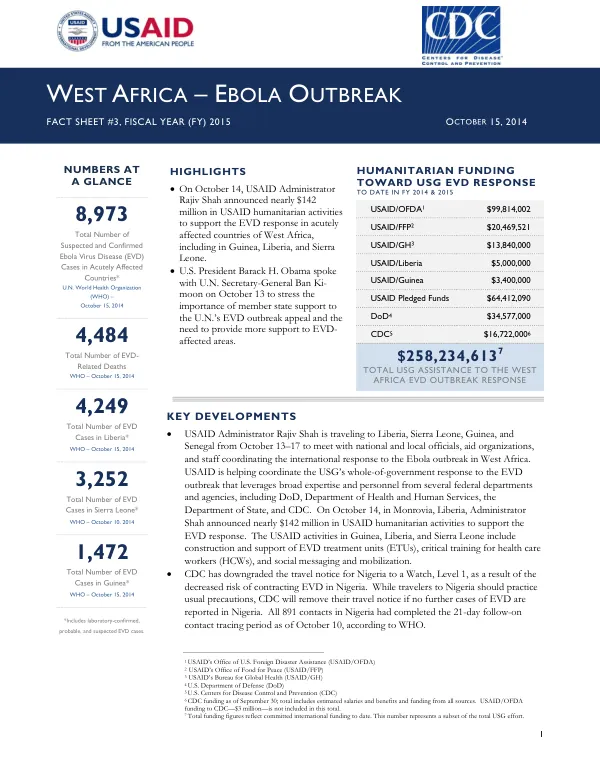
The Ebola outbreak in West Africa began to escalate in 2014, with the World Health Organization (WHO) reporting a total of 8,973 suspected and confirmed cases in acutely affected countries.
2015 · 6 pages
Sign in to readA free account is required to download.
Abstract
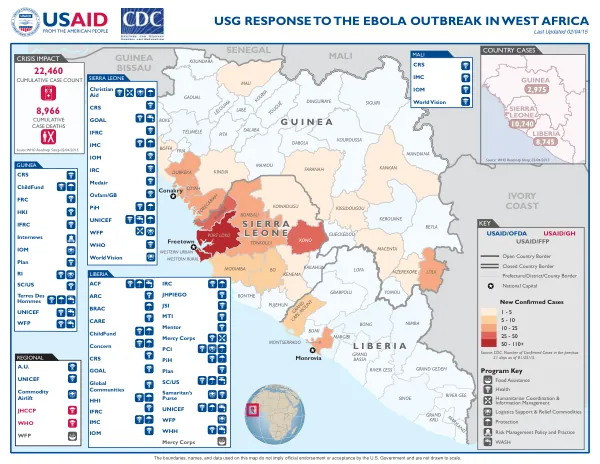
The outbreak was characterized as the most severe public health emergency in modern times, with a significant impact on international peace and security. The WHO reported 4,484 total EVD-related deaths as of October 15, 2014. USAID Administrator Rajiv Shah announced nearly $142 million in USAID humanitarian activities to support the EVD response in Guinea, Liberia, and Sierra Leone. The activities included construction and support of EVD treatment units (ETUs), critical training for health care workers (HCWs), and social messaging and mobilization. The U.S. Department of Defense (DoD) also provided significant support, with more than 430 personnel deployed to Liberia to support the EVD response. The WHO reported a significant increase in EVD cases in Guinea, with a spike in new cases in October. The Government of Guinea, in collaboration with international partners, mobilized additional community HCWs for contact tracing and provided additional personal protective equipment (PPE) to health centers. The International Federation of Red Cross and Red Crescent Societies (IFRC) provided a vehicle and other support to the burial team. In Liberia, disputes over HCW salaries and risk pay continued to challenge EVD response efforts. However, HCWs ended a two-day strike to secure risk pay, influenced by international requests and the desire to continue providing care to EVD patients. The International Rescue Committee (IRC)-led consortium, in partnership with Action Contra le Faim (ACF), conducted contact-tracing activities in Montserrado County, Liberia, documenting 850 new contacts and referring 12 contacts who developed EVD symptoms to ETUs. In Sierra Leone, the number of EVD cases reported in Kenema and Kailahun districts declined in the past four weeks, according to CDC representatives. CDC is assessing the impact of multiple EVD response efforts, including ETUs, safe burial teams, and community mobilization activities, on the decreased caseload. The U.N. World Food Program (WFP) reported that providing food to Sierra Leone's five quarantined districts, along with EVD treatment and transit centers and quarantined areas of Freetown, is the agency's top priority in Sierra Leone. The WHO Assistant Director-General Bruce Aylward stated that up to 10,000 people per week could contract EVD by early December, highlighting the need for a robust international response to curb infection rates. The WHO proposed that the international response focus on safely burying 70 percent of deceased patients and isolating 70 percent of cases within the next 60 days.