USAID DEC
Primary Training for Handmade Leather Products
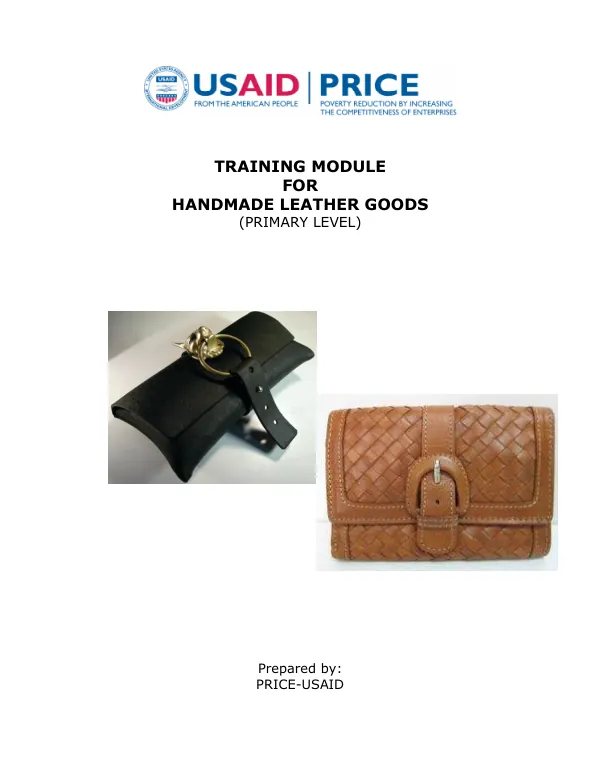
The training module for handmade leather goods is a comprehensive program designed to equip participants with the necessary skills and knowledge to create high-quality leather products.
57 pages
Sign in to readA free account is required to download.
Abstract
The primary level training module is prepared by PRICE-USAID and focuses on the manufacturing of leather goods. The training program is divided into several activities, which are scheduled over a period of 50 days. The activities are designed to cover various aspects of leather goods manufacturing, including introduction to the training, description of leather, different types of leather goods, tools and equipment, pattern making, and assembly of various leather products. The training program emphasizes the importance of formal, non-formal, and informal training methods. Formal training involves structured learning, while non-formal training involves learning through experience and observation. Informal training involves learning through social interactions and networking. The training program also highlights the importance of work-force patterns in South Korean industries. According to the Korean Institute for Industrial Economics & Trade, the demand for scientists and engineers has been reducing, while the demand for technologists and technicians has been increasing. The demand for craftsman has also been reducing. The training program covers various aspects of leather goods manufacturing, including design and pattern making, selection of leather, and assembly of leather products. The program emphasizes the importance of quality control and quality assurance in leather goods manufacturing. The selection of leather is a critical aspect of leather goods manufacturing. The program highlights the importance of selecting high-quality leather that meets the required standards. The program also emphasizes the importance of quality control and quality assurance in leather goods manufacturing. The training program covers various types of leather, including cow softy, sheep nappa, goat glaze, and calf leather. The program also covers various types of leather goods, including keyrings, coin purses, keybags, card holders, and wallets. The training program emphasizes the importance of pattern making in leather goods manufacturing. The program covers various aspects of pattern making, including design and pattern making, classification of pattern, and precondition of cutting. The program also emphasizes the importance of quality control and quality assurance in pattern making. The training program covers various aspects of leather goods manufacturing, including assembly of leather products, quality control, and quality assurance. The program emphasizes the importance of high-quality leather goods that meet the required standards. The training program is designed to equip participants with the necessary skills and knowledge to create high-quality leather products. The program covers various aspects of leather goods manufacturing, including design and pattern making, selection of leather, and assembly of leather products. The program emphasizes the importance of quality control and quality assurance in leather goods manufacturing. The training program is a comprehensive program that covers various aspects of leather goods manufacturing. The program is designed to equip participants with the necessary skills and knowledge to create high-quality leather products. The program emphasizes the importance of quality control and quality assurance in leather goods manufacturing. The training program covers various aspects of pattern making, including design and pattern making, classification of pattern, and precondition of cutting. The program also emphasizes the importance of quality control and quality assurance in pattern making. The program is designed to equip participants with the necessary skills and knowledge to create high-quality leather products.
Related documents