U.S. NATIONAL ASSOCIATION OF REGULATORY UTILITY COMMISSIONERS
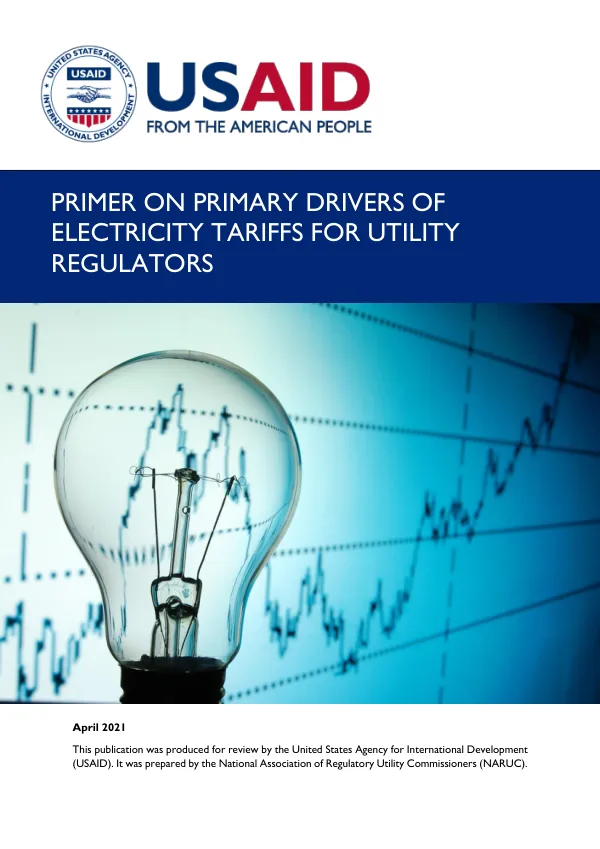
Primer on Primary Drivers of Electricity Tariffs for Utility Regulators
The revenue requirement concept is a fundamental principle in designing cost-reflective electricity tariffs.
2021 · 61 pages
Sign in to readA free account is required to download.
Abstract
This concept is based on the idea that utility tariffs should be set at a level that allows the utility to recover its costs of providing service, while also providing a reasonable return on investment for shareholders. The primary drivers of electricity tariffs are the expenses that are incorporated into revenue requirements. Operation and maintenance expense is one of the key components of revenue requirements. This expense includes costs associated with maintaining and repairing utility infrastructure, as well as labor costs for utility personnel. Technical and non-technical losses are also significant expenses that are incorporated into revenue requirements. Technical losses refer to energy losses that occur during transmission and distribution, while non-technical losses refer to energy that is not billed to customers due to factors such as metering errors or theft. Power purchase agreements and competitive generation pass-through costs are also important expenses that are incorporated into revenue requirements. These costs refer to the expenses associated with purchasing electricity from external sources, such as power plants or renewable energy generators. Production expense, including fuel costs, is another significant expense that is incorporated into revenue requirements. This expense includes costs associated with generating electricity, such as fuel costs and labor costs. Depreciation expense is also a key component of revenue requirements. This expense refers to the cost of replacing or upgrading utility infrastructure over time. Rate case expense is another expense that is incorporated into revenue requirements. This expense includes costs associated with regulatory proceedings, such as filing fees and expert witness costs. Income tax expense and taxes other than income taxes are also significant expenses that are incorporated into revenue requirements. Labor costs are another important expense that is incorporated into revenue requirements. This expense includes costs associated with hiring and training utility personnel. Allocation of administrative costs from affiliated interests is also a significant expense that is incorporated into revenue requirements. This expense includes costs associated with shared services, such as accounting and human resources. The revenue requirement concept is based on the idea that utility tariffs should be set at a level that allows the utility to recover its costs of providing service, while also providing a reasonable return on investment for shareholders. The primary drivers of electricity tariffs are the expenses that are incorporated into revenue requirements. Understanding these expenses is critical for utility regulators in countries with emerging economies to design rates that are based on actual cost of service and to effectively engage the public and key stakeholders in the decision-making process. The Cost Reflective Tariff Toolkit is a comprehensive guide that provides utility regulators with the tools and knowledge needed to design cost-reflective tariffs. The toolkit includes several short practical primers that cover topics such as the revenue requirement concept, rate base components, and typical expenses incorporated into revenue requirements. The toolkit is intended to be used by utility service regulators in countries with emerging economies to design rates that are based on actual cost of service and to effectively engage the public and key stakeholders in the decision-making process. The toolkit is based on the practices of U.S. utility regulators, but also incorporates topics of interest to utility regulators in emerging economies. The toolkit includes a case study that provides a real-world example of how the revenue requirement concept can be applied in practice. The toolkit is a valuable resource for utility regulators who are looking to design cost-reflective tariffs that are based on actual cost of service. The revenue requirement concept is a critical component of designing cost-reflective tariffs. Understanding the primary drivers of electricity tariffs is essential for utility regulators in countries with emerging economies to design rates that are based on actual cost of service and to effectively engage the public and key stakeholders in the decision-making process. The Cost Reflective Tariff Toolkit provides utility regulators with the tools and knowledge needed to design cost-reflective tariffs that are based on actual cost of service.