USAID. MISSION TO INDIA
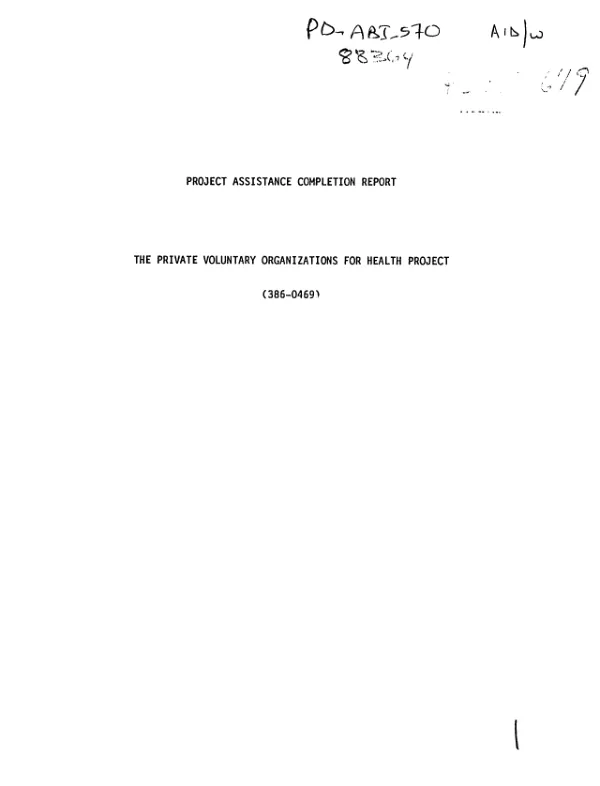
Private voluntary organizations in health (PVOH-I)
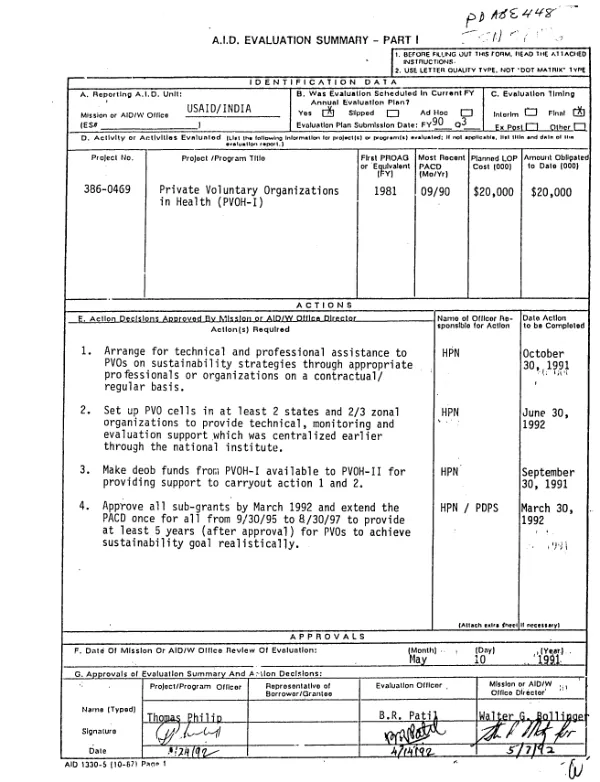
Summarizes attached final evaluation (XD-ABE-448-A) of a project to strengthen the capacity of non-governmental organizations (NGO"s) to deliver maternal and child health (MCH) services in underserved areas of India.
1992
Sign in to readA free account is required to download.
Abstract
External evaluation covered the period from late 1986 to 3/92. The project financed 32 NGO subprojects (SP"s) in 13 States and expended all but 12% of programmed funds. The main results at the national, NGO, and community levels were as follows. (1) At the national level, the Ministry of Health and Family Welfare (MOHFW) and the National Institute of Health and Family Welfare (NIHFW) developed an appreciation of NGO capacities in the health field; NIHFW also developed a capacity to work with NGO"s, and its evaluation and continued monitoring of the SP"s proved valuable in the attainment of project goals. (2) At the NGO level, grantees greatly strengthened their capacity to manage health projects and deliver a quality package of MCH services, including immunization interventions, oral rehydration therapy, ante-natal care, Vitamin A distribution, health education and family planning (FP). Additional workers were trained, and service to residents in underserved areas increased to more than a 1.5 million people. (3) At the community level, impressive coverage was achieved: in regard to FP, 8 of the SP"s have a 50+% rate of contraceptive use and 6 more have 40% coverage rates; in immunization, 18 SP"s have 70%+ coverage rates; and in ante-natal care 9 SP"s have 70%+ coverage rates. In addition, grantees placed considerable emphasis on community mobilization, including self-management of health care systems. Two major policy issues must be addressed in the proposed follow-on project: the need to emphasize sustainability from the SP design stage, and the need to achieve the rapport with health departments at the state level that this project attained at the central level. Among lessons learned are that: (1) involvement of an intermediary technical institution (like NIHFW) can help a project attain good results and maintain quality control; (2) NGO"s have different needs that must be addressed individually -- newer, smaller, NGO"s which are committed to a high level of community involvement will require more time to become self-supporting; (3) a more gradual phase-out of outside support for such NGO"s will help them achieve sustainability.
Related documents