USAID DEC
Processus Participatif d’auto Diagnostic et de Renforcement des capacités Institutionnelles des CSCOM du Mali
Sign inUSAID
Processus Participatif d’auto Diagnostic et de Renforcement des capacités Institutionnelles des CSCOM du Mali
The CSCOM of Mali is undergoing a participatory diagnostic and capacity reinforcement process.
14 pages
Sign in to readA free account is required to download.
Abstract
This process aims to assess the current state of the CSCOM and identify areas for improvement. The CSCOM is a critical component of the health system in Mali, responsible for providing essential health services to the population. The diagnostic process involves evaluating the CSCOM's performance against a set of indicators, which are categorized into three phases: start-up, growth, and maturity. The indicators cover various aspects of the CSCOM's functioning, including planning and service delivery, management of the strategy, motivation and recognition, communication, exchange of information, and management of services. In the planning and service delivery phase, the CSCOM's micro-planning process is primarily dominated by the District Technical Coordinator (DTC). However, there is a growing participation of personnel and the Management Committee in the micro-planning process. The CSCOM's service delivery is focused on providing services to beneficiaries, but it often does not meet the standards and procedures set by the Ministry of Health. In the management of the strategy phase, the DTC is responsible for implementing the strategy, but the other members of the CSCOM's team and the Management Committee are not aware of the problems associated with its implementation. However, the CSCOM has established a calendar for the implementation of the strategy, and the other members of the team participate in its execution. In the motivation and recognition phase, the CSCOM's decision-making process is primarily dominated by the DTC, but there is a growing participation of other members of the team in the decision-making process. The CSCOM also seeks the opinions of beneficiaries regarding the quality of services provided. In the communication phase, the CSCOM's communication is primarily informal, but there is a growing use of formal communication channels, such as team meetings. The CSCOM also seeks to improve the quality of services provided by examining the attitudes and aspirations of beneficiaries. In the exchange of information phase, the DTC shares information with the President of the ASACO, but there is a growing sharing of information with the Management Committee and the Board of Directors. The CSCOM also shares information with the Board of Directors for decision-making purposes. In the management of services phase, the CSCOM's stock management and forecasting of orders are inadequate, leading to frequent stock shortages. However, there is a growing use of tools for controlling and analyzing health information, which is transmitted to the medical hierarchy. In the management of the material phase, the CSCOM's material is not maintained, and there is no support system for managing the material. However, there is a growing use of tools for managing the material, and a regular inventory system has been established. In the follow-up and evaluation phase, the CSCOM's information on activities and results is based on impressions and is communicated orally. However, there is a growing use of a regular follow-up and evaluation system, which is integrated into the decision-making process.
Related documents
Documents in this collection
 2016
2016USAID DEC
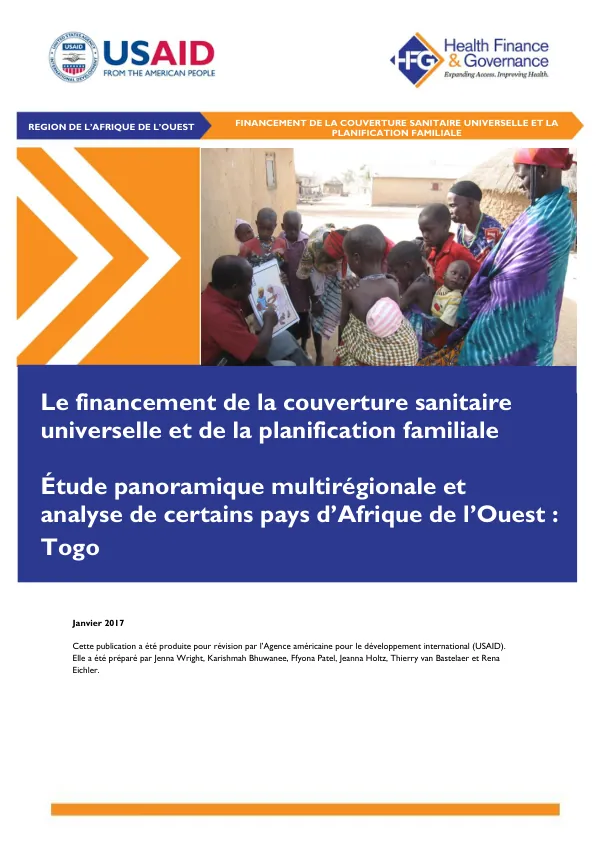
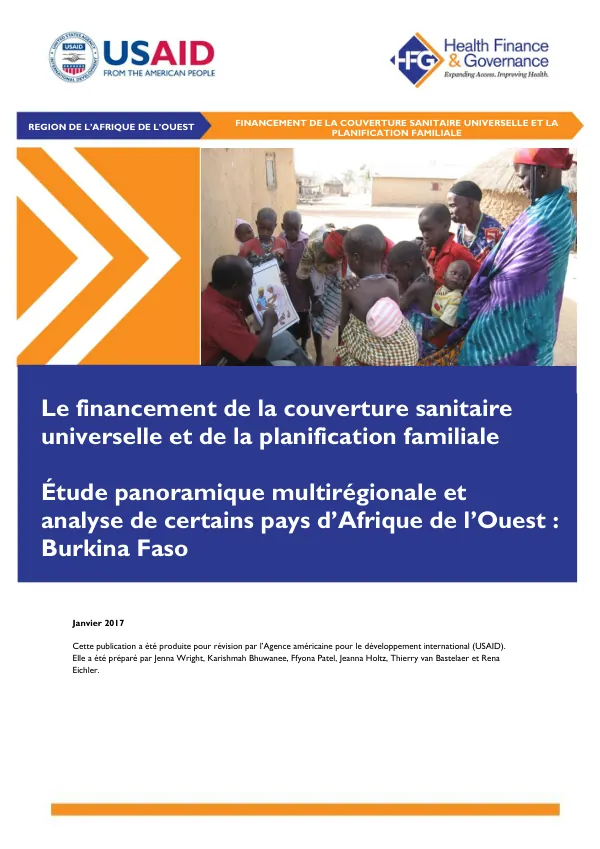
Financing of Universal Health Coverage and Family Planning: A Multi-Regional Landscape Study and Detailed Analysis of Select West African Countries
Open record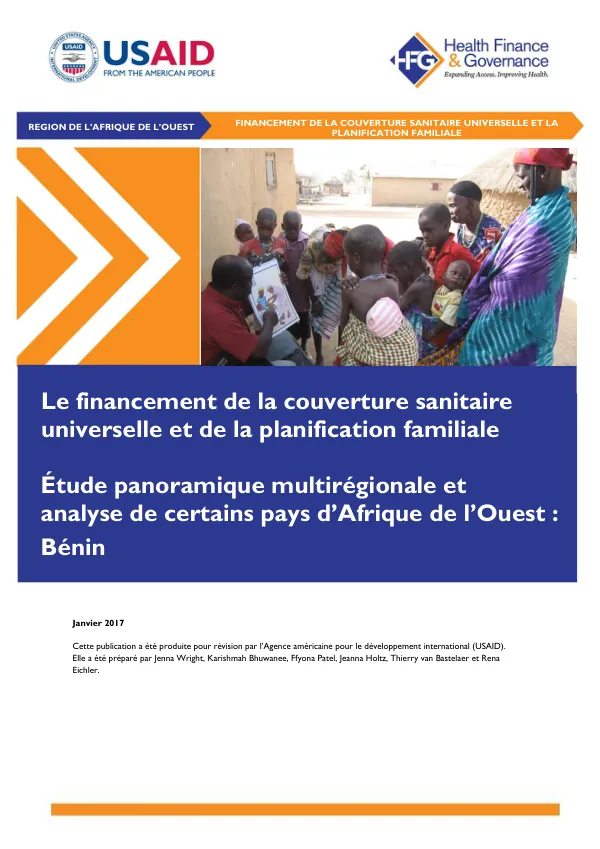 2016
2016USAID DEC