FHI 360
Programa De Conservación y Turismo Sostenible (PCTS)
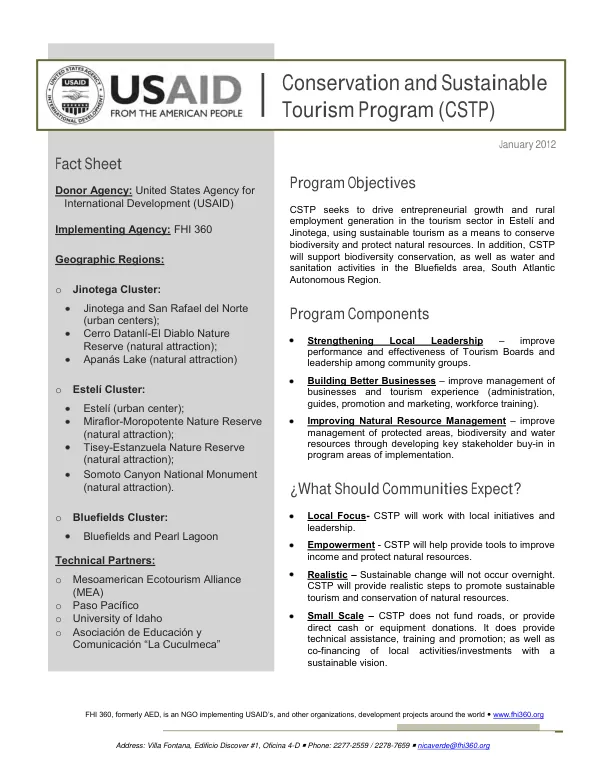
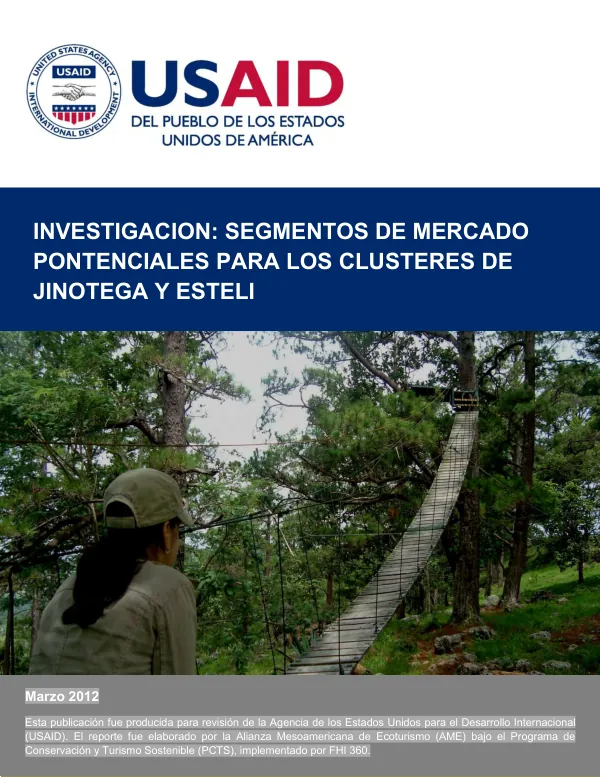
The Programa De Conservación y Turismo Sostenible (PCTS) aims to promote rural entrepreneurship and employment generation in the tourism sector of Estelí and Jinotega, utilizing sustainable tourism as a means to conserve biodiversity and protect natural resources.
2012 · 1 pages
Sign in to readA free account is required to download.
Abstract
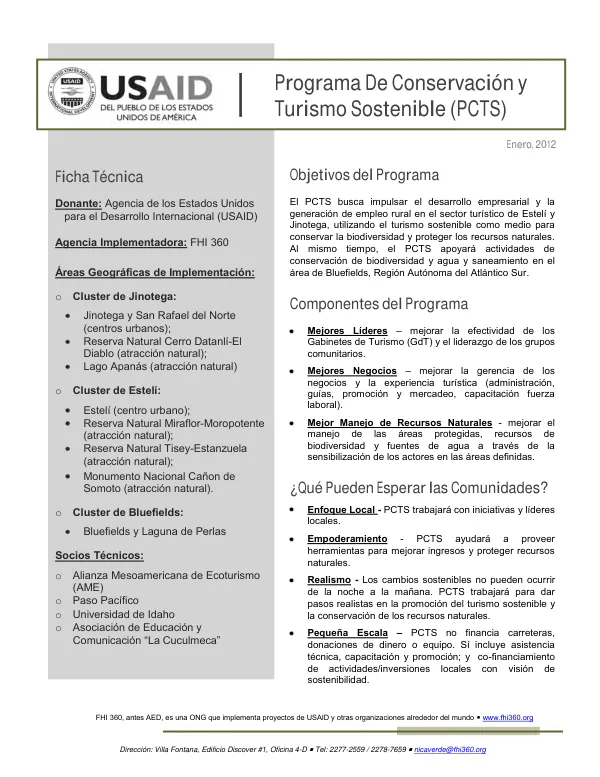
The program is implemented by FHI 360, with funding from the United States Agency for International Development (USAID). The PCTS focuses on three clusters: Jinotega, Estelí, and Bluefields. In Jinotega, the program targets the Cluster de Jinotega, which includes the urban centers of Jinotega and San Rafael del Norte, the Natural Reserve Cerro Datanlí-El Diablo, and Lago Apanás. In Estelí, the program targets the Cluster de Estelí, which includes the urban center of Estelí, the Natural Reserves of Miraflor-Moropotente and Tisey-Estanzuela, and the National Monument Cañon de Somoto. In Bluefields, the program targets the Cluster de Bluefields, which includes the urban center of Bluefields and Laguna de Perlas. The PCTS has three main components: Mejores Líderes (Better Leaders), Mejores Negocios (Better Businesses), and Mejor Manejo de Recursos Naturales (Better Management of Natural Resources). The Mejores Líderes component aims to improve the effectiveness of the Tourism Cabinets (Gabinetes de Turismo) and the leadership of community groups. The Mejores Negocios component aims to improve the management of businesses and tourism experience, including administration, guides, promotion, marketing, and workforce training. The Mejor Manejo de Recursos Naturales component aims to improve the management of protected areas, biodiversity, and water resources through the sensitization of actors in defined areas. The PCTS works with local initiatives and leaders, providing tools to improve income and protect natural resources. The program takes a realistic approach, recognizing that sustainable changes cannot occur overnight. It focuses on small-scale, locally-driven activities, providing technical assistance, training, and promotion, as well as co-financing of local activities and investments with a vision of sustainability.