FHI 360
Progressive Changes in Botswana: Survey Leads to Progressive Changes in Botswana
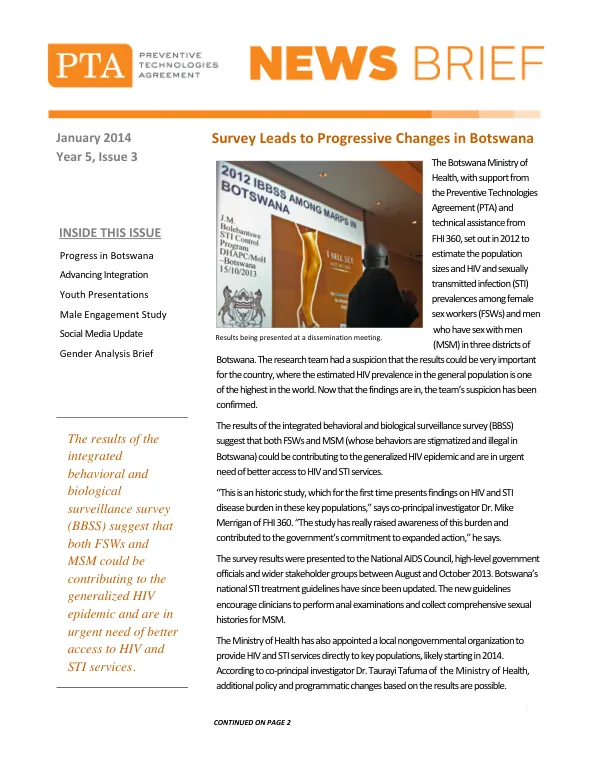
The Botswana Ministry of Health, with support from the Preventive Technologies Agreement (PTA) and technical assistance from FHI 360, conducted a survey in 2012 to estimate the population sizes and HIV and sexually transmitted infection (STI) prevalences among female sex workers (FSWs) and men who have sex with men (MSM) in three districts of Botswana.
2014 · 4 pages
Sign in to readA free account is required to download.
Abstract
The research team suspected that the results could be significant for the country, where the estimated HIV prevalence in the general population is one of the highest in the world. The findings of the integrated behavioral and biological surveillance survey (BBSS) confirmed this suspicion. The BBSS results suggest that both FSWs and MSM could be contributing to the generalized HIV epidemic and are in urgent need of better access to HIV and STI services. The survey identified an FSW population of more than 4,000 in the three districts, with an HIV prevalence of 61.9 percent and high prevalences of gonorrhea and chlamydia. FSWs had a mean of more than seven sex partners per week, and inconsistent condom use was common. The survey also identified an MSM population of almost 800 in two of the three districts, with an HIV prevalence of 13.1 percent and chlamydia as the most prevalent STI. The Ministry of Health has since updated its national STI treatment guidelines to encourage clinicians to perform anal examinations and collect comprehensive sexual histories for MSM. The Ministry has also appointed a local nongovernmental organization to provide HIV and STI services directly to key populations, likely starting in 2014. According to co-principal investigator Dr. Taurayi Tafuma of the Ministry of Health, additional policy and programmatic changes based on the results are possible. The PTA has also supported a panel discussion at the November 2013 International Conference on Family Planning in Addis Ababa, Ethiopia, which highlighted new evidence to guide funders, policymakers, program planners, and program implementers to act on the synergies between family planning and HIV programs. The panel discussed the U.S. government's global strategy for meeting the family planning needs of women living with HIV, the need and demand for integrated reproductive health and HIV services in Kenya and Swaziland, advances in the implementation of preconception care for people living with HIV, and how the integration of family planning and HIV services can increase the use of effective contraceptives. The PTA has also supported research on male engagement in microbicide programs for women, which has been completed in Kenya. The study found that most women wanted their partners to endorse microbicide use, yet most did not or would not tell their partners prior to initiating use, or would tell them but still use the product if they objected. Many men said that they should have control over decisions about microbicide use, yet the male partners of trial participants who discovered that their partners were using microbicides without their knowledge did not seem concerned. The researchers recommend strategies to disseminate information about microbicides, including counseling for women to help them communicate effectively about microbicides with their male partners, couples counseling, print materials, and community meetings.
Related documents