USAID DEC
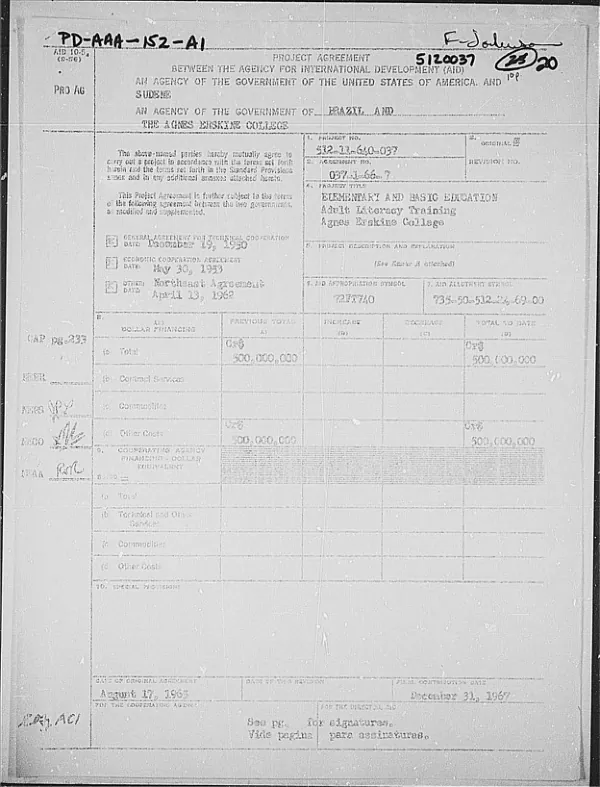
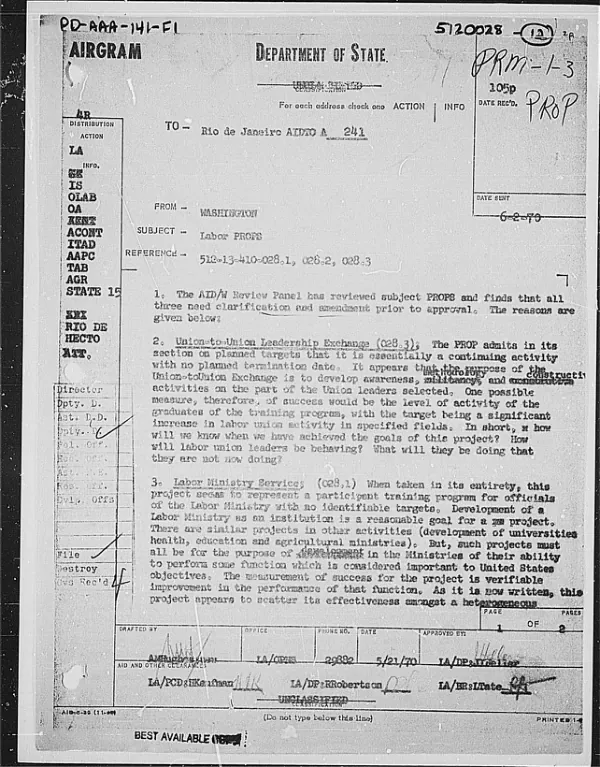
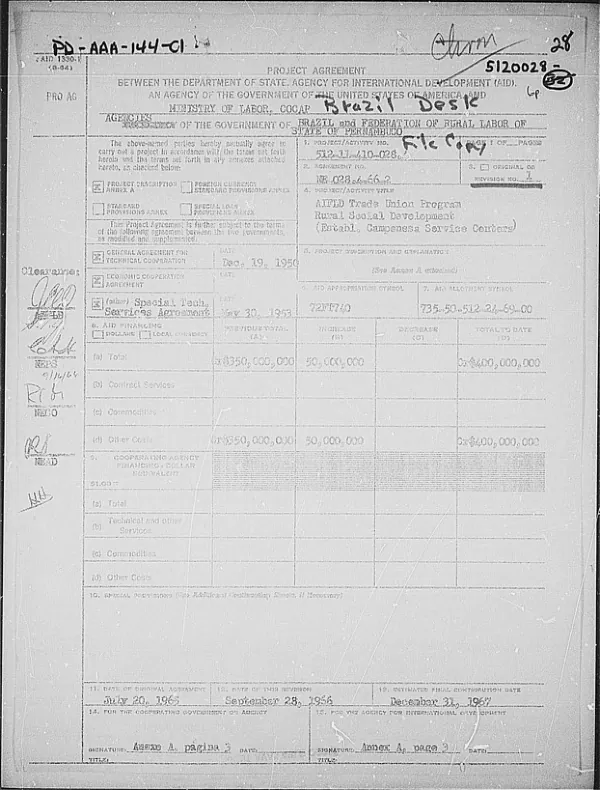
PROJECT AGREEMENT BETWEEN THE DEPARTMENT OF STATE OF THE GOVERNMENT OF THE UNITED STATES OF AMERICA AND THE MINISTRY OF LABOR, COORDINATION AND DEVELOPMENT OF THE REPUBLIC OF BRAZIL FOR THE AIM TRADE UNION PROGRAM
Sign inUSAID
PROJECT AGREEMENT BETWEEN THE DEPARTMENT OF STATE OF THE GOVERNMENT OF THE UNITED STATES OF AMERICA AND THE MINISTRY OF LABOR, COORDINATION AND DEVELOPMENT OF THE REPUBLIC OF BRAZIL FOR THE AIM TRADE UNION PROGRAM
The Agricultural Trade Union Program in Brazil began in 2018 with funding from the United States Agency for International Development (USAID).
2011 · 6 pages
Sign in to readA free account is required to download.
Abstract
The program aimed to improve the working conditions and social development of rural laborers in Brazil. The Ministry of Labor and Employment of Brazil, in collaboration with the Agency for International Development (AID), implemented the program. The program focused on three key areas: improving working conditions, promoting social development, and enhancing trade union activities. The Ministry of Labor and Employment of Brazil worked closely with trade unions, employers, and government agencies to implement the program. The program's objectives included improving labor laws, increasing access to social services, and promoting collective bargaining. Implementation of the program involved training for trade union leaders, establishment of demonstration plots for sustainable agriculture practices, and provision of technical assistance to rural laborers. The program also aimed to improve the social and economic conditions of rural laborers, including access to healthcare, education, and social security. The program's geographic focus was on rural areas in Brazil, particularly in the states of Rio Grande do Sul, Santa Catarina, and Paraná. The program's timeframes were not explicitly stated in the provided document, but it is likely that the program was implemented over a period of several years. The program's methodology involved a combination of training, technical assistance, and community engagement. The program's evaluation and monitoring were likely conducted through regular assessments and surveys of program participants and beneficiaries. The program's recommendations and conclusions were not explicitly stated in the provided document, but it is likely that the program's findings and recommendations were presented in a separate report or document. The program's budget and financial arrangements were not explicitly stated in the provided document, but it is likely that the program received funding from USAID and other international development agencies. The program's partnership with the Ministry of Labor and Employment of Brazil and other government agencies was likely crucial to its implementation and success. The program's impact on rural laborers and the broader economy was likely significant, but the exact extent of its impact is not clear from the provided document. The program's legacy and future prospects are also unclear, but it is likely that the program's findings and recommendations will inform future development initiatives in Brazil.