ARIZONA STATE UNIVERSITY
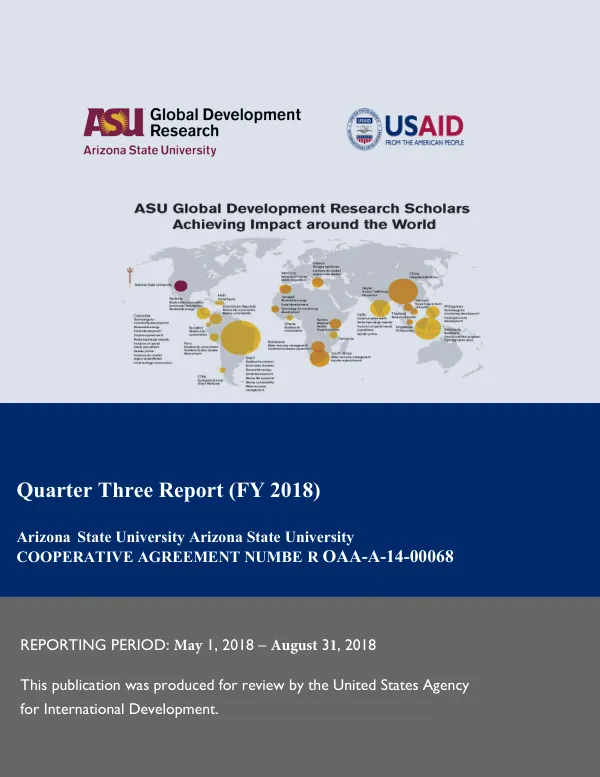
Quarter Three Report (FY 2018)
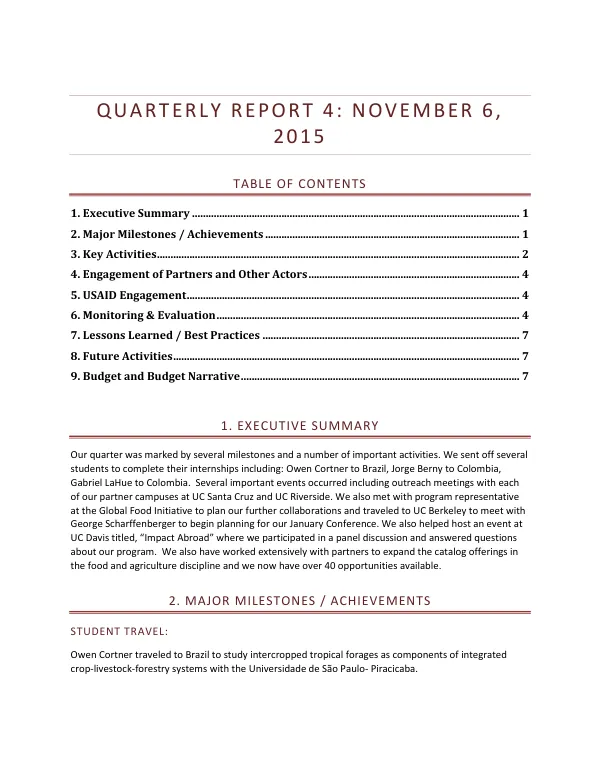
The Graduate Development Research (GDR) program at Arizona State University effectively utilized USAID and university assets to select and identify excelling new graduate scholars and host institutions.
2018 · 14 pages
Sign in to readA free account is required to download.
Abstract
The program's primary goal is to provide scholars with the necessary skills and knowledge to design and implement projects that meet host partner needs, while fusing flexibility and real-world application with academic rigor. During the reporting period of May 1, 2018, to August 31, 2018, the GDR program achieved several key milestones. The program increased the use of scientific research for improved development outcomes, increased organizational capacity of host and fellows, and developed a sustainability plan post-period of performance. The program also demobilized activities funded by USAID, marking the end of the cooperative agreement. To increase the development capacity of host and fellows, the GDR program implemented several specific activities. These included providing partner schools with support to communicate with students about research and technological gaps, building program capacity and fellows with faculty, staff, administrators, and other stakeholders, and leveraging collaborative ties across different departments and colleges with direct recruitment events. The program also conducted exit interviews to determine changes in attitude among scholars and host partners, utilized onsite coordinators as additional points of contact for each school, and facilitated workshops for prospective scholars to match their skills and research interests to the needs of host countries. The GDR program also increased host and fellows' capacity through professional preparedness. The pre-departure curriculum was reevaluated for its effectiveness and student knowledge uptake, and a semester-long professional preparedness course was developed and implemented. The course explored international development theories, development challenges, institutional arrangements, and practices, and helped students understand the theoretical foundations of international development, apply core concepts and tools of sustainability, and design a complete project plan. The program engaged with partners and other actors, including public and private sector partnerships, to sustain the program and increase the number of deserving fellows. The program was promoted through established networking opportunities with local and international financial, municipal, and business entities, and a proposal was successfully submitted to First Solar for $50,000. The program also partnered with USAID to implement a project in Brazil with IPÊ - Instituto de Pesquisas Ecológicas (IPE), to develop and disseminate innovative models for biodiversity conservation. The GDR program has learned several lessons and best practices throughout the reporting period. The program has received several requests from South East Asia host partners for meetings to take place towards the end of August, which will be based on USAID's CLA framework (Collaboration, Learning, and Adoption). The program has also refined its strategic partnerships for future success and has clearly defined strategic objectives for each visit, including an After Action Review and Implementation Meeting focusing mainly on the review of 2017 and 2018 data and summary recommendations.