USAID. MISSION TO EL SALVADOR
Project assistance completion report : drug awareness and abuse prevention project
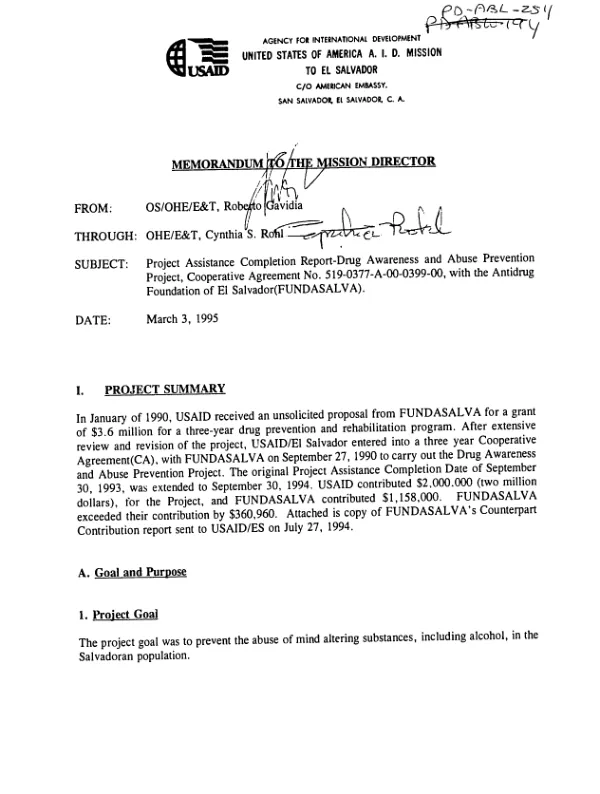
PACR of an OPG (9/90-9/94) to the Anti-Drug Foundation of El Salvador (FUNDASALVA) to upgrade national drug and alcohol abuse/awareness programs and strengthen its own institutional capabilities.
1995
Sign in to readA free account is required to download.
Abstract
The project surpassed its objectives. FUNDASALVA conducted training programs in 152 schools, 152 marginal communities, and 50 private businesses, many times the original targets. FUNDASALVA also provided for a multiplier effect by training 104 sport trainers, 629 teachers, and 1,100 community leaders using a training of trainers model. A mass media campaign lasting more than 2 years included 64 hours of TV spots and 251 hours of radio spots aimed at youth of all ages and socioeconomic levels, as well as 4,823 inches of print media. The program achieved broad coverage of events and was very successful in raising awareness of the drug problem and in establishing FUNDASALVA as a program for preventing substance abuse. FUNDASALVA also created a documentation center that uses MICRO-ISIS, the database software most used in substance control centers throughout Latin America and the Caribbean, thereby facilitating interchanges between FUNDASALVA and other centers. Finally, FUNDASALVA has acquired the designs, materials, and staff skills needed to institutionalize drug prevention programs in both public and private agencies. Lessons learned include the following. (1) Multipliers are important elements in reaching broad target groups with limited resources at the community level. Sustainability of multiplier programs requires follow-up to reinforce lessons learned and provide continued motivation to volunteers. (2) Sustainability needs to be a clearly stated objective from the beginning of a project in order to maximize the TA and institutional planning efforts needed. In this case, Mission efforts and TA provided under the project have resulted in an institution which is able to control operating costs and obtain additional funding from other donors as USAID assistance ends.