USAID DEC
PROJET RÉSILIENCE ET CROISSANCE ÉCONOMIQUE AU SAHEL – RÉSILIENCE RENFORCÉE (REGIS-ER)
Sign inUSAID
PROJET RÉSILIENCE ET CROISSANCE ÉCONOMIQUE AU SAHEL – RÉSILIENCE RENFORCÉE (REGIS-ER)
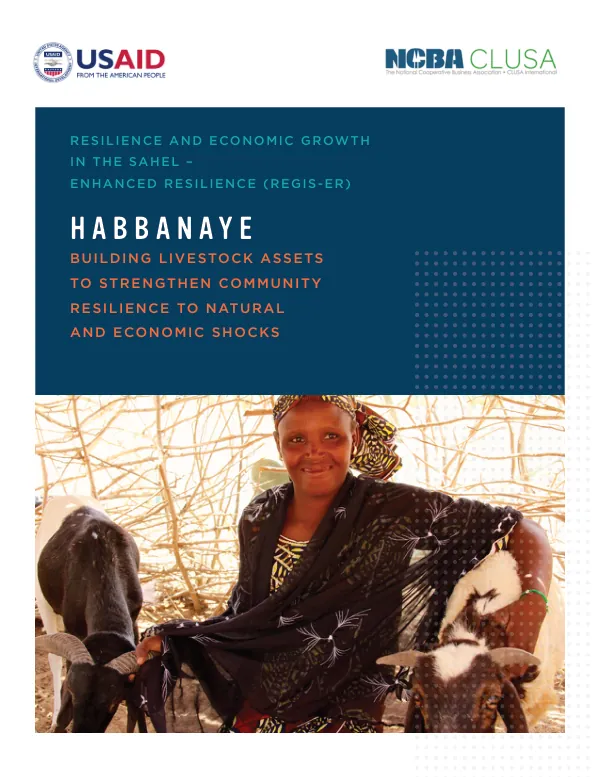
The agricultural development initiative in the Sahel region, known as REGIS-ER, was a 7-year project (2013-2020) supported by the USAID with a total budget of 76 million dollars.
2020 · 8 pages
Sign in to readA free account is required to download.
Abstract
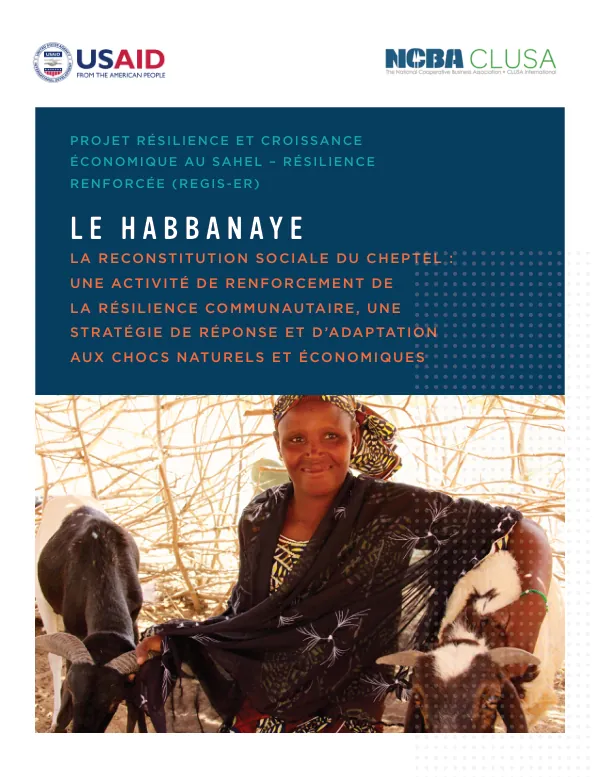
The project aimed to increase the resilience of chronically vulnerable populations in marginal agro-pastoral areas of Burkina Faso and Niger. From November 2013 to November 2018, REGIS-ER worked in 6 regions, 25 communes, and intervened in 570 villages. The project then entered a phase of cost extension, reducing its intervention area to 8 communes in 3 regions of Burkina Faso and Niger. The habbanaye is a traditional system of solidarity among the Peul people, which involves constituting or reconstituting the productive capital of livestock for community members in need. The system consists of temporarily transferring an animal (a female) to a beneficiary and after one or several reproduction cycles, returning it to its owner, while the offspring is raised by the beneficiary to provide milk and meat for the household or, in case of a shock, a source of income to respond to family needs. REGIS-ER adopted the habbanaye as a key activity, introducing some variants to the traditional system, to target and constitute the livestock of vulnerable households, usually headed by women. The project initially focused exclusively on goats, which are highly appreciated for their rusticity and prolificacy. Communities identified the most vulnerable women as beneficiaries who would receive a buck and three goats, as well as food for these animals (for a period of three months), and training on goat breeding and animal health services provided by private veterinarians and their networks. The habbanaye improves the nutritional status of children who have access to milk and animal proteins. The livestock capital constitutes a source of security, income, and nutrition. The activity facilitates inclusive economic growth and social inclusion of marginalized people (women and youth). The habbanaye represents an excellent example of how REGIS-ER addresses the root causes of chronic vulnerability through nutrition-focused agriculture, livestock, income generation, and health and nutrition improvement. REGIS-ER provides services and advice on good practices, including through its network of Agents Prestataires des Services (APS), which connects farmers to animal health services and facilitates links with animal feed suppliers. The habbanaye helps communities prepare for and recover from chronic or sporadic shocks, such as those described above, breaking the cycle of humanitarian crises and emergency responses. The habbanaye system is managed by the Groupe de Travail Citoyen (GTC) and the Conseil Municipal (CM) at the commune level, as well as community organizations, including the Comités Locaux de Développement (CLD) in Niger and the Conseils Villageois de Développement (CVD) in Burkina Faso. The 12 communes identified the habbanaye as an activity with high potential to ensure household resilience, a view shared and expressed earlier in other forums by many communities. The communes then developed their own resilience plans, which included consolidating and scaling up the habbanaye as one of their nine "successful resilience activities." REGIS-ER has strengthened the capacities of habbanaye committees and CLD/CVD in villages and GTC and municipal councils through a series of trainings and coaching. The project has also developed tools for stakeholders to enable them to appropriate the habbanaye activity. Local institutions are now fully responsible for managing and monitoring habbanaye operations not only in intervention villages but also in other villages within their respective communes. The role of local institutions involves transferring small ruminants to new beneficiaries and extending the habbanaye to new communities. REGIS-ER has developed a habbanaye tracking tool using the Excel program for GTC to ensure the tracking of animal placements and transfers. This tool provides real-time situation reports by village. The deployment of the tool was accompanied by training, coaching, and a habbanaye guide provided to GTC to facilitate the implementation of the activity in collaboration with CLD/CVD, which oversee village-level tracking committees.