USAID DEC
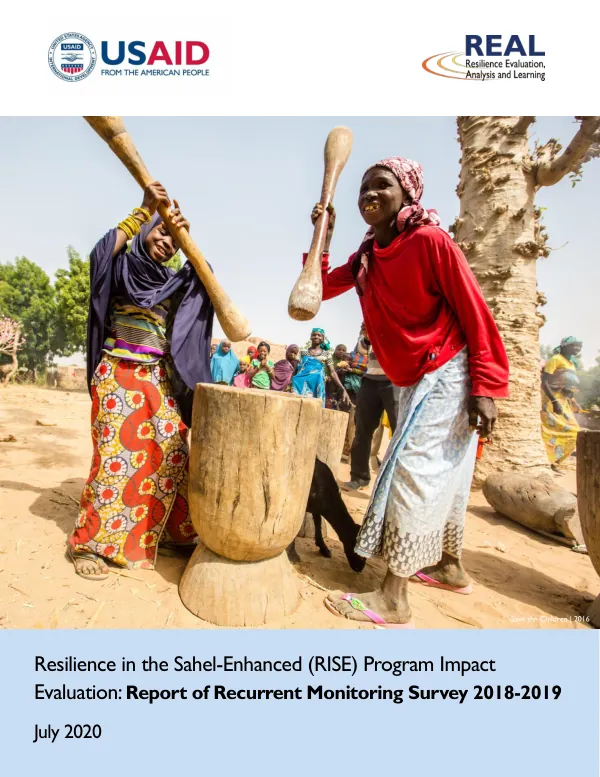
Resilience in the Sahel-Enhanced (RISE) Program Impact Evaluation: Report of Recurrent Monitoring Survey 2018-2019
Sign inSAVE THE CHILDREN FUND
Resilience in the Sahel-Enhanced (RISE) Program Impact Evaluation: Report of Recurrent Monitoring Survey 2018-2019
The RISE Program, a resilience-enhanced initiative, was implemented in Burkina Faso and Niger to improve the livelihoods of vulnerable populations.
2020 · 146 pages
Sign in to readA free account is required to download.
Abstract
The program aimed to enhance household resilience to shocks, improve food security, and increase access to humanitarian assistance. The RISE Program was funded by the USAID Center for Resilience and implemented by a consortium of organizations, including Save the Children, TANGO International, Food for the Hungry, and Mercy Corps. The program's objectives were to assess the impact of the RISE Program on household resilience, food security, and humanitarian assistance. The evaluation aimed to identify the effectiveness of the program's interventions and provide recommendations for future programming. The study employed a mixed-methods approach, combining quantitative and qualitative data collection and analysis. Quantitative data were collected through household surveys, while qualitative data were gathered through in-depth interviews and focus group discussions. The data were analyzed to assess changes in household shock exposure, coping strategies, food security, and resilience over time. The study also examined the role of humanitarian assistance and government responsiveness in supporting households during shocks. The evaluation found that households in the RISE Program areas experienced significant changes in shock exposure and coping strategies over the study period. The data showed that households in the program areas were more likely to experience shocks, such as droughts and floods, but were also more likely to adopt coping strategies, such as diversifying their income sources and reducing their expenses. The study also found that the RISE Program had a positive impact on household food security and resilience. The data showed that households in the program areas experienced improvements in food security, including increased access to food and reduced food insecurity. The study also found that households in the program areas had higher levels of resilience, including greater ability to absorb and recover from shocks. The evaluation identified several factors that contributed to the program's success, including the provision of humanitarian assistance, government responsiveness, and the development of household resilience capacities. The study recommended that future programming focus on building household resilience capacities, improving access to humanitarian assistance, and enhancing government responsiveness to support vulnerable populations during shocks. The RISE Program's impact evaluation provides valuable insights into the effectiveness of resilience-enhanced initiatives in improving household livelihoods and food security. The study's findings highlight the importance of building household resilience capacities, improving access to humanitarian assistance, and enhancing government responsiveness to support vulnerable populations during shocks.
Related documents