BANYAN GLOBAL
USAID/SAHEL Regional Office COVID-specific Gender Analysis Final Report
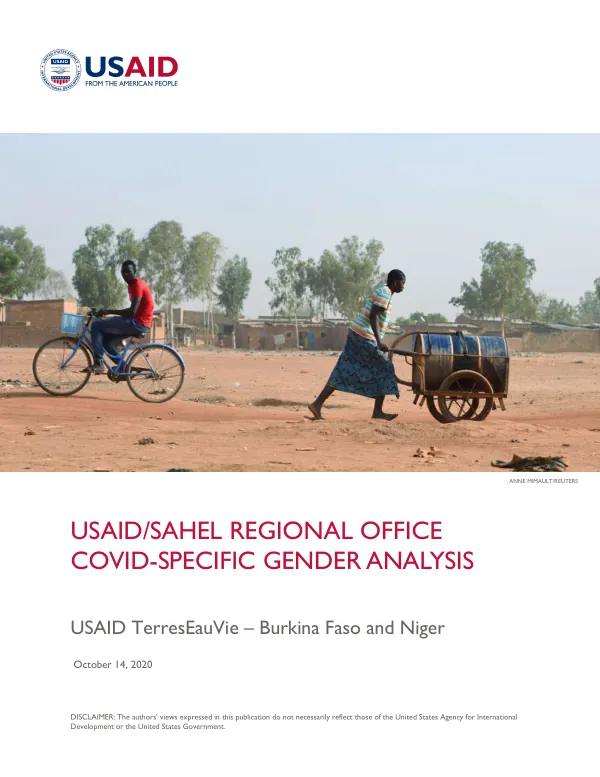
The COVID-19–specific activity-level gender analysis was conducted by the United States Agency for International Development Sahel Regional Office (USAID)/(SRO) to support TerresEauVie (TEV) in integrating gender equality and women's empowerment into its programming to prevent and mitigate COVID-19.
2020 · 30 pages
Sign in to readA free account is required to download.
Abstract
The analysis focused on three activity intermediate results: Improved water security, Enhanced sustainable productive land use, and Improved management of shocks, risks, and stresses. The analysis found that groundwater studies in process indicated up to 44 percent of committees include women and youth. Information campaigns on sustainable management of water that target women and youth are underway in Niger, while awareness-raising campaigns are planned for Burkina Faso. However, a study on the functionality of water user committees found capacity gaps and lack of clarity on roles and responsibilities in Niger. Recommendations were made to engage women and youth in the process from the beginning to understand their unique constraints and vulnerabilities regarding water access and to identify what roles they can play to support long-term sustainability. It was also suggested to adapt activities, such as trainings and water-management committees, to meet in groups of 10 or fewer and conduct previously planned trainings with women, youth, and other potential leaders on communal committees and institutions. In addition, hiring more staff at the commune-level to meet regularly and train small groups (<10 people) was recommended to strengthen the project's field presence and engage more women and youth. Discussions with women and youth groups were also suggested to determine where and how women and youth get their information and whether there are optimal channels of communication beyond radio and WhatsApp groups. The analysis also found that piloting of soap-making with five women's groups that had prior experience with textile production showed positive results, with women reporting increased income and improved livelihoods. However, challenges were identified in accessing markets and competing with imported products. Recommendations were made to support women's economic empowerment by providing training and resources to help them access markets and compete with imported products. It was also suggested to provide financial support to women's groups to help them establish and grow their businesses. The analysis highlighted the importance of engaging women and youth in the decision-making process and providing them with the necessary resources and support to participate fully in the project. It also emphasized the need to address the unique challenges and vulnerabilities faced by women and youth in accessing water and other resources. The COVID-19 pandemic has exacerbated existing inequalities and vulnerabilities, particularly for women and youth. The analysis found that women and youth are disproportionately affected by the pandemic, with limited access to information, resources, and opportunities. Recommendations were made to address these inequalities and vulnerabilities by providing targeted support to women and youth, including training, resources, and financial support. It was also suggested to engage women and youth in the decision-making process and provide them with a platform to express their needs and concerns. The analysis concluded that the COVID-19 pandemic presents a unique opportunity to address existing inequalities and vulnerabilities, particularly for women and youth. By providing targeted support and engaging women and youth in the decision-making process, the project can help to build resilience and promote sustainable development in the region.