USAID DEC
Propuesta para el manejo integral del fuego en Colombia
The Colombian government has implemented various laws and decrees to address the issue of wildfires, but a comprehensive national policy is still lacking.
2019 · 20 pages
Sign in to readA free account is required to download.
Abstract
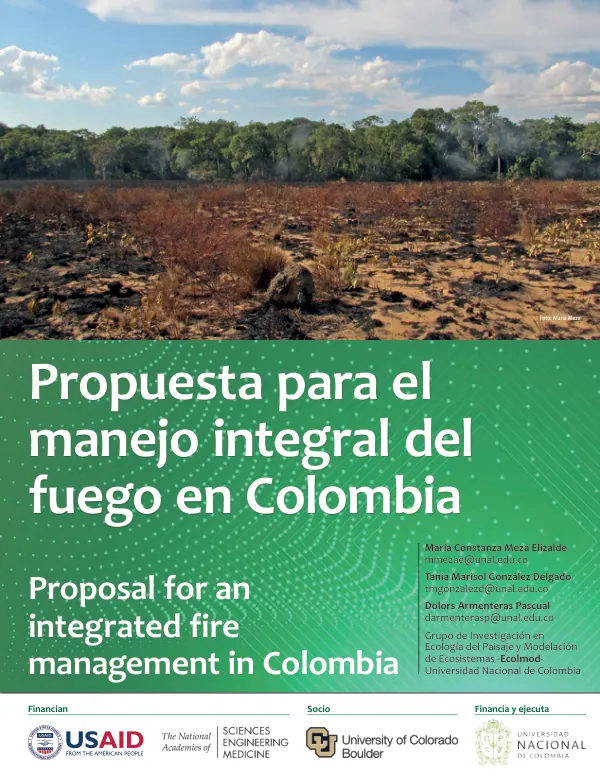
The country's forest cover has been severely affected, with 366 municipalities experiencing forest loss due to wildfires. The majority of these incidents occur during the dry season, when precipitation levels are at their lowest, and are closely linked to socio-economic factors such as agricultural and livestock expansion. The regions most affected by wildfires are the Llanos Orientales, followed by the piedemonte andino, the Amazon, and the Caribbean region. These patterns are related to the dominant vegetation type in each region and the type of economic activity being carried out. For example, there is a correlation between legal and illegal crops and areas with fire damage. In recent years, areas under some form of management, such as protected areas, indigenous reserves, and integrated management districts, have been affected by fires with varying patterns. These areas previously had low fire densities compared to areas without any protection, despite not being isolated from fires. Following the peace agreements, there has been a significant increase in wildfires, as well as deforestation within protected areas, particularly in parks previously controlled by the FARC and now facing increased pressure from crops, livestock, and infrastructure development. Considering the national context regarding wildfire incidence, it is essential to identify the regulatory framework in Colombia regarding fires and wildfires to determine if necessary actions are contemplated to prevent and minimize the impacts that fire can generate on natural ecosystems and forest resources. The 1974 Decreto 2811 established the need for joint actions to prevent and control wildfires, with the collaboration of all public bodies and entities. The decree prioritizes fire extinguishing efforts and requires the organization of prevention and control measures nationwide. However, the decree does not provide a comprehensive framework for wildfire management. In 2012, a series of laws and decrees were enacted to address the issue of wildfires, including the creation of the National System for the Prevention and Control of Wildfires. This system aims to coordinate efforts among government agencies, civil society, and the private sector to prevent and control wildfires. However, the system's effectiveness has been limited by a lack of resources and coordination. The Colombian government has also established various protected areas, such as national parks and wildlife refuges, to conserve biodiversity and ecosystem services. However, these areas have been affected by wildfires, highlighting the need for a more comprehensive approach to wildfire management. The current regulatory framework in Colombia focuses on fire suppression, but this approach has been criticized for being ineffective in preventing wildfires. A more integrated approach that considers the social, economic, and environmental aspects of wildfire management is needed to address the complex issues surrounding wildfires in Colombia. The proposal for an integrated fire management policy in Colombia aims to address the current gaps in the regulatory framework and provide a more comprehensive approach to wildfire management. The policy would focus on prevention, control, and management of wildfires, taking into account the social, economic, and environmental aspects of wildfire management. The policy would also recognize the importance of traditional and cultural practices in wildfire management and ensure the safety of populations, conservation of forest patrimony, biodiversity, and ecosystem services.