USAID DEC
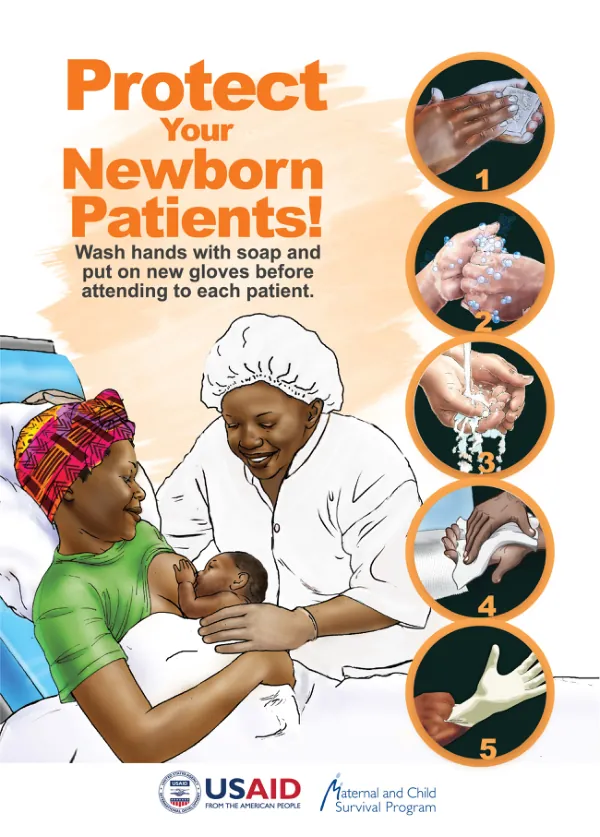
Protect Your Newborn Patients! Wash hands with soap and put on new gloves before attending to each patient.
Sign inUSAID'S MATERNAL AND CHILD SURVIVAL PROGRAM/JOHN SNOW, INC.
Protect Your Newborn Patients! Wash hands with soap and put on new gloves before attending to each patient.
Newborn patients require special care to prevent infection.
2019 · 5 pages
Sign in to readA free account is required to download.
Abstract
Healthcare providers must wash their hands with soap and water before attending to each patient. This is crucial to prevent the spread of infection to vulnerable newborns. Invasive procedures carry a higher risk of infection. These include vaginal examinations, insertion of urine catheters, insertion of IV cannulas, artificial rupture of membranes, manual removal of the placenta, cord clamping, manual removal of blood clots, and switching between patients. Healthcare providers must take extra precautions when performing these procedures. The risk of infection is particularly high in newborn care. Newborns are vulnerable to infection due to their immature immune systems. Infection can lead to serious complications, including sepsis and death. To prevent infection, healthcare providers must adhere to strict infection control protocols. Hand hygiene is a critical component of infection control. Healthcare providers must wash their hands with soap and water upon entering the ward and before conducting any invasive procedures. They must also wear new, sterile gloves before attending to each patient. This ensures that the risk of infection is minimized and newborn patients receive the best possible care. In addition to hand hygiene, healthcare providers must also follow proper protocols for invasive procedures. This includes using sterile equipment, following aseptic techniques, and minimizing the number of healthcare providers involved in the procedure. By following these protocols, healthcare providers can minimize the risk of infection and ensure that newborn patients receive the best possible care.