USAID DEC
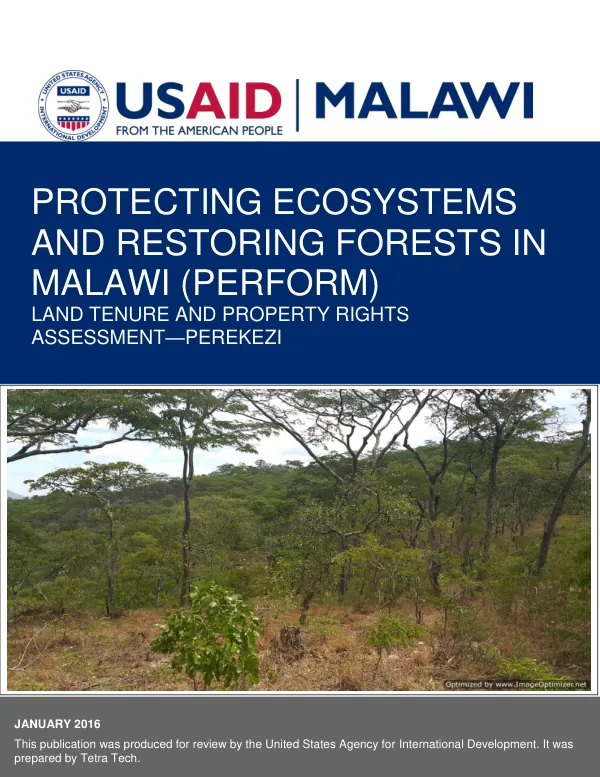
Protecting Ecosystems and Restoring Forests in Malawi (PERFORM) Land Tenure and Property Rights Assessment—Perekezi
Sign inTETRA TECH
Protecting Ecosystems and Restoring Forests in Malawi (PERFORM) Land Tenure and Property Rights Assessment—Perekezi
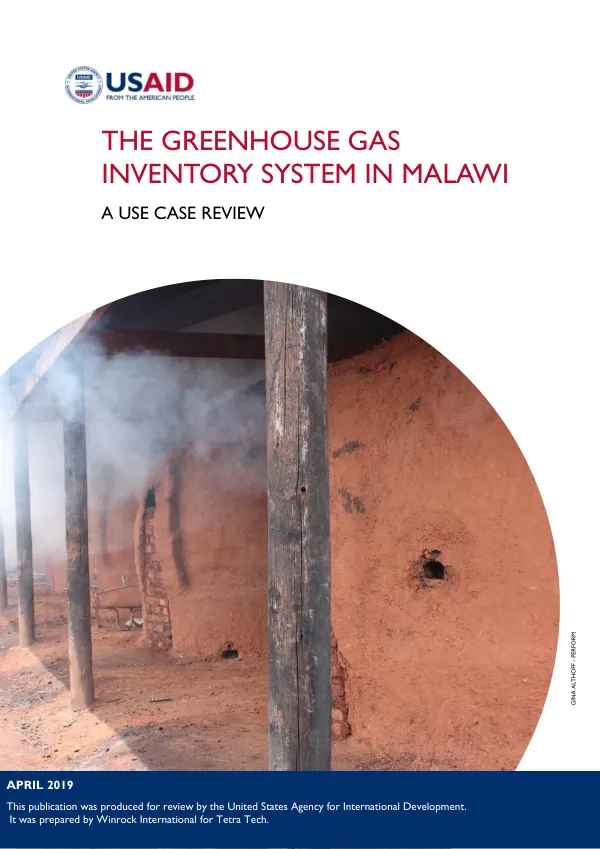
Protecting Ecosystems and Restoring Forests in Malawi (PERFORM) Land Tenure and Property Rights Assessment—Perekezi began in 2015 with the objective of assessing forest governance and tenure in Malawi.
2016 · 45 pages
Sign in to readA free account is required to download.
Abstract
The assessment aimed to identify key challenges and opportunities for improving forest management and promoting sustainable land use practices. The research methodology involved a mixed-methods approach, combining both qualitative and quantitative data collection and analysis techniques. The assessment framework was based on a comprehensive review of existing literature, as well as fieldwork conducted in selected sites across Malawi. The research team consisted of local and international experts with expertise in forest governance, tenure, and natural resource management. The assessment identified several key challenges in forest governance and tenure in Malawi. Weak governance was a major issue, with perceptions of co-management being low among community members. Deficiencies in capacity to manage forest resources were also evident, with many communities lacking the necessary skills and knowledge to effectively manage their forests. Disparities in power, wealth, and influence were also observed, with some individuals and groups holding more power and influence over forest management decisions than others. Insecure tenure and property rights were also a major concern, with many communities unable to protect their rights from encroachment by others. Legislative and policy gaps were identified as a key contributor to these challenges, with many laws and policies failing to provide adequate protection for community rights and interests. Unsustainable natural resources management and biodiversity loss were also identified as major concerns, with many communities engaging in practices that were detrimental to forest health and biodiversity. Based on these findings, the assessment made several programmatic recommendations for improving forest governance and tenure in Malawi. These included improving co-management plans, strengthening institutions, and improving natural resources management. The assessment also highlighted the importance of addressing legislative and policy gaps, as well as promoting community-led forest management initiatives. The assessment was conducted in collaboration with the Government of Malawi, local communities, and other stakeholders. The research team consisted of local and international experts with expertise in forest governance, tenure, and natural resource management. The assessment was funded by the United States Agency for International Development (USAID) under the Restoring the Environment through Prosperity, Livelihoods, and Conserving Ecosystems (REPLACE) Indefinite Quantity Contract. Block Management Committees (BMCs) were identified as a key institution for forest governance and management in Malawi. BMCs represent the interests of and are accountable to the community, and take the lead in forest planning, management, and administration. Local Forest Management Boards (LFMBs) and Local Forestry Organizations (LFOs) were also identified as important institutions for forest governance and management in Malawi. Village Natural Resource Committees (VNRMCs) were established to manage Village Forest Areas (VFAs) and other natural resources. VNRMCs are also being established by PERFORM to cover a broader range of natural resources, including private woodlots and customary land. The assessment highlighted the importance of strengthening these institutions and promoting community-led forest management initiatives to improve forest governance and tenure in Malawi.
Related documents