TETRA TECH
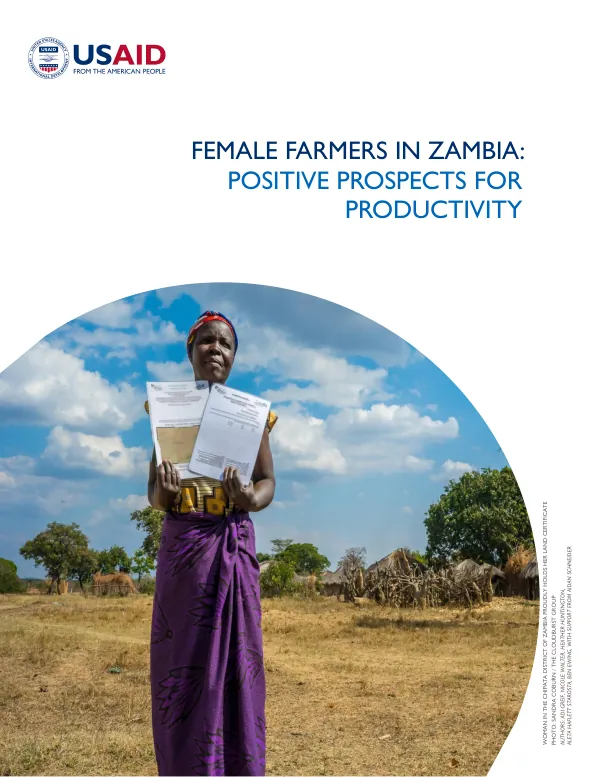
Female Farmers in Zambia: Positive Prospects for Productivity
The agricultural development initiative in Zambia focused on improving tenure security and agroforestry adoption among smallholder farmers, particularly women.
2018 · 13 pages
Sign in to readA free account is required to download.
Abstract
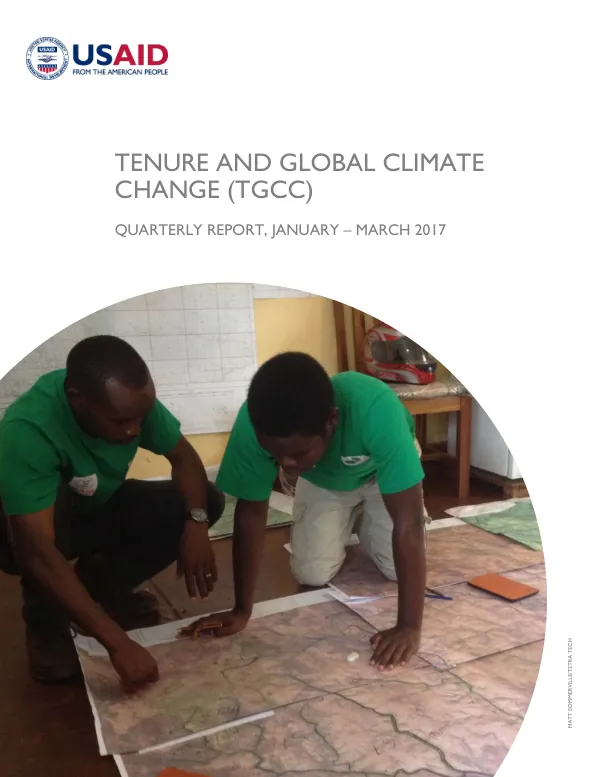
Insecure land tenure is a significant problem in Zambia, affecting both men and women, but women are disproportionately disadvantaged. Research has shown that tenure insecurity leads to reduced agricultural investment and productivity, with women investing 13-18% less in fertilizer, fallowing 4-5% less land area, and using intensive tillage techniques on 3-5% fewer acres. The Tenure and Global Climate Change (TGCC) program, supported by USAID, aimed to improve tenure security and agroforestry adoption in Zambia's Eastern Province. The program's Land Tenure intervention increased transparency in land allocation, administration, and decision-making processes, and strengthened smallholder rights to land and trees through dialogues and documentation. The Agroforestry intervention promoted the adoption of agroforestry practices, which are expected to benefit smallholder farmers struggling with low yields, unreliable access to fertilizer, and vulnerability to climate change. The evaluation of the TGCC program found strong quantitative evidence that the Land Tenure intervention improved tenure security perceptions for both male and female household heads. The Agroforestry intervention also showed increased rates of agroforestry adoption for both male and female household heads. The results suggest that the TGCC program has important equity benefits, with similar outcomes for male and female household heads, and an absence of elite capture. Female-headed households (FHHs) benefited from linking the Land Tenure and Agroforestry interventions, with increased participation in land management meetings and adoption of agroforestry practices. However, the Agroforestry intervention increased perceptions among female household heads of unfairness for the poor in land management decisions, which may be related to the disproportionate burden of caring for saplings in a communal nursery. The evaluation findings support the scale-up of the TGCC program's documentation and boundary demarcation approach in Zambia and program piloting in other customary land systems. However, more time is necessary to explore the impact on longer-term outcomes such as willingness to fallow land or ensure tree survival. The benefits of the Agroforestry intervention should be reexamined, and other CSA activities considered, such as minimum tillage or crop rotation, given the large labor investment and challenge to keeping seedlings alive. The Zambian context and Eastern Province's female farmers are characterized by a prevalence of smallholder farmers on customary land, limited uptake of agroforestry, and a substantial minority of female-headed households. The study site of Eastern Province is rural and engages in subsistence farming, with most households depending primarily on charcoal production and subsistence agricultural activities. Women are responsible for foraging for forest products for household consumption, including mushrooms, caterpillars, and fruits. The TGCC program's activities aimed to increase transparency of land allocation, administration, and decision-making processes, and to strengthen smallholder rights to land and trees through dialogues and documentation. The program supported USAID development objectives of improved resource governance, reduced rural poverty, and increased women's empowerment through improved agricultural productivity of smallholders, natural resource management, and resilience of vulnerable households.
Related documents