USAID DEC
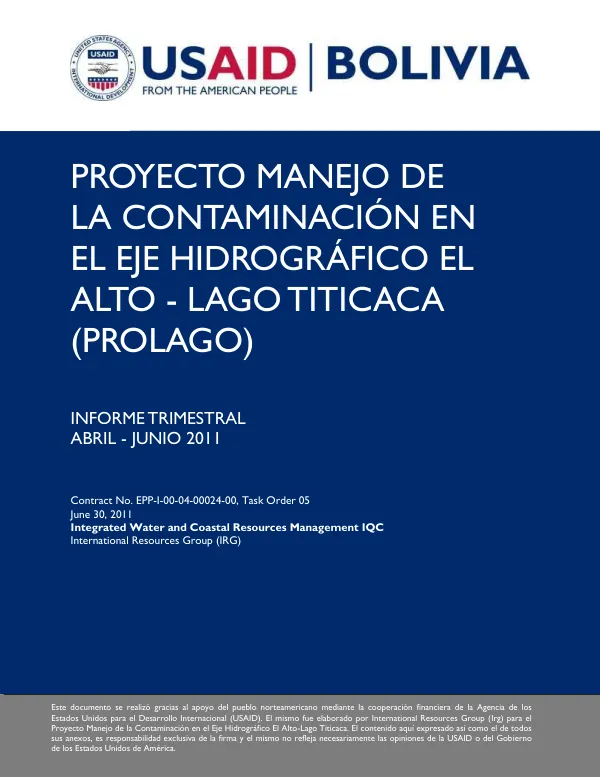
PROYECTO MANEJO DE LA CONTAMINACIÓN EN EL EJE HIDROGRÁFICO EL ALTO - LAGO TITICACA (PROLAGO)
Sign inINTERNATIONAL RESOURCES GROUP
PROYECTO MANEJO DE LA CONTAMINACIÓN EN EL EJE HIDROGRÁFICO EL ALTO - LAGO TITICACA (PROLAGO)
The Proyecto Manejo de la Contaminación en el Eje Hidrográfico El Alto-Lago Titicaca, also known as PROLAGO, is a project aimed at managing contamination in the El Alto-Lago Titicaca watershed.
2011 · 46 pages
Sign in to readA free account is required to download.
Abstract
The project is funded by the USAID and implemented by the International Resources Group (IRG). The project's main objective is to prevent and control industrial and urban contamination in the region. The project is divided into three focus areas (FAs): FA 1, FA 2, and FA 3. FA 1 focuses on interventions to prevent industrial and urban contamination, while FA 2 focuses on integrated management of the Bahía de Cohana. FA 3 focuses on communication and participation of citizens. Each focus area is supported by three components: Component 1, Component 2, and Component 3. Component 1, Prevención y control de la contaminación urbana y rural, aims to prevent and control urban and rural contamination. Activities under this component include the implementation of biogas utilization systems, such as the testing of biogas-powered engines in Qenakahua Alta, Cantón Aygachi, and the Villa Ingenio landfill in El Alto. The results of these activities have demonstrated the effectiveness of biogas-powered engines in reducing pollution. Component 2, Manejo Integrado de los Recursos Naturales en la Bahía de Cohana, focuses on the integrated management of natural resources in the Bahía de Cohana. Activities under this component include the implementation of instruments that contribute to the management of the Katari River watershed, the implementation of a biodiversity monitoring system that involves local communities, and the implementation of plans for the proper management of totora in communities in the Bahía de Cohana. Component 3, Comunicación y Participación Ciudadana, focuses on communication and participation of citizens. Activities under this component include capacity-building programs for public and private actors, student involvement in environmental management, and the implementation of initiatives and projects that support municipal institutions related to environmental issues. The project has made significant progress in achieving its objectives and implementing planned activities. The project has demonstrated the effectiveness of biogas-powered engines in reducing pollution, and has implemented instruments and systems that contribute to the management of the Katari River watershed. The project has also promoted the participation of citizens in environmental management and has implemented initiatives and projects that support municipal institutions related to environmental issues. The project's next steps will focus on preventing and controlling contamination, managing natural resources, and promoting communication and participation of citizens. The project will continue to implement activities under the three focus areas and components, with the goal of achieving its objectives and making a positive impact on the environment and the communities in the El Alto-Lago Titicaca watershed. In the area of Prevención y control de la contaminación urbana y rural, the project will continue to implement biogas utilization systems and promote the use of clean energy sources. In the area of Manejo Integrado de los Recursos Naturales en la Bahía de Cohana, the project will continue to implement instruments and systems that contribute to the management of the Katari River watershed and promote the sustainable use of natural resources. In the area of Comunicación y Participación Ciudadana, the project will continue to promote the participation of citizens in environmental management and implement initiatives and projects that support municipal institutions related to environmental issues. The project's progress will be monitored and evaluated regularly to ensure that it is meeting its objectives and making a positive impact on the environment and the communities in the El Alto-Lago Titicaca watershed.