USAID DEC
Q1 Performance Report: CA #72060821CA00002 REMA
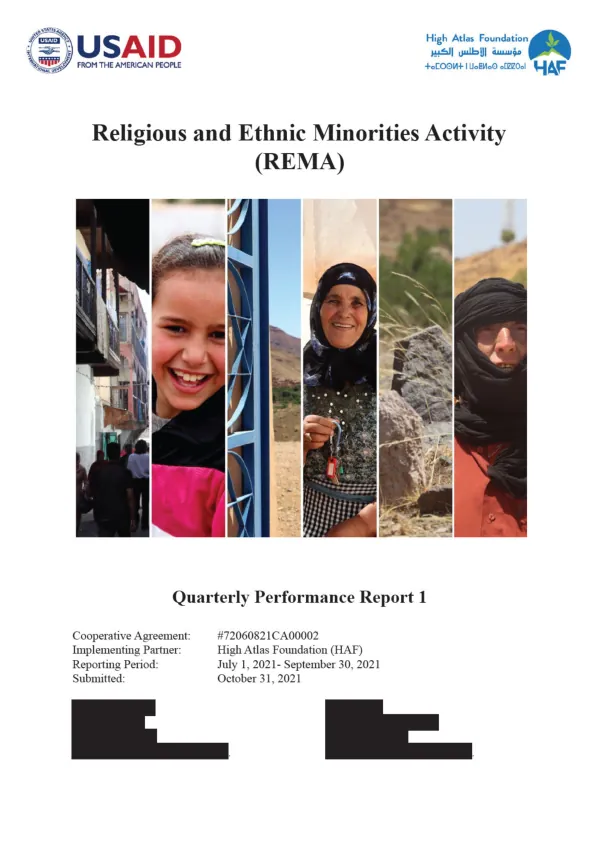
The REMA program in Morocco began on July 1, 2021, with the goal of exploring and strengthening inter-religious and inter-ethnic solidarity and community efforts that preserve cultural heritage.
2021 · 20 pages
Sign in to readA free account is required to download.
Abstract
The program aims to empower communities through capacity building and experiential learning to promote multiculturalism, social cohesion, diversity, and the basis for creating shared plans of action for improving their future. REMA targets younger generations who have not lived alongside members of diverse faith traditions, with the opportunity to rebuild the narrative of Morocco's multifaceted heritage by gathering and preserving the stories of those communities. During the first quarter, the program team successfully established close coordination between HAF and other REMA partners, focusing on developing the first-year implementation plan and discussing potential adjustments to the activities and timeline. The program team also organized and conducted ten strategic planning meetings with partners to present and explain the financial and implementation procedures for the program. These meetings provided opportunities to understand and address partners' questions and concerns, collect their feedback on project activities and the needs of target communities, and integrate their priorities into the final agreement. The program team developed and submitted the implementation plan, including key activities and detail on the methodology and approach regarding data collection as well as the partners' scope of activities. The team also created a CSO country-wide mapping to create a network to form productive links on issues related to historic preservation and the protection of Moroccan religious and ethnic groups. The CSO mapping annexed to this report identifies some of the prospective partners for REMA and further builds important progress toward developing a national network. The program team visited several sites, including the old medina of Sefrou, the Jewish Community Center, and the Catholic Church in Fes, to introduce the REMA program and concept to local stakeholders. These visits provided opportunities for the program team to share information about the program and gather feedback from local communities. The team also met with the President of the Volunteer Experts for Development to discuss potential projects and introduce him to the REMA program and concept. The first quarter has been instrumental to the launch of the mapping of communities guarding a historical heritage and strategy to integrate them in REMA. The program team successfully managed to address challenges by adopting a reflexive approach to the coordination, conducting multiple dialogues with partners, and expanding regional representation. The program team also developed an environmental mitigation and monitoring plan, particularly in regard to the planning of the restoration activities to be implemented at the Toumliline monastery and adjacent gardens. The preservation of Moroccan memory and religious minority heritage has become increasingly discussed, particularly since the nation signed the Abraham Agreements leading to the normalization process with Israel in December 2020. The urgent need to preserve intangible histories surrounding faith traditions echoes Morocco's goal to strengthen its social cohesion among communities. The program team aims to use and share its experience with its partners to ensure that opportunities for their capacity building and networking are maximized alongside programmatic opportunities. The New Development Model, which was laid out by Morocco's municipal and regional elections, provides a new framework for strategic orientation for the REMA program. The model emphasizes the importance of preserving Morocco's multifaceted heritage and promoting social cohesion among communities. The program team aims to use this framework to guide the implementation of the REMA program and to promote the preservation of Moroccan cultural heritage.
Related documents