FHI 360
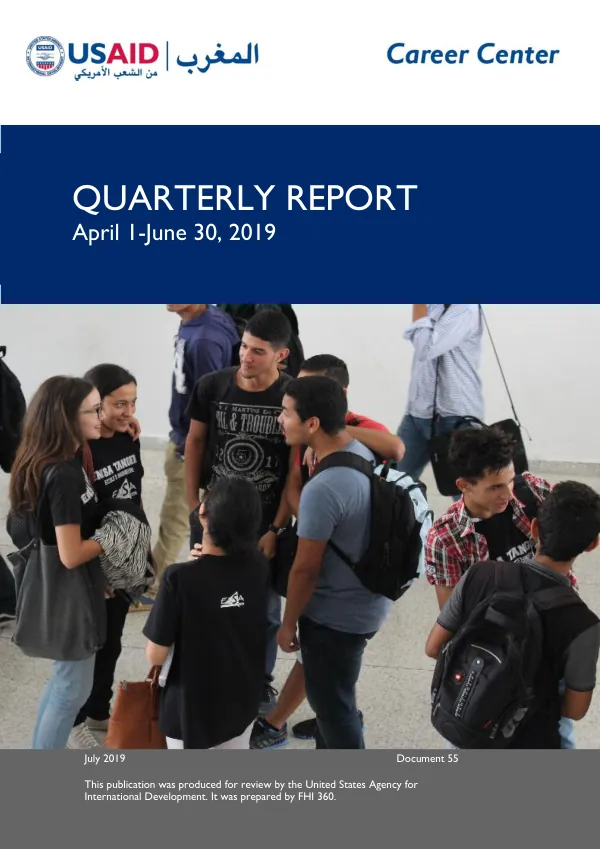
Quarterly Report: USAID Career Center
The USAID Career Center in Morocco is a program aimed at enhancing the employability of target youth.
2019 · 110 pages
Sign in to readA free account is required to download.
Abstract
The program began on February 12, 2015, and is set to conclude on February 11, 2020. The reporting period for this quarterly report spans from April 1 to June 30, 2019. The program is implemented by Family Health International 360, with subcontractors including International Research and Exchanges Board, Education for Employment, and Golden Resources. The Career Center model and services delivery are a key component of the program. This component focuses on reinforcing the Career Center model and improving services delivery. The model is designed to provide a comprehensive range of services to youth, including career guidance, job placement, and vocational training. The program aims to increase the number of youth who access these services and ultimately find employment. The program also focuses on expanding work readiness access. This component aims to increase the number of youth who are prepared for the workforce by providing them with the necessary skills and knowledge. The program offers training and certification programs in areas such as entrepreneurship, leadership, and communication. The goal is to increase the number of youth who are employable and able to secure jobs. Stakeholder collaboration is a critical aspect of the program. The Career Center works closely with a range of stakeholders, including government agencies, private sector companies, and civil society organizations. These partnerships are essential for the program's success, as they provide access to resources, expertise, and networks that can help to support the Career Center's activities. The program also places a strong emphasis on branding, outreach, and communications. This involves developing a strong brand identity for the Career Center, as well as creating materials and campaigns to promote the program's services and activities. The goal is to increase awareness of the Career Center and its services among the target audience, and to encourage more youth to access the program's services. In terms of lessons learned, the program has identified several key takeaways. One of the main challenges faced by the program is the need to increase the number of youth who access the Career Center's services. This requires a range of strategies, including outreach and marketing efforts, as well as partnerships with other organizations and stakeholders. The program has also learned the importance of tailoring its services to the needs of the target audience, and of continuously evaluating and improving its programs and activities. The program's goal is to support the sustainability and scaling of the Career Centers. This involves developing a range of strategies to ensure that the Career Centers can continue to operate effectively in the long term, and to expand their services and reach to more youth. This may involve developing partnerships with other organizations, securing funding and resources, and building the capacity of the Career Center's staff and management.