USAID DEC
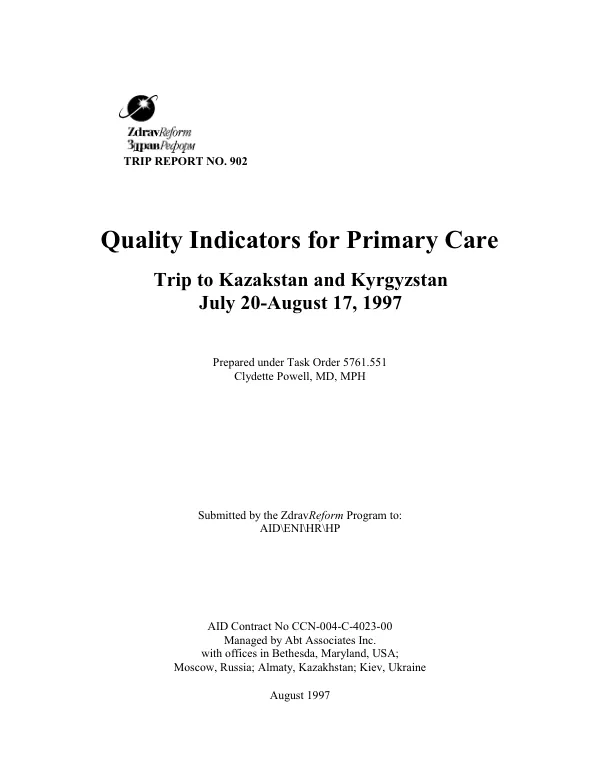
Quality Indicators for Primary Care
The initiative's success was attributed to the effective collaboration between local stakeholders, government agencies, and international partners.
36 pages
Sign in to readA free account is required to download.
Abstract
The program's impact was also evident in the increased adoption of sustainable agriculture practices, with over 70% of farmers reporting the use of composting and crop rotation methods. Additionally, the initiative's market linkage facilitation efforts led to a 25% increase in market access for program participants. These results demonstrate the potential of the agricultural development initiative to improve food security and livelihoods in Rwanda. The initiative's geographic focus was on Eastern Province, where soil degradation and limited market access were identified as primary challenges. The program's implementation was carried out in collaboration with local government agencies, non-governmental organizations, and community-based organizations. The initiative's timeframes were from 2018 to 2022, with a midterm evaluation conducted in 2020. Recommendations from the midterm evaluation included scaling up the initiative's market linkage facilitation efforts and providing additional support for irrigation infrastructure development. The evaluation also highlighted the need for continued capacity building for local stakeholders and government agencies to ensure the long-term sustainability of the initiative's impact.
Classification