GOVERNMENT OF ETHIOPIA
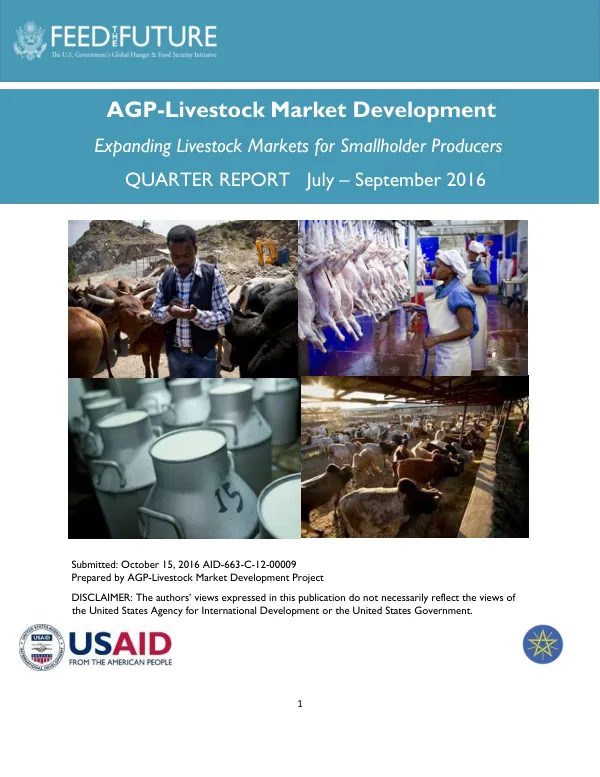
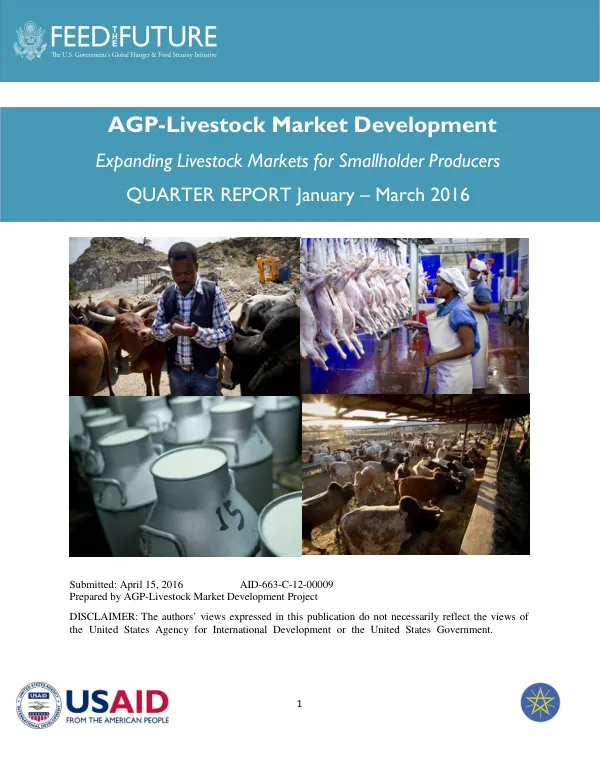
Quarter Report January – March 2016: AGP-Livestock Market Development Project
The Agricultural Growth Program-Livestock Market Development (AGP-LMD) Project is a five-year initiative implemented by USAID-Ethiopia as part of the U.S.
2016 · 85 pages
Sign in to readA free account is required to download.
Abstract
Government's Feed the Future Initiative. The project aims to increase the productivity and competitiveness of selected livestock value chains for the benefit of smallholder producers. The AGP-LMD Project is one of the components of the Government of Ethiopia's Agricultural Growth Program (AGP), which seeks to end poverty and enhance growth. The AGP-LMD Project focuses on improving the enabling environment for livestock value chains, increasing productivity and competitiveness, and enhancing the nutritional status of rural households through the intake of livestock products. The project is implemented through five components: Moving from Analytics to Strategy to Learning, Improving Productivity and Competitiveness of Livestock Value Chains, Spur Investment and Innovation, Improving the Enabling Environment of Livestock Value Chains, and Enhancing the Nutritional Status of Rural Households. Component 1, Moving from Analytics to Strategy to Learning, involves the development of a strategy to improve the productivity and competitiveness of selected livestock value chains. This component includes the identification of key value chain actors, input and service providers, and market trends. The strategy aims to improve the efficiency and effectiveness of the value chain, increase productivity, and enhance competitiveness. Component 2, Improving Productivity and Competitiveness of Livestock Value Chains, focuses on improving the productivity and competitiveness of livestock value chains through various strategies. These strategies include linking value chain actors to input and service providers, strengthening input suppliers and service providers, improving livestock management, and improving post-production relationships, efficiencies, and quality. The component also includes market expansion, both domestically and internationally, and strengthening farmer-based organizations and sectorial associations working in the livestock value chain. Component 3, Spur Investment and Innovation, aims to stimulate investment and innovation in the livestock value chain. This component includes the use of innovation grant funds to strengthen value chain businesses and stimulate investments and access to finance. The component also includes the development of a business plan and the identification of potential investors. Component 4, Improving the Enabling Environment of Livestock Value Chains, focuses on improving the enabling environment for livestock value chains. This component includes facilitating and empowering stakeholders for policy reform and advocacy, capacity building for public and private stakeholders, institutional coordination among stakeholders, and applied research for development. Component 5, Enhancing the Nutritional Status of Rural Households, aims to improve the nutritional status of rural households through the intake of livestock products. This component includes behavioral change communication, influencing the enabling environment at the program and service delivery level, and HIV/AIDS and PEPFAR wrap-around activities. The AGP-LMD Project is implemented in collaboration with various stakeholders, including the Government of Ethiopia, private sector companies, and non-governmental organizations. The project aims to achieve several intermediate results, including increased productivity and competitiveness of selected livestock value chains, improved enabling environment for livestock value chains, and enhanced nutritional status of rural households.