USAID/ETHIOPIA
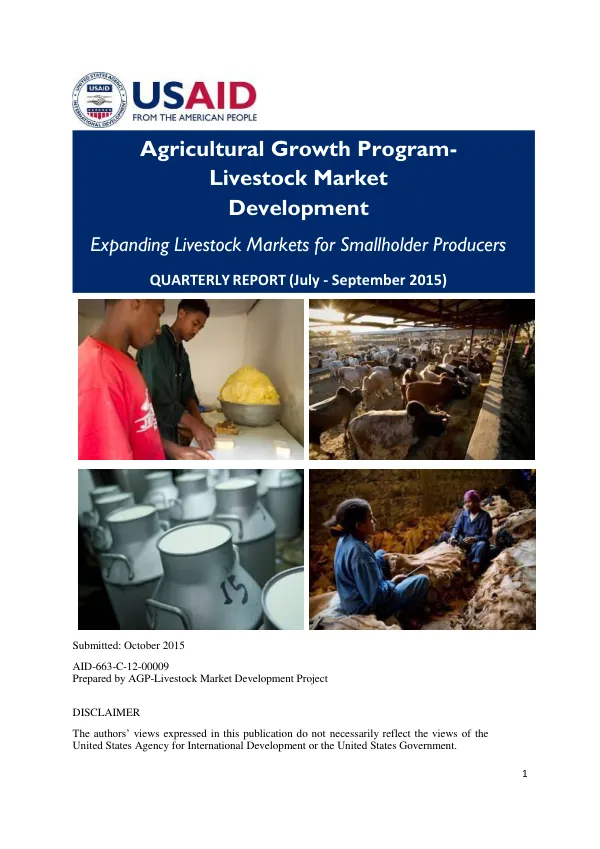
Quarterly Report: Livestock Market Development Project (July - September 2015)
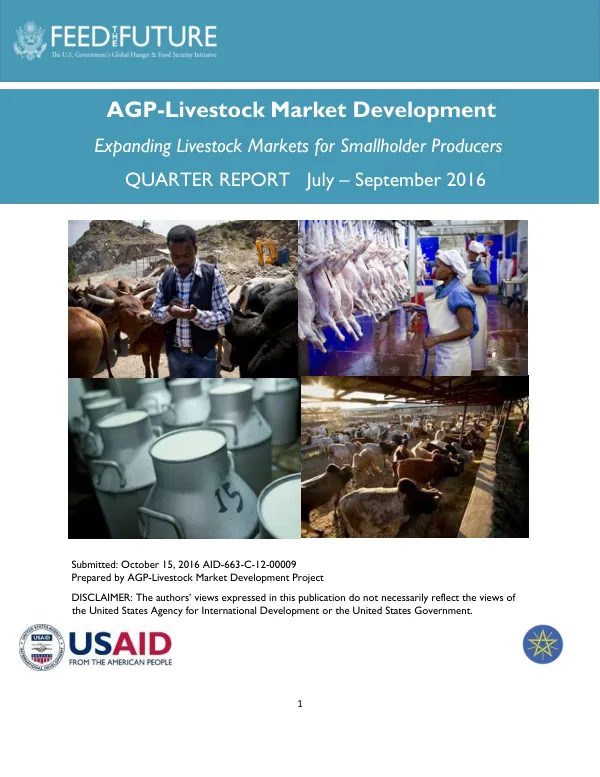
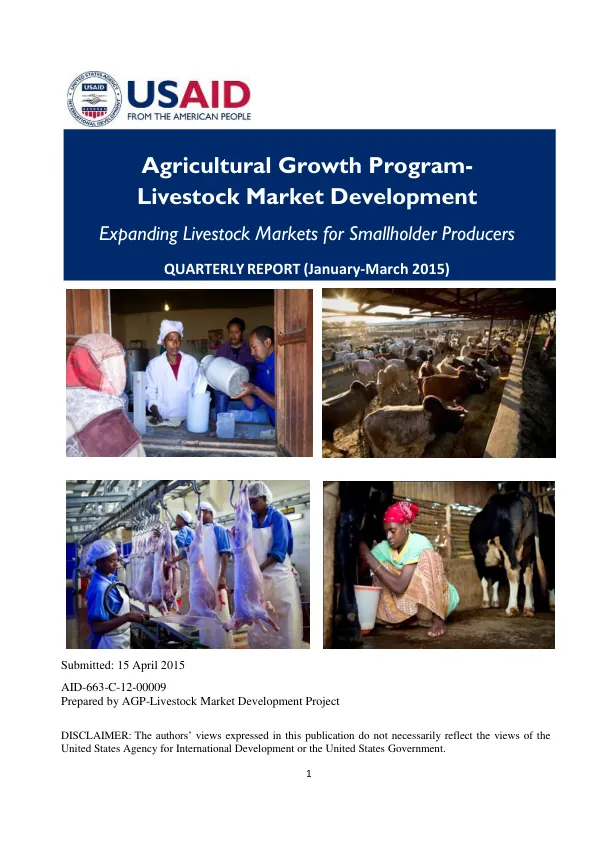
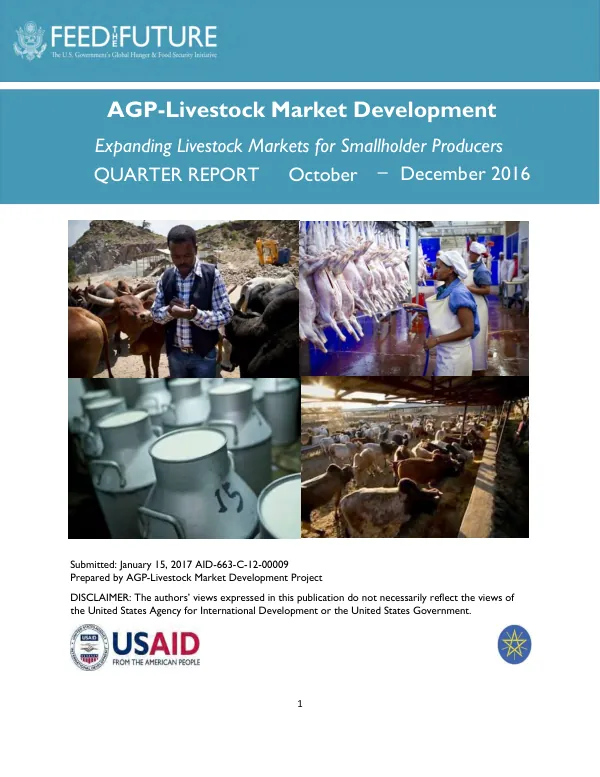
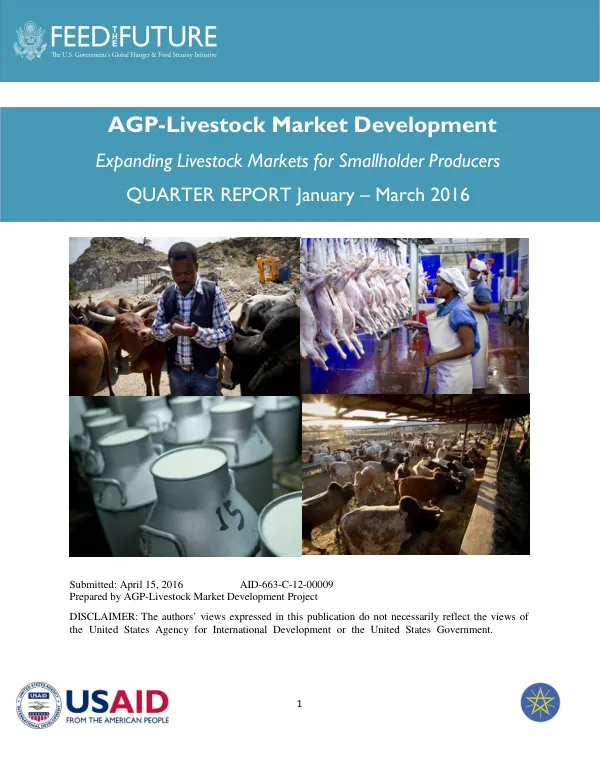
The USAID-Ethiopia's Agricultural Growth Program-Livestock Market Development (AGP-LMD) Project is a five-year project implemented as part of the U.S.
2015 · 61 pages
Sign in to readA free account is required to download.
Abstract
Government's Feed the Future (FtF) Initiative. The project aims to foster growth and reduce poverty through improving the productivity and competitiveness of selected livestock value chains: meat/live animals, hides/skins/leather, and dairy. Program operations take place in AGP targeted woredas of Tigray, Amhara, Oromia, and Southern Nations, Nationalities, and Peoples' Region (SNNPR), in order to effectively reach large numbers of smallholder producers. The AGP-LMD project addresses USAID's Strategic Objective of improving smallholder incomes and nutritional status through the achievement of three key USAID intermediate results, involving five program components. The project applies a holistic value chain development approach to ensure that the program transforms the targeted value chains from infancy to maturity. This self-propels value chains, capable of taking ownership of their own future development, by addressing systemic bottlenecks and facilitating value chain participants' own engagement and investment. The project focuses on improving the productivity and competitiveness of selected livestock value chains through five key strategies. Strategy 1 involves linking value chain actors to input and service providers, while Strategy 2 aims to strengthen input suppliers and service providers. Strategy 3 focuses on improving livestock management, and Strategy 4 seeks to improve post-production relationships, efficiencies, and quality. Strategy 5 targets market expansion, with a focus on increasing access to markets for smallholder producers. The project also places a strong emphasis on strengthening FBOs and sectorial associations working in the livestock value chain. This includes supporting the development of grants under the existing grants windows, with 42 grants awarded to support the implementation of the project's objectives. The project also aims to improve the enabling environment for livestock value chains, through the facilitation and empowerment of stakeholders for policy reform and advocacy. In the first quarter of the fourth year of operation, the project made significant progress in implementing the recommendations of the Mid Term Performance Evaluation. The development process of the MSME strategy has started, and the nutrition team developed a draft strategy for incorporating poultry. The development of grants under the existing grants windows was finalized, with 42 grants awarded to support the implementation of the project's objectives. The contract renewal process with the Implementing Partners has also started, with the Implementing Partners setting up Livestock market Development teams in the four regions. The project's focus on improving the productivity and competitiveness of selected livestock value chains has the potential to significantly improve the incomes and nutritional status of smallholder producers in Ethiopia. By addressing systemic bottlenecks and facilitating value chain participants' own engagement and investment, the project aims to create a self-sustaining value chain that can take ownership of its own future development.