ABT ASSOCIATES
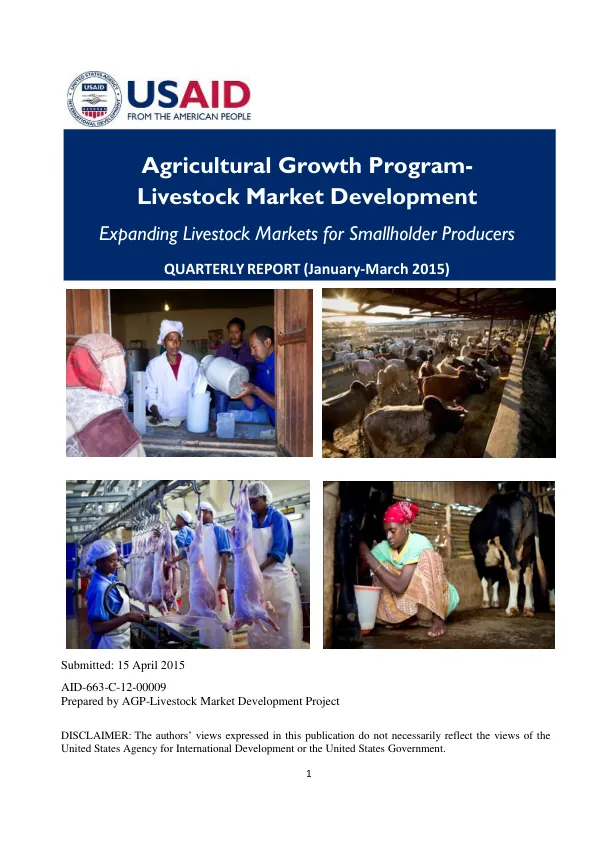
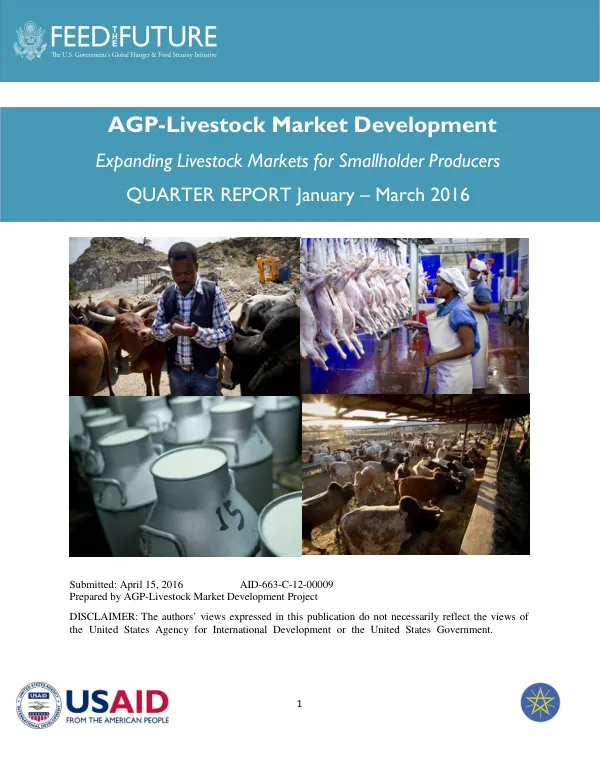
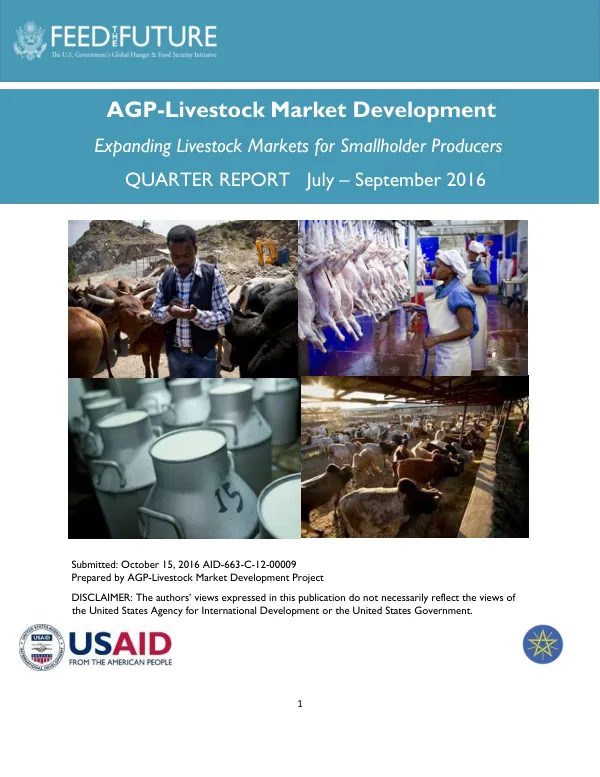
AGP-Livestock Market Development Project QR1 Quarterly Report
The AGP-Livestock Market Development Project is a five-year initiative implemented as part of the U.S.
2013 · 30 pages
Sign in to readA free account is required to download.
Abstract
Government's Feed the Future (FTF) Initiative. The project aims to foster growth and reduce poverty through improving the productivity and competitiveness of selected livestock value chains: meat/live animals, hides/skins/leather, and dairy. Program operations will take place in AGP-targeted woredas of Tigray, Amhara, Oromia, and SNNPR, in order to effectively reach large numbers of smallholder producers. The project will address USAID's Strategic Objective of improving smallholder incomes and nutritional status through the achievement of three key USAID intermediate results, involving five program components. The project will apply a holistic value chain development approach to ensure that the program transforms the targeted value chains from infancy to maturity. This will empower value chains, capable of taking ownership of their own future development, by addressing systemic bottlenecks and facilitating value chain participants' own engagement and investment. The project's key themes driving the approach include market development, increased productivity and efficiency throughout the livestock value chain, private sector focus and investment, smallholder impact, gender mainstreaming, and environmental conservation. The project runs from September 17, 2012 to September 30, 2017, and is being implemented by CNFA, supported by JE Austin Associates, IICD, IIE, SNV, IMC, and eight national implementing partners. The project is being implemented in four regional states – Oromia, Amhara, Tigray, and SNNP. The projects in each regional state will be run by a Regional Coordinator, supported by Addis Ababa-office headed by the program COP. This report is the first quarterly performance report of the project, three months into program start-up and implementation, and focuses on progress towards deliverables identified in the Contract obligations. The project's intermediate results include increasing productivity and competitiveness of selected livestock value chains, improving the enabling environment for livestock value chains, and improving quality and diversity of household diet through intake of livestock products. The project will apply a holistic value chain development approach to ensure that the program transforms the targeted value chains from infancy to maturity. The project's five program components include moving from analytics to strategy to learning, improving the productivity and competitiveness of livestock value chains, spurring investment and innovation, improving the enabling environment of livestock value chains, and enhancing the nutritional status of rural households. Integrated into these components are the crosscutting objectives of engaging people living with HIV/AIDS, gender equity, promotion of ICT solutions, environmental mitigation, and natural resource management. The project's focus on market development, increased productivity and efficiency, private sector focus and investment, smallholder impact, gender mainstreaming, and environmental conservation will enable the system to more competitively compete in local and export markets. The project's implementation will take place in four regional states, with each regional state being run by a Regional Coordinator, supported by Addis Ababa-office headed by the program COP.
Related documents