USAID DEC
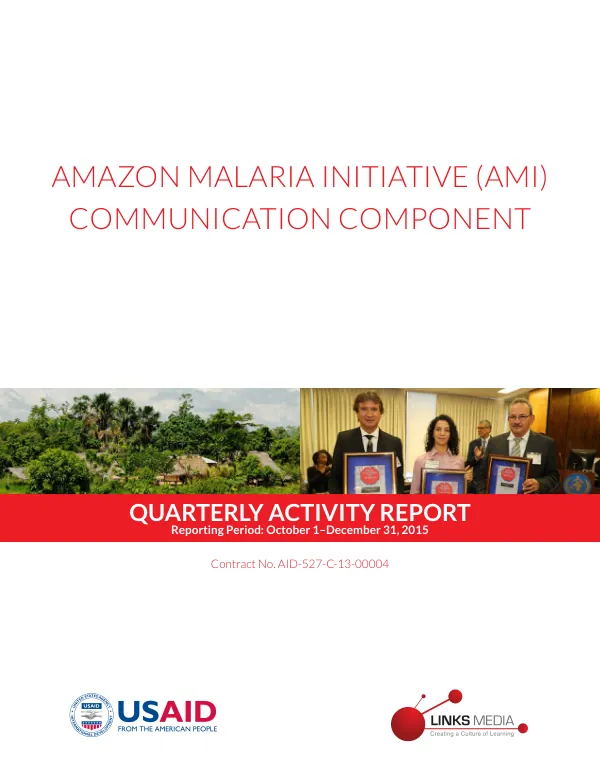
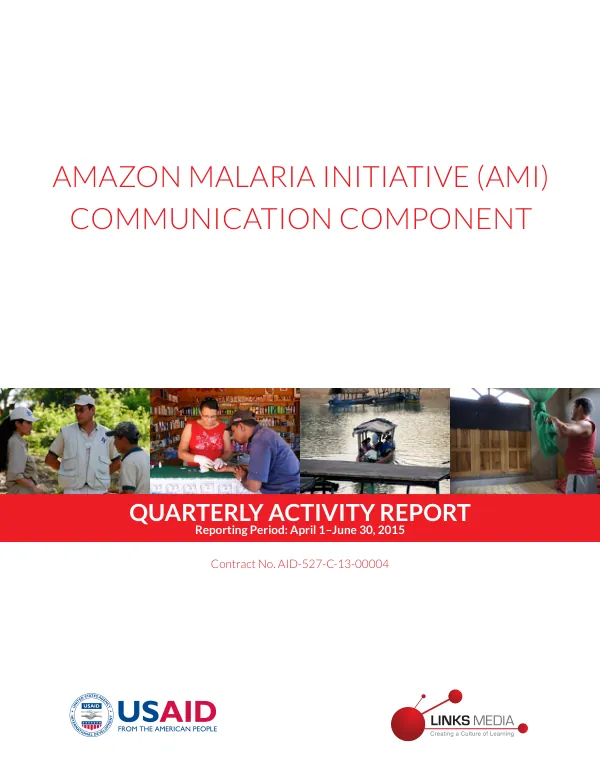
Quarterly Activity Report April 1–June 30, 2015: Amazon Malaria Initiative (AMI) Communication Component
Sign inLINKS MEDIA, LLC
Quarterly Activity Report April 1–June 30, 2015: Amazon Malaria Initiative (AMI) Communication Component
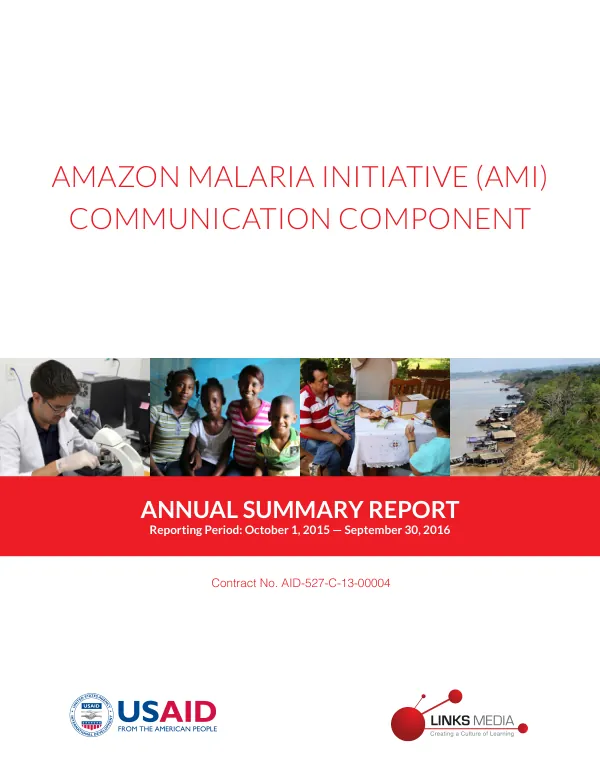
The Amazon Malaria Initiative (AMI) is a collaborative partnership among organizations and national malaria control programs in the Amazon basin and Central America.
2015 · 32 pages
Sign in to readA free account is required to download.
Abstract
Launched by the United States Agency for International Development (USAID) in 2001, the initiative aims to improve the prevention and control of malaria in partner nations. The AMI's mission is to ensure that national malaria control programs substantially incorporate best practices and promote evidence-based policy changes. The initiative's regional approach benefits partner countries through training and technical assistance, the development of standardized guidelines and protocols, the comparability of research and monitoring results, and coordinated approaches to addressing shared problems. The partner countries include Belize, Brazil, Colombia, Ecuador, Guatemala, Guyana, Honduras, Nicaragua, Panama, Peru, and Suriname. Under the AMI Communication Component, Links Media's activities are designed to strengthen AMI's role in improving malaria prevention and control in the Amazon basin and Central America. During the period from April 1-June 30, 2015, Links Media worked directly with the National Malaria Control Programs (NMCPs) of the partner countries to improve the use of communication interventions for malaria. Links Media completed needs assessments and comprehensive literature reviews of the epidemiological situations in Peru and Central America, as well as the history of past malaria elimination and/or control efforts. An evidence review was also conducted for a technical assistance document provided to the NMCP of Brazil. Additionally, an abstract was submitted to the American Society of Tropical Medicine and Hygiene (ASTMH) 64th Annual Meeting (2015) based on qualitative data collected during communication assessments with 11 countries' NMCPs in 2014. The initiative also successfully disseminated study findings from Peru, in Spanish, about the applicability of advanced molecular methods to investigate malaria outbreaks. Links Media provided strategic media outreach support to CDC and NAMRU-6 by consulting on the key public health messages from an original English-language journal article published in the May 2015 scientific journal Emerging Infectious Diseases. The AMI's regional approach has led to significant progress in introducing artemisinin-based combination therapy (ACT) for P. falciparum malaria in all Amazon basin countries. The initiative has also improved access to and quality of malaria diagnosis, as well as epidemiological surveillance, vector control, and systems strengthening. The partner countries have also collaborated with one another and maintained an ongoing exchange of information and expertise through South–South collaboration promoted and supported by AMI. The initiative's focus on evidence-based policy changes has led to the development of standardized guidelines and protocols, which have improved the comparability of research and monitoring results within and across countries. The coordinated approaches to addressing shared problems have also led to significant progress in malaria prevention and control in the Amazon basin and Central America.