FAMILY HEALTH INTERNATIONAL
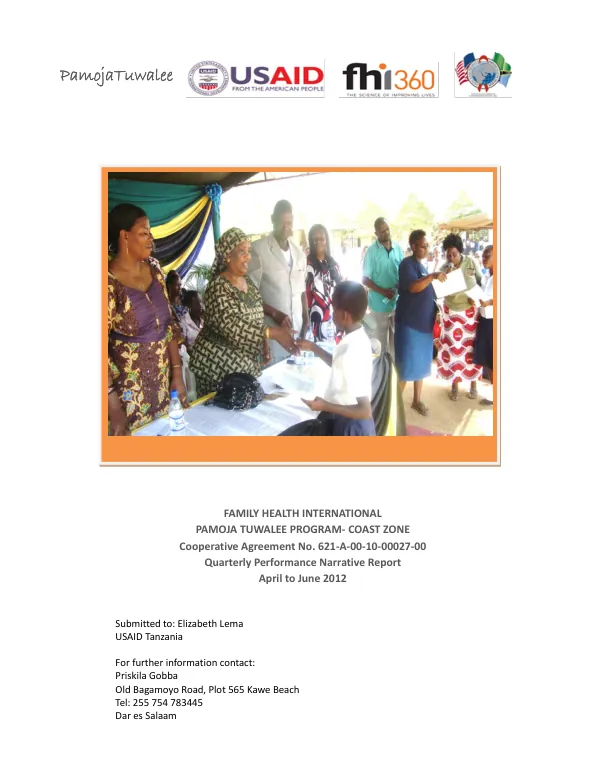
Quarterly Performance Narrative Report. Pamoja Tuwalee
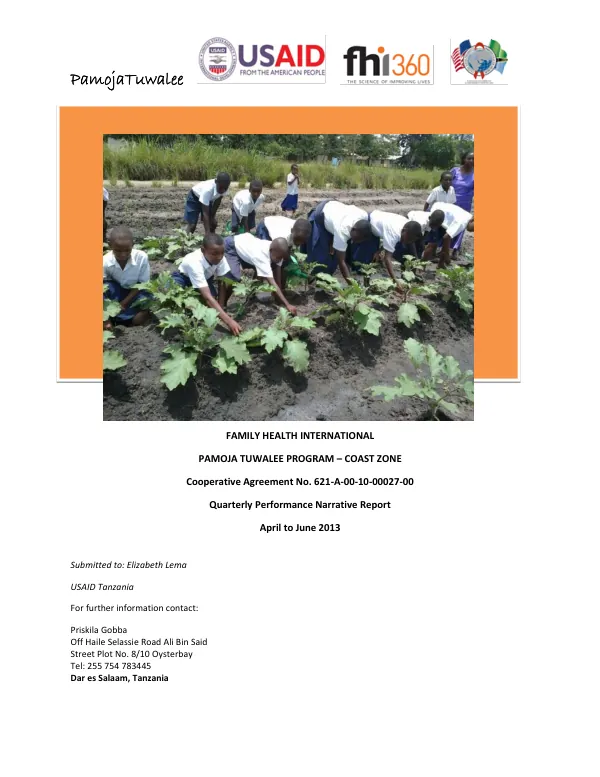
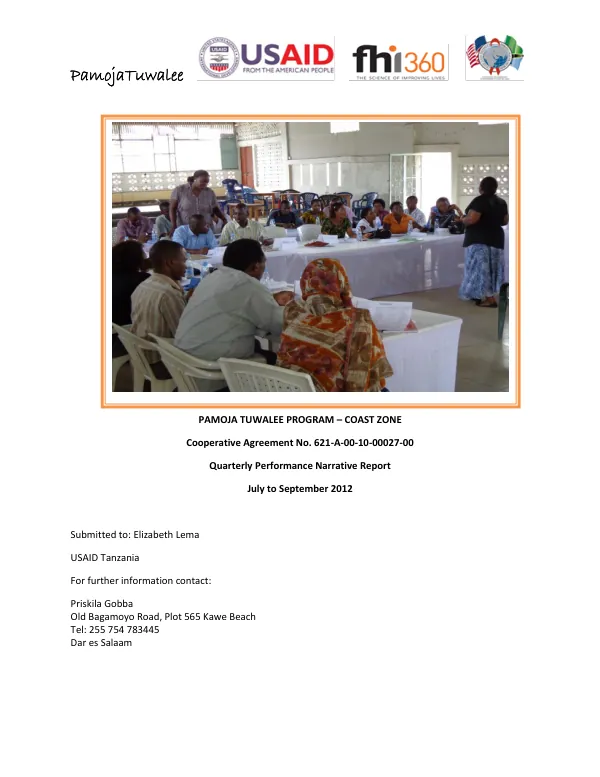
The Pamoja Tuwalee Program, implemented by FHI 360 in the Coast zone of Tanzania, aims to improve the quality of life and well-being of Most Vulnerable Children (MVC) and their households.
2012 · 52 pages
Sign in to readA free account is required to download.
Abstract
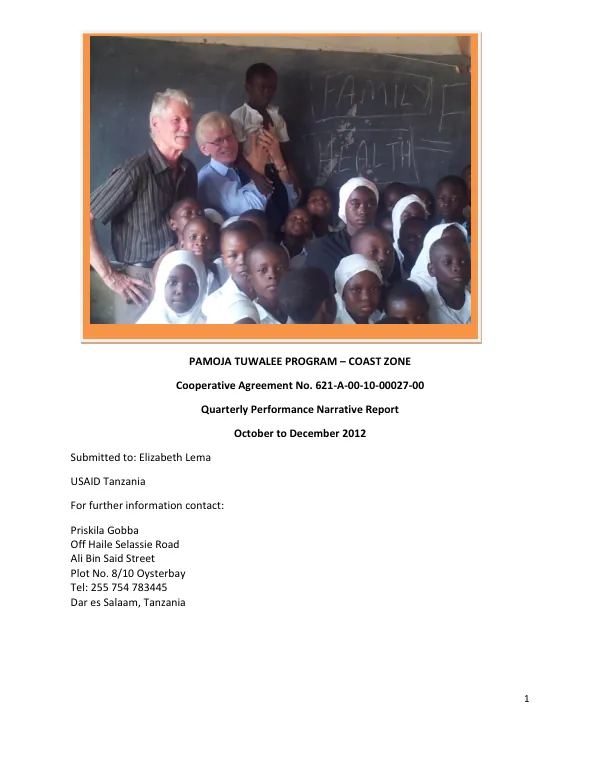
The program is part of a five-year USAID-funded initiative that covers five zones in Tanzania. The Coast zone includes regions of Dar es Salaam, Morogoro, and Coast in mainland Tanzania, as well as Unguja and Pemba islands in Zanzibar. The program's broad goal is to empower households and communities to provide comprehensive and sustainable care, support, and protection to MVC and their households. To achieve this goal, the program focuses on several objectives, including increasing the capacity of communities and local governments to meet the needs of OVC and their households. During the first quarter of year three (October-December 2012), the program made significant progress in achieving its objectives. One of the notable achievements was the mobilization of TZS 5,217,000 (US $ 3,261) and other material supports from local communities. This support enabled 592 MVC (278 males and 314 females) to receive health and education services. The program also conducted supportive supervision activities, which aimed to strengthen the capacity of local governments and communities to provide care and support to MVC and their households. This effort contributed to the program's objective of increasing the capacity of communities and local governments to meet the needs of OVC and their households. In addition to these achievements, the program also provided training and other support to increase savings and improve livelihoods for OVC households. This included training for household caretakers in caretaking skills, PSS, and reducing stigma/discrimination. The program also supported training and linkages to improve OVC household food security and nutrition, as well as training on social/legal rights and community protection structures. The program's efforts to improve the quality of life and well-being of MVC and their households have been recognized through several success stories. For example, the program reported that 592 MVC received health and education services, and that 592 MVC received material support. The program also reported that 592 MVC received training and other support to improve their livelihoods. The program's achievements during the first quarter of year three demonstrate its commitment to improving the quality of life and well-being of MVC and their households. The program's efforts to empower households and communities to provide comprehensive and sustainable care, support, and protection to MVC and their households are critical to achieving the program's broad goal. The program's geographic focus is on the Coast zone of Tanzania, which includes regions of Dar es Salaam, Morogoro, and Coast in mainland Tanzania, as well as Unguja and Pemba islands in Zanzibar. The program's timeframes are outlined in the program's five-year plan, which includes quarterly performance narratives and annual reports. The program's recommendations for the next quarter (January-March 2013) include continuing to provide training and other support to increase savings and improve livelihoods for OVC households, as well as continuing to strengthen the capacity of local governments and communities to meet the needs of OVC and their households. The program also recommends continuing to mobilize support from local communities and continuing to provide material support to MVC and their households. Overall, the Pamoja Tuwalee Program's efforts to improve the quality of life and well-being of MVC and their households have been recognized through several success stories. The program's achievements during the first quarter of year three demonstrate its commitment to empowering households and communities to provide comprehensive and sustainable care, support, and protection to MVC and their households.