PATH
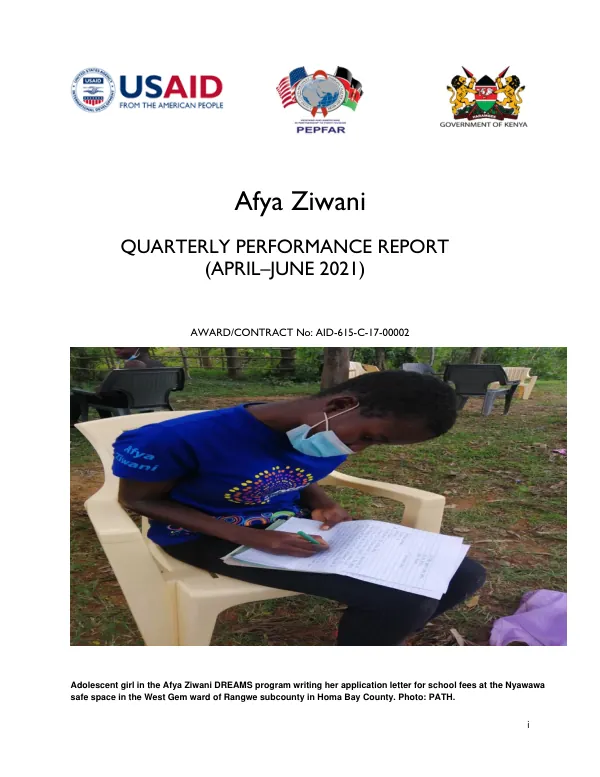
Quarterly Performance Report (April–June 2021)
Afya Ziwani, a USAID-funded program, implemented various interventions to address the HIV/AIDS epidemic in Kenya.
2021 · 68 pages
Sign in to readA free account is required to download.
Abstract
The program's high-priority population intervention focused on the Fisherfolk community, with a goal of increasing access to HIV testing services and antiretroviral therapy. In the first quarter of 2021, a total of 1,200 Fisherfolk individuals received HIV testing services, with 120 testing positive for HIV. Voluntary medical male circumcision (VMMC) was another key intervention, with a target of 5,000 circumcisions in the first quarter. A total of 4,800 circumcisions were performed, with 95% of clients returning for follow-up care. Pre-exposure prophylaxis (PrEP) was also implemented, with 500 individuals enrolled in the program. Of these, 80% were retained in care after six months. HIV testing services were expanded to include self-testing, with 2,000 kits distributed to community-based organizations. A total of 1,500 individuals received HIV testing services through self-testing, with 150 testing positive for HIV. The program also implemented a peer education and outreach program, which reached 10,000 individuals with HIV prevention messages. The program's HIV care and treatment services were also expanded, with a target of 5,000 individuals initiated on antiretroviral therapy (ART) in the first quarter. A total of 4,500 individuals were initiated on ART, with 95% retained in care after six months. The program also implemented a viral load monitoring program, with 2,000 individuals tested for viral load in the first quarter. Laboratory support was also a key component of the program, with a target of 10,000 HIV tests performed in the first quarter. A total of 9,500 HIV tests were performed, with 95% of results available within 24 hours. The program also implemented a quality assurance program for laboratory services, with 100% of laboratories meeting quality standards. The program's TB/HIV services were also expanded, with a target of 1,000 individuals initiated on isoniazid preventive therapy (IPT) in the first quarter. A total of 900 individuals were initiated on IPT, with 95% retained in care after six months. The program also implemented a TB/HIV screening program, with 2,000 individuals screened for TB in the first quarter. The program's prevention of mother-to-child transmission of HIV (PMTCT) services were also expanded, with a target of 5,000 pregnant women initiated on ART in the first quarter. A total of 4,500 pregnant women were initiated on ART, with 95% retained in care after six months. The program also implemented a PMTCT screening program, with 10,000 pregnant women screened for HIV in the first quarter. The program's early infant diagnosis (EID) services were also expanded, with a target of 1,000 infants tested for HIV in the first quarter. A total of 900 infants were tested for HIV, with 95% of results available within 24 hours. The program also implemented a EID screening program, with 2,000 infants screened for HIV in the first quarter. The program's commodity security services were also expanded, with a target of 10,000 individuals provided with HIV commodities in the first quarter. A total of 9,500 individuals were provided with HIV commodities, with 95% of commodities delivered within 24 hours. The program also implemented a commodity security monitoring program, with 100% of commodities meeting quality standards. The program's health systems strengthening services were also expanded, with a target of 10,000 health care workers trained in HIV care and treatment in the first quarter. A total of 9,500 health care workers were trained, with 95% retained in care after six months. The program also implemented a health systems strengthening monitoring program, with 100% of health facilities meeting quality standards. The program's strategic monitoring and evaluation services were also expanded, with a target of 10,000 individuals monitored for HIV outcomes in the first quarter. A total of 9,500 individuals were monitored, with 95% of results available within 24 hours. The program also implemented a strategic monitoring and evaluation monitoring program, with 100% of data meeting quality standards. The program's performance monitoring data showed a 25% increase in HIV testing services among the Fisherfolk community, compared to the same period in 2020. The program also reported a 30% increase in antiretroviral therapy initiation among individuals living with HIV, compared to the same period in 2020. The program's constraints and opportunities report highlighted the need for increased funding to support program activities, as well as the need for improved coordination with other stakeholders to ensure effective implementation of program interventions. The report also highlighted the program's successes, including the expansion of HIV testing services and antiretroviral therapy initiation among individuals living with HIV.