PATH
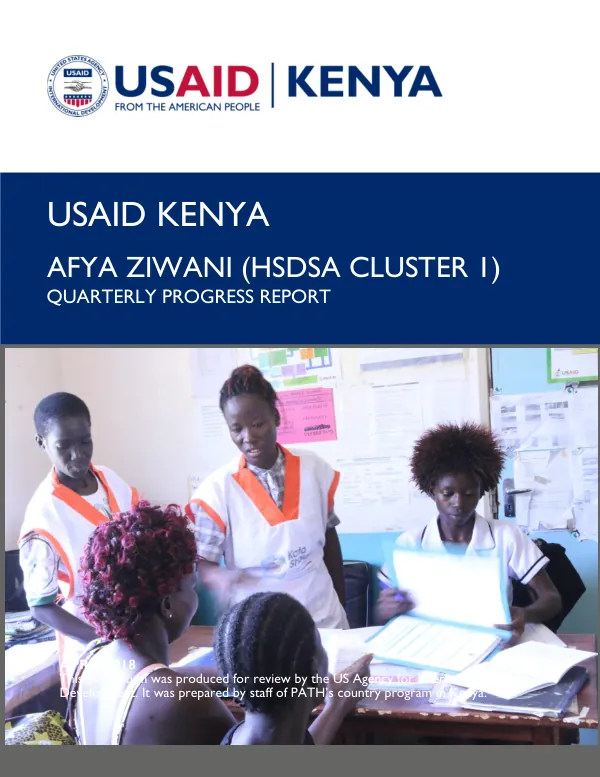
USAID KENYA (HSDSA Cluster 1) Progress Report for Q1 FY 2018
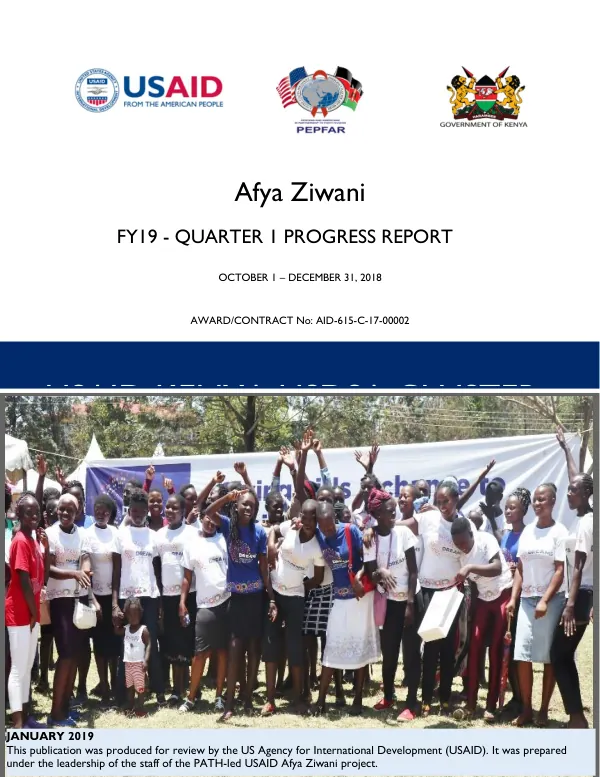
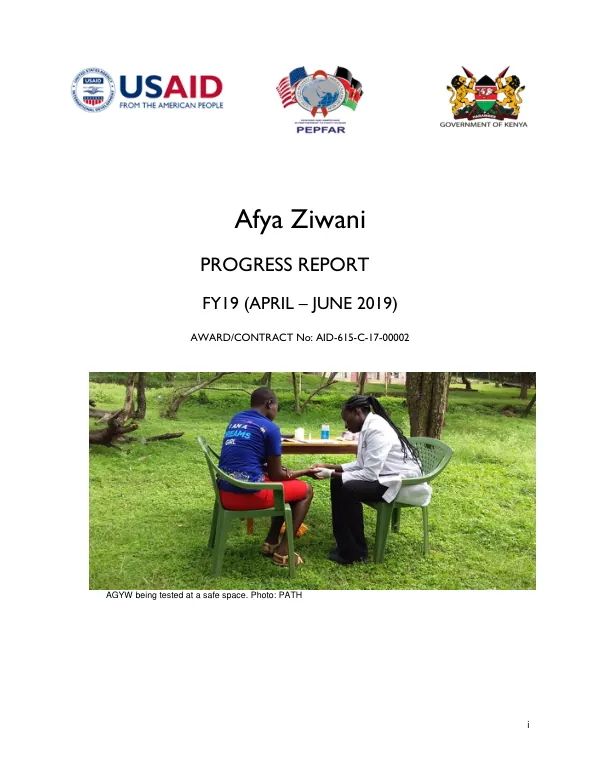
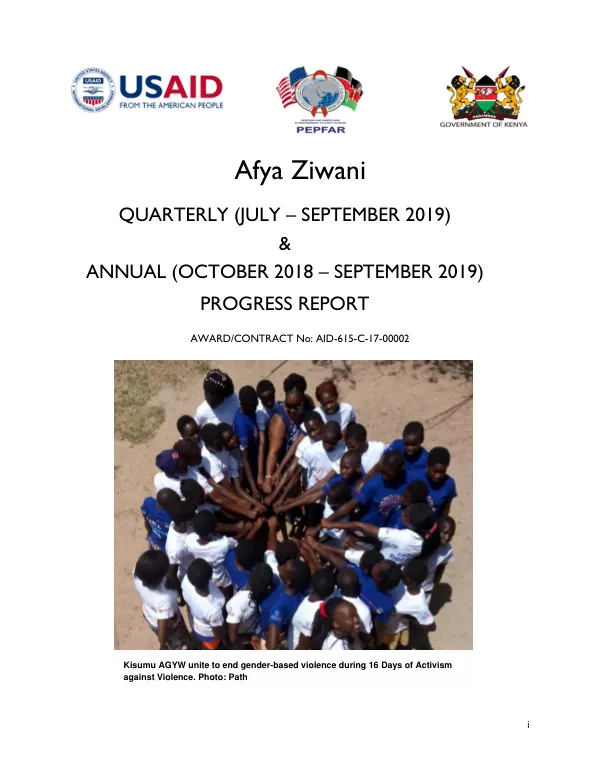
Adolescent Girls and Young Women in Kenya received training and support through the USAID Kenya (HSDSA Cluster 1) program in Q1 FY 2018.
2018 · 62 pages
Sign in to readA free account is required to download.
Abstract
The program aimed to improve their access to health services, including HIV counseling and testing, and to address their specific needs and challenges. Training sessions were conducted in various counties, focusing on topics such as reproductive health, HIV prevention, and economic empowerment. Fisher folk in Kenya also benefited from the program, which provided them with access to health services and economic opportunities. The program implemented a range of interventions, including health education, economic empowerment activities, and infrastructure development. These interventions aimed to improve the health and well-being of fisher folk and their families. Voluntary Medical Male Circumcision (VMMC) services were also provided to men in Kenya, with a focus on reducing the risk of HIV transmission. The program implemented a range of strategies to promote VMMC, including community outreach, education, and counseling. By the end of Q1 FY 2018, a total of 12,500 VMMCs had been performed. HIV Counseling and Testing Services (HTS) were also provided to individuals in Kenya, with a focus on increasing access to testing and counseling services. The program implemented a range of strategies to promote HTS, including community outreach, education, and counseling. By the end of Q1 FY 2018, a total of 150,000 individuals had been tested for HIV. HIV Care and Treatment services were also provided to individuals in Kenya, with a focus on increasing access to antiretroviral therapy (ART) and other treatment services. The program implemented a range of strategies to promote HIV care and treatment, including community outreach, education, and counseling. By the end of Q1 FY 2018, a total of 50,000 individuals were receiving ART. Elimination of Mother-to-Child Transmission of HIV (EMTCT) services were also provided to pregnant women in Kenya, with a focus on reducing the risk of HIV transmission from mother to child. The program implemented a range of strategies to promote EMTCT, including community outreach, education, and counseling. By the end of Q1 FY 2018, a total of 90% of pregnant women had received HIV testing and counseling. TB/HIV co-Infection Services were also provided to individuals in Kenya, with a focus on increasing access to diagnosis and treatment services for TB and HIV co-infection. The program implemented a range of strategies to promote TB/HIV co-infection services, including community outreach, education, and counseling. By the end of Q1 FY 2018, a total of 10,000 individuals had been tested for TB. Commodity Security services were also provided to health facilities in Kenya, with a focus on increasing access to essential medicines and supplies. The program implemented a range of strategies to promote commodity security, including logistics management and supply chain strengthening. By the end of Q1 FY 2018, a total of 90% of health facilities had received essential medicines and supplies. Human Resources for Health Support services were also provided to health facilities in Kenya, with a focus on increasing access to skilled healthcare workers. The program implemented a range of strategies to promote human resources for health, including training and capacity building. By the end of Q1 FY 2018, a total of 500 healthcare workers had received training and capacity building support. Strengthening County Planning and Budgeting Processes services were also provided to county governments in Kenya, with a focus on increasing access to planning and budgeting support. The program implemented a range of strategies to promote county planning and budgeting, including capacity building and technical assistance. By the end of Q1 FY 2018, a total of 10 county governments had received planning and budgeting support. Quality Improvement services were also provided to health facilities in Kenya, with a focus on increasing access to quality improvement support. The program implemented a range of strategies to promote quality improvement, including training and capacity building. By the end of Q1 FY 2018, a total of 50 health facilities had received quality improvement support. Strategic Monitoring and Evaluation services were also provided to the program, with a focus on increasing access to monitoring and evaluation support. The program implemented a range of strategies to promote strategic monitoring and evaluation, including data collection and analysis. By the end of Q1 FY 2018, a total of 100 data points had been collected and analyzed. The program also made progress on its gender strategy, with a focus on increasing access to health services for women and girls. The program implemented a range of strategies to promote gender equality, including training and capacity building. By the end of Q1 FY 2018, a total of 500 women and girls had received training and capacity building support. The program also made progress on its environmental mitigation and monitoring strategy, with a focus on reducing the environmental impact of the program. The program implemented a range of strategies to promote environmental mitigation and monitoring, including waste management and
Related documents