USAID DEC
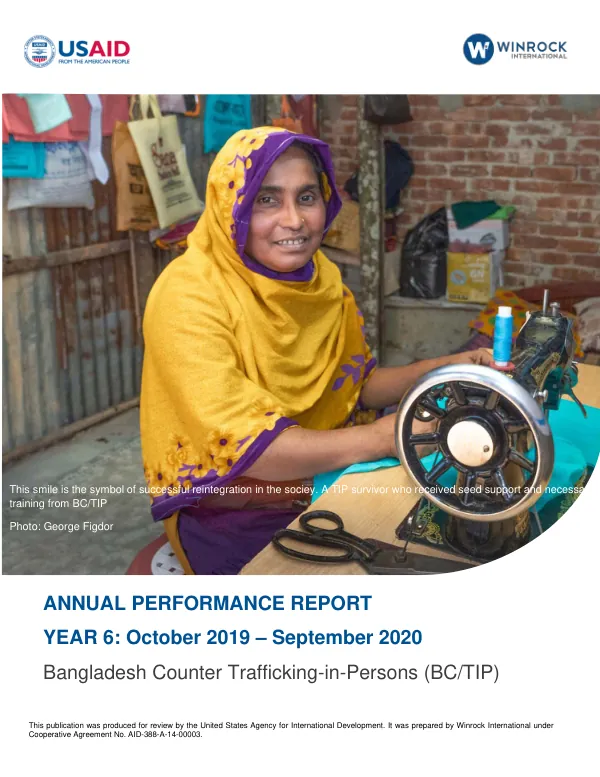
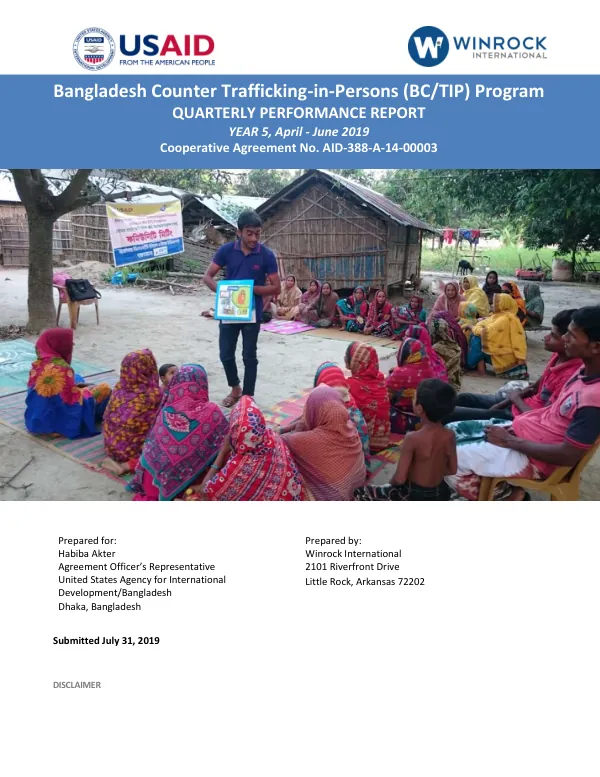
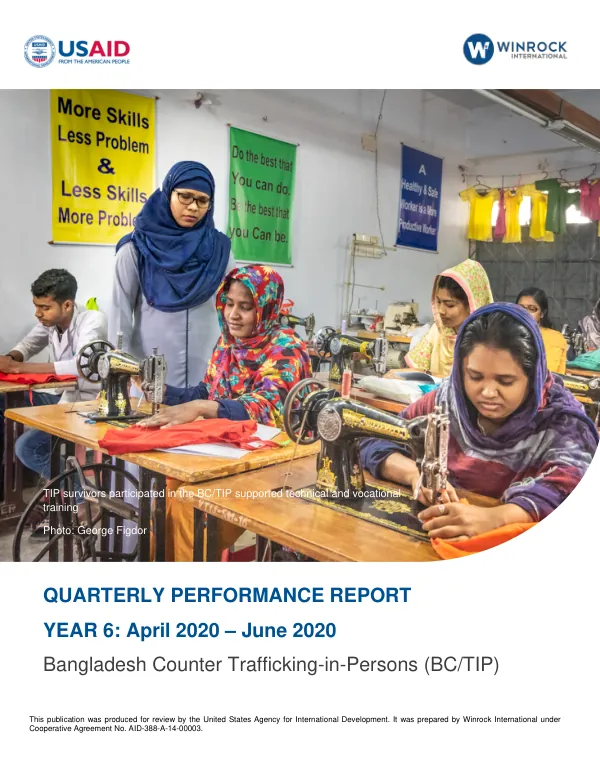
Quarterly Performance Report: Bangladesh Counter Trafficking-in-Persons (BC/TIP) Program
Sign inUSAID
Quarterly Performance Report: Bangladesh Counter Trafficking-in-Persons (BC/TIP) Program
The Bangladesh Counter Trafficking-in-Persons (BC/TIP) program is a seven-year initiative funded by the U.S.
2020 · 81 pages
Sign in to readA free account is required to download.
Abstract
Agency for International Development (USAID) and implemented by Winrock International. The program operates in up to 20 trafficking-prone districts to address the trafficking problem in Bangladesh. BC/TIP provides robust interventions in all four USAID areas of emphasis: Prevention, Protection, Prosecution, and Partnership, as well as in Child Marriage. The project connects local and national government representatives, non-governmental organizations, citizens, and community leaders to prevent trafficking-in-persons (TIP). It also works to protect survivors and reverse the damage done to them, prosecute perpetrators, prevent child marriage, and engage all levels of society as change agents in curbing TIP. During Quarter 3, Year 6 (April 2020 – June 2020), the project maintained communication with volunteer groups, Peer Leaders, ANIRBAN, and the network of Counter-Trafficking Committees (CTCs), enabling the delivery of emergency support to vulnerable people. The project also organized important trainings focused on counseling, legal aid, and laws preventing child marriage, using online resources and tools. The COVID-19 pandemic had a significant impact on the project's activities, but BC/TIP adapted by rapidly developing a comprehensive contingency plan aimed at maintaining project continuity. The project redirected some activities in Cox's Bazar to save people at-risk, victims, and survivors of TIP from further vulnerability during the pandemic. The project's efforts to keep continuity of implementation and achieve results despite the pandemic's impact are reflected in the significant progress made in various areas. For example, the project maintained communication with volunteer groups and delivered emergency support to vulnerable people. The project also organized important trainings focused on counseling, legal aid, and laws preventing child marriage. The report highlights the project's contingency planning and adaptability in response to the pandemic. The project's efforts to maintain project continuity and deliver results despite the challenges posed by the pandemic demonstrate its commitment to addressing the trafficking problem in Bangladesh. The project's activities during Quarter 3, Year 6, focused on maintaining communication with volunteer groups and delivering emergency support to vulnerable people. The project also organized important trainings focused on counseling, legal aid, and laws preventing child marriage. The project's contingency planning and adaptability in response to the pandemic allowed it to maintain project continuity and deliver results despite the challenges posed by the pandemic. The report also identifies priority tasks for the upcoming quarter, which include maintaining communication with volunteer groups, delivering emergency support to vulnerable people, and organizing important trainings focused on counseling, legal aid, and laws preventing child marriage. The project's efforts to address the trafficking problem in Bangladesh will continue to be guided by its contingency planning and adaptability in response to the pandemic. The project's progress in various areas is reflected in the report, which highlights the significant efforts made to maintain project continuity and deliver results despite the pandemic's impact. The report demonstrates the project's commitment to addressing the trafficking problem in Bangladesh and its ability to adapt to challenging situations.
Related documents